
Waging Heavy Peace
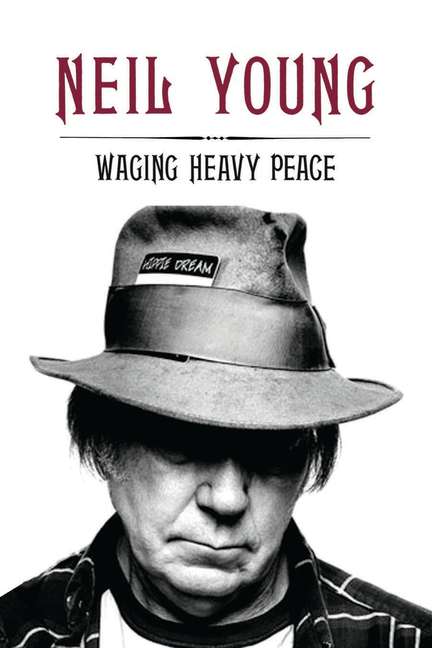 Having completed “Waging Heavy Peace” by Neil Young, I cannot say that I know any more about him than I did before. In fairness, I have read both Shakey and Zero to Sixty, both excellent biographies, and it is good to hear what the man says. Strangely, the book reads more like a blog than an organized biography. The book – ok I cheated and listened to the Keith Carradine narrated unabridged audiobook (which I really enjoyed) – reminds me of a Crazy Horse record: All over the place, disjointed, sublime and mediocre (often within the same chapter), wavering pace, no chronology, no table of contents or index, no obvious editing, but strangely captivating – at times thrilling and GENUINE. Be aware, about half of the book is made up of discussion about cars that he has owned, his train sets, his electric car project, puretone and his houses and places he has lived. He gives us snippets about his wives, children and friends, but gives us inadequate information about his instruments, his bands (other than the Springfield and Crazy Horse) and his recording techniques.
For example, every couple of chapters, Neil goes off in a diatribe about “Pure Tone” – some wonderful new high resolution music project (24/192 anybody? Linn, B&W, HD Tracks, 2N anybody?) that subsequently changed its name to Pono (some silly Hawaiian name). Normally an editor would go back and replace all references in his text from Pure Tone to Pono (so readers don’t become confused), but not in this case. The book reads like Neil sat at his computer each day, typed in whatever came to mind, and kept doing so until he just stopped (last chapter is some weird David Briggs/Larry Johnson memory/dream thing). Then it was published. He recurrently tells us about his writers’ block since giving up alcohol and weed, how he has not written a song in “forever” and how he would like to get back with the ‘Horse. Obviously he was cured of his block – having released no fewer than 3 CDs of music with Crazy Horse this year. It would have been great to read how this all came about. In particular – these are the first Crazy Horse recordings I have enjoyed since Ragged Glory; did finishing the book suddenly reawaken his muse?
Neil gives us the impression that he spends more of his time plodding away with pet projects than working on his Archives, which is unfortunate for us fans. He goes on and on about his electric car as if it is some new marvelous technology – but I’m thinking that I drive a hybrid already and hasn’t he heard of the Chevy Volt? On the other hand, most other Rock stars of his generation and pedigree (Bob Dylan and Bruce Springsteen excepted) are content to rehash old tunes, rake in their royalties and cash in on nostalgia tours (somehow I can’t see a “Tonight’s the night” performance tour).
Having read/listened to the book, you can’t help liking Neil Young. You know that he has, at times been a complete bollocks – “Eat a Peach” Stephen Stills, but he admits to it, apologizes for it, and has gone out of his way (like Eric Clapton) to play with his old groups and collaborators again. He is very generous in his praise for musicians that he worked with (in particular Ben Keith), Briggs, his manager and his road manager Larry Johnson.
Looking in the bookshops this Christmas at all of the rock biographies – Mick Jagger, Pete Townsend, Rod Stewart, The Stone Roses, The Smiths, countless others, this is the book I would pick up and buy – even if I had read it already. I feel I know enough about Mick and Rod as I need to know and frankly, I fear I will like Pete Townsend even less if I read his biography.
 audioexchange