
What I hate about Hi-Fi
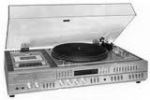
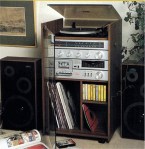 Back in the 1970s and 80s, our parents generation were split in 3 in audio terms. Some families idea of hi-fi was a radio, or a cassette player, a Dansette record player or nothing at all. Up a level was the music centre family: this was a big silver box, made by JVC/Sony/Hitachi that contained a record player, cassette deck and radio tuner: in 1 box with matching speakers: I obtained my own one of these, a Toshiba music center in 1982. Then there was “Hi-FI”: this was a “rack” system of individual components – turntable, cassette deck, tuner, perhaps reel-to-reel, pre-amp, power-amp and speakers – all usually made by different manufacturers. The coolest dads had these and we were not allowed to touch them. Usually the makers of these components were the same Japanese manufacturers of music centers, sometimes they were elegant music centres (by Bang and Olfsen for example), but the best and coolest hi-fi was made by brands that your average teenager had never heard of: Linn, Wharfdale, Arcam, Meridian, Quad, Pink Triangle etc. I accidentally fell into Hi-Fi in the mid 1990s, when I went to buy a turntable to play on a mini system, and discovered a 70s era Sansui amplifier in the shop (it had been
 traded it). I brought it home, plugged to old turntable into the amp, and bang – I was blown away and the mini system went into permanent storage. This was joined by a Marantz CD52 MkII, a Marantz tuner, a Pioneer A400 amplifier (that was highly rated but didn’t sound half as good as the Sansui – it was subsequently traded for an Arcam alpha-one), Wharfdale speakers and stands, thick cords etc. Budget hi-fi nirvana. Then I got married and discovered that my hi-fi took up half the kitchen and went into storage. Subsequently, I have flirted with lots of different hi-fi devices, have some nice kit – such as a Clear-Audio turntable, and Croft pre- and power amps, and guess what – they are now in storage. I love hi-fi and hate it at the same time. So here is what I hate about hi-fi:
1. The boxes – they are big and ugly and take up too much space. Great to impress your friends in bachelor pads, but not for families. I have a 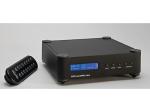 Wadia power DAC mini – it is the size of about 10 mouse mats stacked up on top of one another. This device is a DAC/preamp/digital poweramp and it powers a couple of dinky Monitor audio speakers and subwoofer in my office: the sound is bloody good.
2. The lack of storage furniture: hi-fi storage is all about a series of shelves, that take up half the living room, and are way to accessible to small hands.
3. Hi-Fi snobbery: it is pathetic. I buy audio devices to listen to music. It is great if the music sounds really good; but that is a bonus. Hi-Fi enthusiasts (not all of them) seem to spend more time analysing just how good the sound is, tweaking their systems with all kinds of accessories, constantly upgrading to improve sound – that they never seem to spend much time listening to music.
4. The term “lifestyle audio” – what a load of bollocks: if hi fi enthusiasts think that your nice looking small proportioned music device is not up to their “golden ears” they term it a “lifestyle” device. Bose speakers have been consigned to that role for decades: most owners think that their Bose gear (which is overpriced) sounds great and, due to their promotional activity, it impresses their friends. More importantly, it doesn’t take up half of their living rooms.
5. The “Dealer” network. So, if I want to buy a particular device – say for example the Naim Supernait – can I go to a website and order it. No. Tough shit – if you want to buy the device you have to hoof it to the nearest dealer to audition it in their listening room before buying it. That would be great if there was a dealer within a couple of hours drive of your home – but there is non even in the country (I live in the West of Ireland, a hi-fi wasteland). Yes I know, if you are lucky enough to have a dealer nearby, they become life long friends, help you to system match, take trade ins of crappy components that they will have trouble offloading, and they are very knowledgeable. The problem is that there are very few of them and their numbers are declining. Take, for example, my hometown, Dublin. In the 1990s there were loads of places to buy Hi-Fi (mostly budget stuff, but Hi-Fi nonetheless). Now there is 1 – Cloney: and they carry very little stock. Now – I love Cloney, and they are very helpful – but it is not exactly an impulse buying shop is it? European hi-fi retail needs to move into the 21st century and sell mid-end products on line to people with itchy mouse fingers like me. What really irks me is that I still get newsletters from US based music direct – and they sell lots of really cool stuff to Americans over the internet (at good prices too).
6. The “Cable” rip-off. There is no question that for analogue audio, that high quality interconnects and speaker cable make a huge difference to the sound of your hi-fi system. The big question is – how much should you pay for this benefit, and does it translate to other cables? A few years ago I aquired a Croft pre and power amp and B&W floorstander speakers. I had no decent speaker cables, so I went to Maplin and bought whatever was their thickest priciest cable (it probably cost me 20 or 30 euro). The system sounded great – open sound, lots of clear treble, deep base, great soundstage. However, based on years of reading Hi-fi magazines, and living in hi-fi wasteland, I ordered expensive (300 euro) cable on the internet. Attached to my system – it sounded – worse. I decided that it must be my ears. It wasn’t. After a year or so, I rolled up the cable and went back to the original Maplin stuff. Do I think that I would get better sound out of $500 Nordost speaker cable? I don’t know, but how could I be sure unless some nice dealer shipped me a variety of cables to try out in my system in my home.
So, I do believe in good quality analogue cables – they make sense, there is some reasonable science, but I am not sure where the inflection point between price and sound improvement is. On the other hand, the whole AV cable think really get up my goat. You go into Currys or Best Buys and attempt to buy a $100/£75/E100 Blu-ray player. Good value you think. Then the salesman informs you that there is no HDMI cable in the box and ushers you to a wall of various branded wires: 39.99 for 1m; 59.99 for 2m. <Where are the cheap cables?> “This is all we carry” – in other words – your Blu-ray player won’t work on your TV unless you spend almost as much again on a super-duper HDMI cable to connect it – and you are stuck buying that cable because we make lots of profit selling them. Fuck you! I have been reading for years about how one HDMI cable is the same as the next. Digital is digital – optical, coaxial, DVI, HDMI – once the data is transmitted it is reconstructed in the TV irrespective of the mode of transport. Thankfully, Currys are now selling cheap cables – known as Currys essential.
7. Budget versus High End – you spend $1000 on a CD player and some knob informs you that this is a fine “budget” component. You should be given full permission to kick his head with no consequences. Yes the more you pay for hi-fi the greater the likelihood that it will sound better. So, if you spend $500 on a component it will sound twice as good as a $250 component; if you spend $1000 on a component – 25% improvement over $500; $2000 – probably a 10%. Above that, who the hell knows. The bottom line is, that once you get over the $1000/£1000 mark the marginal improvement in sound quality is just that – marginal. Often you are not paying for higher quality components, but for low volume sales, better soldering and advertising costs. If you are going to spend a lot of money on components – it should be on those items that will age little with technologic developments – in other words analogue: preamps, poweramps, turntables and speakers. Spending $5000 on an SACD player makes no sense whatsoever – nor does buying an expensive media server, CD player or Blu-ray player. You are much better off spending $200o on a highish end DAC and plugging budget components into it. And forget about copy protected SACDs. Put them all in the attic and buy the PCM files on HDTracks: at least then you will own the music.
8. Hi-Fi Magazines: these journals exist only to induce desire in reader. s so that they will go out an squander large amounts of money on new kit that is not necessarily better than their old kit. For example, last year I bought an Oppo BD95: based on magazine reviews I believed that I was getting an absolutely top notch universal player for a budget price. I plugged it in, attached an expensive set of analogue audio cords, and then started playing a series of CDs/SACDs/BDs/DVAs. They all sounded really good. I then put a flac encoded DVD into the drive – sounded good: then I flicked the input on the pre-amp to my Benchmark DAC-1 USB, attached to the BD95 via a cheap optical cable. I was devastated – it was like a veil had been lifted and an astonishingly new level of clarity, soundstaging and space revealed itself. I may as well have kept my old Oppo DVD player – those highly trumped twin 32 bit Sabre DACs in the BD95 were absolutely no match for the Benchmark. In this months hi-fi magazines there is coverage of the new BD103 that features – digital, in to make use of the DAC (wonderfully useful), no fan and improved sound quality. Immediate reaction – I want I want. But I know that it still won’t be as good as my Benchmark DAC. The only cure for the desire-itis is to stop buying Hi-Fi mags.
Another example of the questionability of these publications is the Arcam FMJ series. I have an old Arcam alpha-1 amplifier that I rather like, and considered buying a newer amp by the same company – the FMJ series. Luckily a friend of mine had said amp and was willing to lend it to me for a trial. I plugged it in, listened, was unbelievably underwhelmed, plugged in the old alpha-1 – hugely better. I invited my friend over: same reaction – the 15 year old amplifier kicked the crap out of the new model by the same company. An it was recommended by the hi-fi mags. A similar story happened to me when I bought the highly recommended Pioneer A400 in the mid 90s: no bass, none, absent, totally crap. So, my message is – if you have old audio equipment and you like the sound – hang onto it, the new gear is unlikely to sound better.
9. Home Cinema: I was the first person I know to wire up my living room for 5.1 and the first I know to abandon it. Home cinema sound is great if 1. You have a large soundproofed room dedicated to nothing but watching TV; 2. You are willing to buy an AV amp the size of a carry on suitcase, that generates as much heat as a volcano; 3. You buy hi-fi speakers. All other home cinema stuff is totally crap and should be avoided. I know that LED TVs are very thin and you can hang them on the wall like pictures: unfortunately they sound shite. Your best bet is to buy a soundbar from the same manufacturer as the TV. It will sound just fine. Don’t waste your time on one of those, dare I say it – lifestyle – 5.1 Blu-ray systems for $£E300-400: they might look good, but the sound is dire. During quiet phases you have to pump up the volume to hear the dialogue, then suddenly you are blasted by 150DB of noise/loud music that drowns out all else. Good home cinema requires that you can easily balance the sound from each speaker, and adjust volume accordingly. You would be better off plugging your TV into a cheap stereo amp and buying a couple of small speakers/subwoofer. Home cinema is not hi-fi and it should not be sold in hi-fi shops. I would, nevertheless like a proper audiophile multi-channel hi-fi amplifier so that I can listen to my quadrophonic sound SACDs and DVDa discs.
 audioexchange