
NAD, NAD, NADA
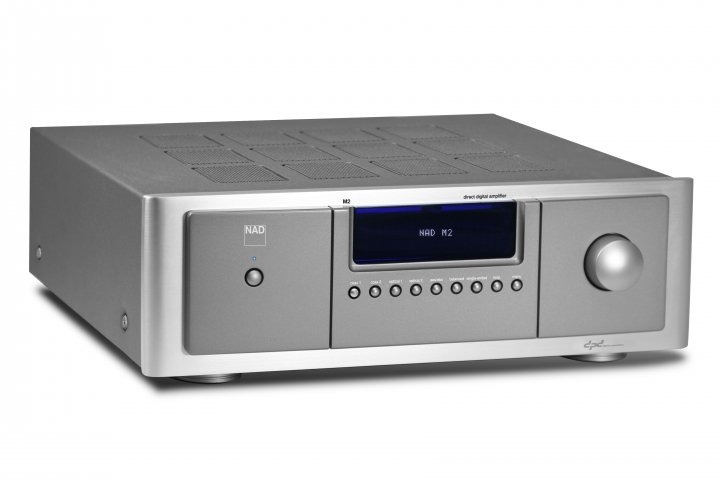 When I was a young fella – everybody had NAD hi-fi. It was good quality and inexpensive. NAD’s products lasted decades. In many ways, they were the Aldi or Lidl of Hi-fi manufacturers – good solid stuff in very plain wrappers that would impress nobody. Given a choice between NaD, Rotel or Marantz – I went with the latter. because their gear looked better and sounded a little exotic.
Fast forward 20 years and who would have thought that NAD would have been at the cutting edge of audiophile digital technology, selling high end products at 10 times the price of their lower offerings.
A couple of years ago, my “I want ” receptors went into overdrive when I read about the NAD M2 direct digital amplifier in the Absolute Sound and Stereophile. Although not a new concept, this was the first widely available audiophile grade class D amplifier: essentially a digital to analogue converter that power amplified the digital signal such that the analog path starts and finishes at the loudspeaker terminal. Incoming PCM signals are up sampled to 192kHz pulse width modulation (PWM) that constructs an analogue like sine wave analogous to DSD waveforms. At $6000, this machine was out of my league. I also had three problem with it: 1. If you wanted to connect a turntable, the analogue signal had to be converted by and internal A-D converter into the digital domain; 2. It did not receive DSD signals from SACDs (no HDMI inputs), and so could not be used with high 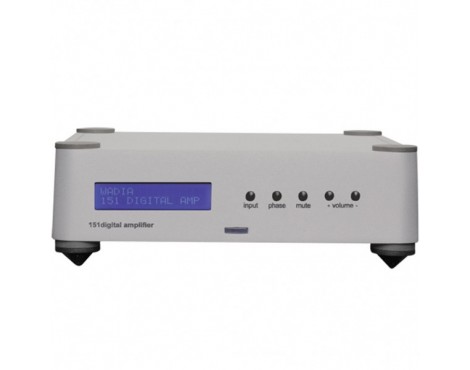 resolution digital sources – SACD/DVDA/Blu-Ray Audio. Of course, over the past 3 years, high resolution audio files have become widely available, and really – super discs are anachronisms. 3. The thing is enormous – the size of a Musical Fidelity power amp. The major advantage of class D amplifiers is that they can be tiny. For example, I own a Wadia Power DAC mini, which keeps me company in my office. It receives a USB signal from a media center PC, a coax-signal from it’s matching iPod dock, and an optical signal from a CD player. All of these devices take up less space than a shoebox. But the sound, through small monitor audio speakers, is excellent. No it won’t drive large floorstanders, but the powerdac mini acquitted itself well with a pair of Dynaudio bookshelf speakers that I used for a while. There is no reason why a Power DAC of this kind cannot put out 100 or 150 watts. It is surprising that, so far, Wadia have not come out with a PowerDac big brother.
On the other hand, NAD now have a little brother for the M2: the C3900 DD. This power DAC seems every bit as capable as the M2 for half the price – although it won’t impress any of your friends – because it looks like a $250 NAD amplifier not a $2500 one!. Nevertheless, the 3900 is future proof: you can and a variety of mini cards to it (like PCI cards on a PC) – analogue boards, HDMI connections etc. The device still cannot convert DSD from an SACD (so far as I know, however some DVD players will send DSD out the HDMI port – Oppo for example), but it is much more reasonably priced.
B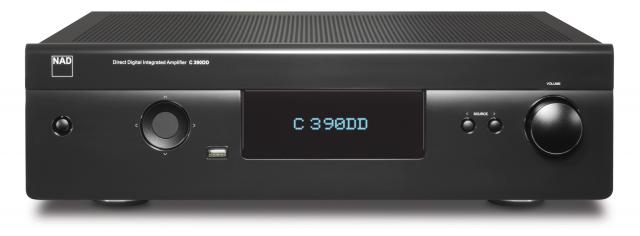 ut here is the question – who is going to buy the 3900? Yes, I have no doubt that in 5 years time class D amplifiers will dominate the digital audiophile household (i.e. those houses that don’t listen to vinyl), and this is the way forward. Would I like a 3900 for my non analogue system? Absolutely. Would I drop 2 grand for one? NO WAY! If NAD want to make money out of direct digital, they need to go back to their budget hi-fi roots, and find some way of mass producing C3900DD products for less than $1000, preferably in the $500 range. If they are able to do so – NAD will own the budget digital hi-fi market that they used to dominate.
I note that NAD have produced a fairly expensive DAC, Music Streamer and music vault: all impressive technologies and products. A word of advice for the company: put the streamer technology into the “Budget” version of the C3900DD and sell it as a standalone music center (see previous post) with a matching universal disc player (CD/HDCD/SACD/DVDA/BRA) that directly outputs native signal (PCM or DSD) and iPod/Android dock – and you will sell shedloads of product.
 audioexchange