
The Dark Side of the Vinyl Revolution
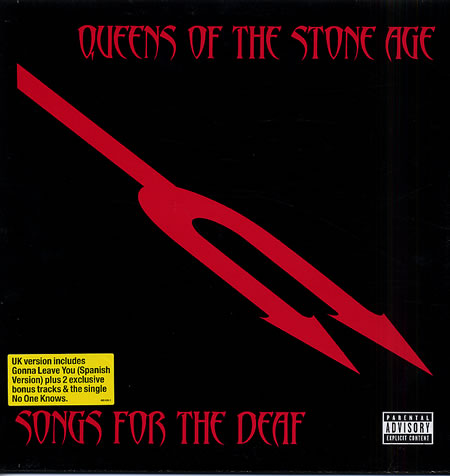 I have being buying a lot of vinyl recently, having visited some wonderful vinyl emporia in Paris, Brussels & Saville. I have kept Discogs in profit, while picking up some nice specimens in local record shops. However, I have noticed the re-emergence of an age old phenomenon – call it bootlegging if you like, but it is really – counterfeiting or piracy. I have previously posted about a couple of albums that I bought on Amazon, that I presumed were kosher – on the Timeless and Tapestry labels. I have seen these on sale in reputable records shops – and I fell for another one – by Blodwyn Pig, despite my “buyer beware” thought processes. Nevertheless, if I spent 3 minutes looking at the cover, and then another looking up Discogs – it would be pretty obvious that these are not “official” reissues. The other day I was burned again. I went into a record shop in Dublin and found a new copy of “Songs for the Deaf” by Queens of the Stone Age on sale (in fact there were 3 or 4 in the shop). It had a sticker on the cover – declaring it to be a “European” special edition. Ok – presumably a reissue. The record is in a perfect reproduction sleeve, with perfect labels, barcode etc. Three things came to mind – 1. the record (2 x 180g) was not shrink-wrapped 2. there was no “reissue” date on the back (merely the 2002 original issue date). & 3. There was no “free download” sticker. I pondered this for a few moments, but as my 3g wasn’t working (as usual when you need it) in the shop and the place was closing pretty soon afterwards, I stumped up the 30 euro (which would be the right price for a reissue, and a few of the other QOTSA albums are already available on reissue) and went home, delighted. Unfortunately, when I went to catalogue the record in Discogs, horror arose – I was a chump (click here), again.
I should have read the signs – this particular shop – that does in fact have some terrific and rare records on sale (at impressive prices) has a section called “new arrivals” just inside the door. In this pile are lots of Led Zepplin and other popular artist albums that are clearly “unofficial”. The crappy cover print gives the game away, as does my familiarity with current LZ vinyl availability. However, the only way for me to identify the QOTSA album as counterfeit, was by looking at the matrix material on the run-out groove (which was different from the original). I am sure that people who like to have albums to show off their musical taste – while listening to music on their iPods – would be happy with this record. But, at best, this version is CD sourced, and cost 5 or 6 times what I would pay (have paid) for the CD. Clearly, the pirates have identified that there is a market for hard to find records, and these are not the records that you expect (such as rare Beatles releases) – read here. So here is my guide to not getting ripped off:
1. Make a list of records that you actually want and research them on Discogs. Ensure that you are aware of the current price that they would fetch, catalogue number and whether or not reissues are available.
2. If an album was released between 1993 and 2005, chances are that, if it did receive a vinyl release, there were very few LPs pressed. This includes major artists. If the album hasn’t had a Back to Back or Music on Vinyl reissue, it will command a significant premium. 1990s era original britpop albums, in particular, cost a fortune. The same is true of late 60s psychedelia and 1970s progressive rock (except by mega selling acts like Genesis, Yes or ELP).
3. If a record has a “180g vinyl” sticker on the front cover – beware – this will distract you from the fact that it is a CD sourced grey market pressing or a copyright free cd sourced jazz album (see previous posts).
4. Avoid the following labels:
- Jazz Wax Records
- Jazz Tracks Records
- Jazz Beat
- 52nd Street Records
- Doxy Music
- Vinyl Lovers
- ZYX
- Tapestry
- Timeless
5. If a record is dated more that 5 years old and looks like it just it just came out of a factory – it did!
6. If a record looks “too good to be true” (i.e. less expensive than you would expect) – it is! Record shop owners, in general, know exactly how much records are worth. The only place that you are likely to get luck is in an Oxfam or equivalent shop where the assistants are generally clueless (my own experience of these places is that they are stocked with Johnny Mathis, James Last and lots of crappy 1970s scratched up C&W records).
7. If you are buying what you think is a re-issue, and there is a sticker on the outside promising “MP3”, a “download code” or “includes CD” – it is almost certainly genuine – for 2 reasons. 1. Pirates are unlikely to provide download services, 2. Retailers are unlikely to stock products that promise downloads that are bogus, because that is fraud and will lead to angry returns. Be aware, nonetheless, that any record that provides a download is likely digitally sourced (which audiophiles dislike).
8. Never spend more than 25 pounds, 30 euro, 35 dollars on a record without checking out it’s provenance.
9. Be really cautious buying mid 1970s American pressings of anything – you are likely to to receive non virgin (recycled) 80 gram vinyl that sounds awful. You are better off with German, Japanese or even UK pressings (this is my opinion, not fact). Of course, first pressings are always good, regardless of the territory, if you are willing to sell your kidney to fund the purchase.
10. Reissues today are almost uniformly better that reissues during the golden era of vinyl (up to 1990) – which were typically re-pressings with worn out stampers. Even if the modern reissue is digitally sourced, if it is pressed with a fresh stamper on 180g virgin vinyl it will be silent and sound pretty good (although not necessarily better than the CD). This is important because a lot of the discussion groups rant on about vintage vinyl and it’s quality compared to what is coming out today. This is bull: most of what you and I can find in record shops is not high-end vintage vinyl, it is stuff that came off the presses at varying quality on lightweight vinyl, meant to be played on cheap record players. You could have 3 copies of a record and they will all sound different – depending on country of origin, master sources and age of stamper. Even though a fair proportion of the reissues are warped, they are still significantly better than their 30 year old counterparts.
11. Cutouts: back in the day bargain bin or promo records had a cut-out in the sleeve or on the spine. I’m not sure what this achieved, but it put me off buying the disc (as the sleeve was mutilated). Records with cut out sleeves are less valuable than ones that have not been damaged. Strangely, however, these records are often worth buying – as they likely sat in a box for years without anybody playing them – and often have mint calibre vinyl inside. They are reasonably priced, because the sleeve is, at best VG. Also, as these often represented overstocked LPs, not infrequently they are first pressings (why would they bother with a second pressing?). Remember, a lot of records that are well regarded today, couldn’t be sold for love or money when they first came out.
12. Don’t forget CDs – they are being practically given away these these in second hand shops. Since 2000 the volume of CDs issued has fallen dramatically (just like vinyl in the 90s) – so buy a copy of albums that you like (if not mass produced), they will certainly attain a value in the future. Strangely, I have seen CDs on sale for €1.49 in shops, and the same recording costs 100 times that on vinyl (!) – and remember it is the same recording (here is an example). Don’t be a mug.
13. Hold out for the reissue. A couple of years ago- I just had to have “Your Arsenal” by Morrissey – but it was prohibitively expensive (being an early 1990s album – see above). Eventually I stumped up – due to the usual testosterone drive compulsion that afflicts gambles and heroin addicts. 12 months later – out came a reissue that sounds exactly the same – for €20. Any album that was popular in it’s day will be reissued – eventually. Be patient – make up a list.
14. Avoid Record Store Day “exclusives” – the whole thing has become a rip-off. A great idea that encouraged buyers to support their local record shops has turned into a major label profit fest. There is nothing that pisses off real record buyers more than tossers that queue up to buy these “exclusives” (before we can get into the shop), and then sell them on eBay).
15. If you are in a record shop and you are paying real money (>€12, £10, $15) for a second hand disc – insist on inspecting it. If it is plastic wrapped and the store assistant won’t let you open it – unless you know the shop to be trustworthy – walk away. There is a reason why record shops are in touristy parts of cities – lots of their customers are sucker tourists who won’t look at the records until they get home (include in this the Dublin record shop).
 audioexchange