
The Bluesound System, excellent – but with a major caveat
I have a happy history as a user of (all of) Sonos products, but have been long been frustrated by the company’s lack of support for high resolution files and also by the file number limit. I have filled the void, for the last 3 or 4 years with a Squeezebox Touch. This was an excellent product that combined a 4.5 inch touchscreen with a phone/tablet app and remote control. The Touch had 2 limitations: 1. 24 bit recordings were limited to 96kHz (many are now released with 192kHz) and 2. The requirement to have Squeezebox server running on your computer.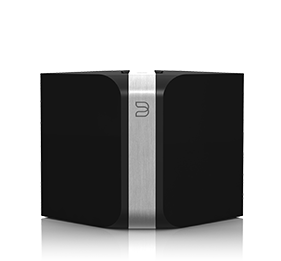
The Bluesound node appears to be an elegant alternative to Sonos: it supports high resolution playback, is part of a multi room wireless playback system and comes under the umbrella of the parent company of NAD. As these products are not sold by high street retailers, having read very strong reviews – I plumped to buy the Node (the equivalent of the Sonos Connect – a device that attaches the Bluesound system to external amplifier or DAC)– sight and sound unseen. Here are my views:
1. Price – the Node is significantly more expensive than the competing Sonos Connect (ZP-90). However, it does support high resolution files, and, frankly, as a newer product – the sound from the analogue output is significantly better than from that from the Connect. However, compared with similar products (network streamers) from other companies (Naim, Linn etc)– it is quite an inexpensive product.
2. Unboxing – I was surprised by the size of the Node – it is a comparatively large product considering that the box is likely rather empty. I am not sure why Bluesound did not build the product 30% of the size or make it flat to fit alongside conventional hi-fi equipment. It is a moderately large (imagine a cube made up with 6 compact discs with curved edges), shiny black or white, plastic cube – and neither cool nor attractive.
3. Connections – the major plus is that the Node supports USB sticks – so you can plug in music files to your system. The major negative is the absence of S/PDIF digital output (only a Toshlink connector is present). I will get back to this. Unlike the Sonos Connect there is no analogue (or digital) input – so you cannot connect up a turntable, tapedeck or CD player and stream it throughout the house (which is actually a handy feature of Sonos).The audio output is standard RCA phono plugs.
4. Setup – a total piece of cake. I setup the Node and connected it to my Network drive in minutes using my iPhone. Bravo – this was superb.
5. Control – these days all of these types of products are sold without remote controls (Sonos did sell a wonderful touchscreen remote – but seem to have discontinued it) – so you have to make do with smartphone/tablet or PC apps. They all work well. I much preferred the iPad to the iPhone app. Usefully, when a high definition file is selected from the library an icon appears HD (as opposed to CD) indicating this. Personally I would prefer if the library could separate out standard and high resolution files completely – so I could have SD and HD libraries. Overall, however, I prefer the Sonos app (although I have lived with multiple iterations of this app for several years).
6. Operation: the Node, connected to an external digital to analogue converter or amplifier is very responsive and the sound quality is very good. I cannot fault the quality of the analogue signal from the Node – files played back from my Oppo BD-95EU Blu-Ray player sound almost identical to files streamed from the Node. The digital interface is another issue entirely.
Virtually all high quality digital products come with two or more digital output options (usually Toshlink and S/PDIF) – this is the case with Sonos Connect (although not the Soundbar which is Toshlink only) and the Squeezebox. However, the “audiophile” Node only comes with Toshlink. This didn’t appear to be a problem for me until I tried to play a 24-192 file (the very reason I bought the product) on my Node through my Benchmark Dac II HGC – and all I heard was – nothing! It turns out the many hi-fi manufacturers are no longer supporting Toshlink above 96kHz – due to some issue with the Toshiba manufacturing process. Which make the decision by Bluesound not to include a coaxial output quite curious – I cannot imagine that it would have cost them any more to manufacture the product with such an output (even the cheapest DVD player has one), and it would have saved me from having to buy a Toshlink to S/PDIF converter.
I have read that Bluesound suggest that the best way to listen to their products is to use the inbuilt DAC, which does sound good, but this is quite a poor argument. The type of people who have significant high resolution libraries tend also to have high quality digital to analogue converters attached to their amplifiers – and would prefer to use them. I cannot say for sure whether or not 24-96 files sound better from the Node –analogue versus the Node-Benchmark-digital, but would like to choose that for myself.
So, in summary, a nice product that is altogether too large for what it does. An excellent starter device for those new to multi-room wireless audio. The sound is very good and the iPad app is excellent. An ideal high-res audio player ?– No – it is limited due to the foolish decision to output digital to Toshlink only. Better than Sonos?– significantly more expensive than equivalent Sonos devices – which probably don’t sound as good but work really well nonetheless. Right now it is my view that if Sonos come up with a 24 bit version of the Connect (and sort out the file number limit), I’ll be selling my Node on Ebay.
 audioexchange