
Art Pepper & Contemporary Records
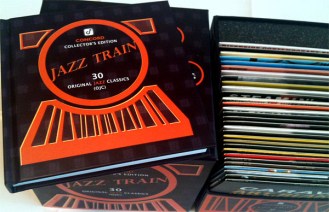 Due to the sheer crapness of modern rock, indie, folk, electronic music, I spent the winter and early spring listening almost exclusively to jazz. I principally listened to a number of artists whose music I had accumulated but to whom I had given little focus: Eric Dolphy, Art Pepper, Gerry Mulligan, Lee Konitz, Stan Getz and Bill Evans. For some reason I have long been slightly prejudiced against west coast jazz – due to its whiteness and purported “cool” vibe. Big mistake. The trigger for my interest was a CD box set that I bought several years ago – called Jazz Train – Concord Records 30 CD Jazz Collection (Original Jazz Classics). Over the years I have obsessively listened to Blue Note, Prestige, ECM, Impulse, Columbia Jazz, Prestige etc. but not Contemporary Records – the LA imprint of Lester Koenig. However, I read a posting by Michael Fremer about Sonny Rollin’s “Way Out West” – a record that I have enjoyed for many years on CD and vinyl, and became intrigued by the record label and its output. And that’s when I discovered that I had the crown jewels in the Concord box set.
The Concord Music Group actually owns the output of a wide variety of great labels – but whoever put this box together is a genius. Every CD is fantastic – and makes the basis of a top notch music collection. There is also an Impulse box, a couple of Columbia boxes, a French “American” records box etc. that were tremendous value 6 or 7 years ago when the CD era was fizzing out. Indeed, the Concord box contains CDs from many of their labels, not just Contemporary – quite a few are on Riverside (about which more in later post).
I decided to work my way sequentially through the box set and give each CD my undivided attention. And then I heard “Art Pepper Meets the Rhythm Section.” OMG! Apparently Pepper was so strung out on drugs that he was unaware that he was booked to play with Miles Davis’ band that morning, had nothing prepared and his saxophone was gummed up. Rarely in history has such beautiful spontaneous music been produced. For a generation, like mine, who have principally grown up listening to honking tenor sax – Coleman Hawkins, Ben Webster, Sonny Rollins, Gene Ammons, Hank Mobley etc. – the alto seems like it comes from a different instrument family. Instead of the sheer dynamic range and power of the tenor, the alto requires speed and finesse – and a greater sense of melody. Art Pepper plays with a great sense of lyrical beauty. I became obsessed.
Fortunately, Art Pepper’s recorded output is relatively limited – unfortunately that was because he spent much of his life in jail for taking drugs. His autobiography, Straight Life, is one of the most harrowing reads I have ever encountered. He details his development as a young musician in the racially mixed Central Avenue of LA, being discovered by Benny Carter and his involvement with the Stan Kenton Orchestra (before and after WW2). His solo output commenced in the early 1950s – but this period coincided with escalating drug abuse and a concomitant zero tolerance policy by law enforcement. One wonders if Pepper would have been better off emigrating to Europe circa 1955 – like Bud Powell or Dexter Gordon. He stayed on the West Coast and spent much of his peak years in San Quentin. Eventually he went into a rahab facility/alternative lifestyle group, Synanon, in the early 1960s – met his third wife, Laurie, and entered a methadone programme. He died of a brain haemorrhage (“stroke”) in 1982 at the age of 56.
There are no bad Art Pepper albums – everything is good, much is extraordinary. His career can be divided into three phases- the 1950s – when he was with Contemporary: Rhythm Section, Getting Together, Intensity, Smack up and Art Pepper + 11 are all superb. The early 60s were non productive. In the mid to late 60s, Pepper switched to Tenor and attempted to ape John Coltrane, not very successfully – I can see the reason – for a whole generation the tenor was considered the sexy and commercially viable instrument. Fortunately, there is little recorded output from that time. He then joined Buddy Rich’s big band in the late 1960s, which restored his confidence.
Once his life stabilized in the 1970s, there was a Pepper renaissance and everything he recorded at that stage is worth a listen. I particularly enjoy his return to Contemporary records – Living Legend. This was now music of the 1970s, darker, more emotional – the work of a man who lived a hard life. His live recordings at the Village Vanguard (3 or 4 albums) are terrific, but my most treasured acquisition is a 7 LP box set of Pepper playing at Ronnie Scott’s in 1980.
It is scandalous that there are no recent vinyl audiophile reissues of Art Pepper’s great albums – Meets and +11. Early pressings and the Analogue Productions reissues (from 2003) are extremely expensive. The best new pressings are OJC US reissues, likely digitally sourced – but excellent sounding, from 2011. European buyers beware – all of this stuff is pre 1963 copyright free material – CD sourced and released on Jazz Wax, Waxtime or DOL: avoid. Just buy the CD. Concord could do a lot worse than handing Kevin Grey the master tapes of the 5 albums listed above and releasing an audiophile Pepper box.
The later recordings are easy to come by from Discogs, however a 16 CD mammoth box set – the Complete Galaxy Recordings (1989) – is savagely hard to find and expensive. A good selection of albums are available on SACD – Meets the Rhythm Section, …The Way it Was, New York Album, Intimate and a few more. The only one I can find on hi res PCM is +11. Analogue Productions are selling a few of the Pepper SACDs as DSD downloads (Meets is only at single rate but I would be strongly confident that, for $25 you will never hear a better version). If you are rich or obsessed – they are selling the New York Album on ¼ inch tape for $450.
The strange thing about Art Pepper is that you can play any record at any time and it fits any mood. This is possibly true also of Bill Evans. When one listens, particularly to the 1950s output, it is hard to tie together the strung out junkie to the wonderful sound emanating from the horn.
Thanks Art Pepper for brightening up my winter.
 audioexchange