
THE HIGH RESOLUTION BLUES
 Over the past 20 years or so home television technology has moved from standard NTSC/PAL with 480 lines of interlaced 4:3 picture to 8K (4320 vertical lines) in 16:9 format. From a 28” box that weighed as much as you did, to a hang on the wall OLED screen that wouldn’t be out of place in a boutique cinema. These televisions can access all kinds of content – from Satellite TV, Netflix, Hulu, Amazon Prime etc. that is broadcast or streamed to you sitting room. Looks great? Yes. Sounds great? Rarely. In addition, I have the feeling that it was easier to find movies that I wanted to watch by crossing the road to the local VHS shop or Blockbuster (or even mail order Netflix) than it is today. For example – my daughter wanted to watch Harry Potter movies – no problem – must be in one of our many streaming or satellite accounts: no dice. I bought the DVDs and Blu-Rays – but they are in a storage locker somewhere. I could pay to watch on Sky TV – but I have already bought them. Arrragh. Illegal download anyone? Luckily, one of my friends had the box set sitting in his car to bail me out. Why isn’t the whole world library of video available now on demand on all streaming services?
Conversely , if you like music – any of the streaming services will supply you with 10s of millions of tracks from most of the albums that you are ever likely to listen to – Spotify, Deezer, Tidal, Qobuz, Apple music, Amazon music: it is all there. Unfortunately, the quality on most of the platforms, (at best 320kbs) resembles the video quality of old VHS tapes – using 25 year old compression algorithms and psychoacoustics to deliver tiny files to your phone – listened to through poor quality Bluetooth earbuds or god awful Beats headsets. Where is the sound revolution? Also, what happened to surround sound?
For many years I have been accumulating high resolution (24 bit or DSD) files and albums – despite only occasionally being able to distinguish significant aural improvements over CD (the difference over mp3 is staggering). However, when Qobuz started to stream in 24/192 flac – those days ended. Suddenly my CD collection was obsolete – everything I already had was available in 16 bit streaming and everything that had been remastered to 24 bit could be streamed. There still remains an occasional reason for buying digital music, but not many. For example – last week I bought the Abbey Road box set: not because I wanted the CD or 24 bit audio – they are available to stream from Qobuz, but because I wanted the 5.1 surround version (not available for streaming) and the souvenir box, which I had to have.
Recently, I read Neil Young and Phil Bakers’ book – “To Feel the Music” which is about 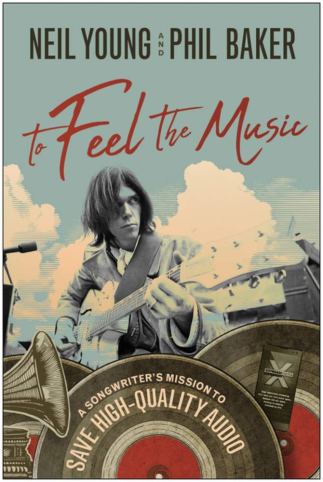 Neil’s passion for high resolution music, the development and eventual failure of the Pono music player and music store and the establishment of the NYA website. Although it is 242 pages long, much of the content could be covered in a magazine article and the main gist can be read here. It was an interesting business book on the evolution of a startup and the positive decisions and mistakes made along the way. Eventually, poor management, a hostile and audiologically illiterate commentariat* and the failure to come up with a business partnership with Kardon – did the company in.
Pono was a high resolution portable music player developed in conjunction with Ayre acoustics, using an Android operating system. Considering it’s audiophile origins, construction quality and versatility – Pono was exceptionally good value at $400. The equivalent Astel & Kern product was at least $1000 more. Financed by kickstarter, built in China with premium components, packaged in a bamboo box – with special editions in limited quantity featuring many famous artists, it was a product that every audiophile should have owned – when it was released in 2014. Pono was not a unique product – Sony has just started to release HiRes audio Walkmans and A&K had a number of similar products. Pono has drawbacks – it was shaped like a Toblerone – not exactly jeans pocket friendly. The screen was small – this significantly reduced versatility. There was no wi-fi or Bluetooth – restricting its use for streaming and wireless speakers. In other words – Pono was an ideal audiophile player for 2009 – not 2015. Conversely, because it was made independently of the tech industry (although there was an early flirtation with Meridian), all Pono players can still be used for non protected audio files. No restrictions. No nonsense. I’d like to have one.
The Pono music store, in my view, was a bust from the beginning. Due to the avarice of the music industry, high res albums were (and continue to be) too expensive and, of course, record companies have been too stingy to pay for high res remastering of their back catalogue. Young, in the book, clearly recognizes the short sightedness of this – as analogue tapes are rapidly decaying in their boxes and need high res backup. Not to mention the Universal fire…. Eventually Apple bought the company that provided the platform for the Pono store and closed them down: that was the end of the Pono story.
Never the man to give up, Young went ahead and jumped into streaming and created the Neil Young Archives website, various resolution (dynamically changing depending on bandwidth) streaming platform and mobile phone app. It is fantastic (if you are a hardcore Neil Young fan).
Reading the book, I felt a strong bond of brotherhood with Neil and his colleagues: he is absolutely correct that the music industry and tech companies have been selling us second rate sound for convenience for the past decade despite the dramatic reduction in the cost of bandwidth and storage. All of the worlds music should be available in high res – it was just a pity that he didn’t team up with a like minded hardware company like Bowers and Wilkins, for whom a portable music player like Pono would be a tremendous synergy to their speaker and headphone business.
 Perhaps the story will have a happy ending: I don’t know if Jeff Bezos is an audiophile – but there are few people in the world powerful enough to frighten the music industry into the high res future. In mid September, Amazon announced that they would commence CD and high res quality streaming for a reasonable monthly price (discounted if you are already a Prime or music subscriber). This will almost certainly kill Tidal (who stream in the dubiously valued MQA rather than flac), Deezer and probably Qobuz. The survival of Qobuz and Tidal will likely be determined by whether or not Amazon music will be integrated into Roon and whether the music industry will keep them alive to avoid a monopoly. It is only a matter of time until Apple follow suit.
Twenty five years ago, when Amazon was founded few would have expected that it would become the worlds biggest retailer. Twenty years ago, when I was ordering CDs from the USA, I would never have envisaged a day that, for a modest subscription, I could listen to virtually every album available in CD or better than CD resolution on my mobile device – supplied by Amazon. The next question is whether we are about to get a HiRes Alexa device – and will Apple be able to force Sonos to support 24 bit audio?
All the world’s music at high resolution – are you watching TV industry?
*I hate the type of listening test conducted in the Yahoo review. There is a big difference listening to a few seconds of a music file in different resolution levels and sustained listening. There is no question that high resolution audio (particularly DSD) and vinyl are much less tiring to listen to than CD and mp3. The smoothness, dynamics and space that you hear, particularly through a proper hi fi system envelops you in a comfortable sonic space: you are forced to feel the music and listen. Compressed audio formats sound good for short duration listening (before the brittleness starts to grate), distracts attention and vanishes into the background. So, if you want to do a comparative test, listen, for example, to a favorite album at mp3 or 16/44 and then listen to it at 24/96 or DSD or audiophile (analogue sourced) vinyl and notice how the music affects you emotionally. It is not the crispness of the treble or the boom of the bass that makes music sound good – it is the soundstage and the emotional effect that it has on the listener.
 audioexchange