
10 years of the vinyl renaissance
 In 2009, Columbia records released a 50th anniversary edition of “Kind of Blue” by Miles Davis. This included a copy of the record pressed on blue vinyl. I was intrigued as I had never heard the album on vinyl – this was still peak CD era – so I dug my Bang & Olufsen 4600 turntable out of storage and started playing my records again. I haven’t stopped since. That particular record wasn’t a great advertisement for the vinyl renaissance, but it did not matter. I know very few individuals who remained loyal to vinyl (mostly DJs) during the CD era. Where I live, despite there being several record shops in 2009 (now there is one – if you count the corner of the souvenir shop as such), you could not be new vinyl locally. There was no market. Only a small proportion of new music releases came out on vinyl, and those were often in very limited quantities.
 Something obviously sparked the vinyl revival – I don’t know what – but certainly in my case it was the sight of favorite records that I had only ever owned on CD/SACD sitting on the shelves looking at me that stirred my juices. I came home from summer vacation in 2009 with a stack of new records. There is, was, and always has been something more satisfying about the look and feel or a record versus a CD. They probably sound better too. Ultimately, iTunes killed the CD, Spotify killed iTunes and music enthusiasts embraced vinyl rather than SACD or DVD-Audio for their physical product of choice. I presume that increasing vinyl sales spurred increasing sales, leading to more media coverage, increasing supply, leading to record store day, leading to increasing supply, media coverage and sales. And now, vinyl records are about to eclipse CDs in sales – for the first time in 33 years! This may be due to the fact that the record sells for 2 to 2.5 times the price of the CD – but the number of units sold has increased geometrically since 2003 (see graphic above). Not surprisingly, one in eight records is sold by Amazon. Highly surprisingly, in the USA, 1 in 12 records is sold by Urban Outfitters. But the record shop may be back in a good way – HMV recently opened a 25,000 square foot vinyl store (the Vault) in Brimingham, UK. There are more pressing plants producing more records today than in a generation. So, it seems, that vinyl will be around for a while and I may be commenting on it again a decade hence.
Here are a few observations about the last decade in vinyl:
1. The price of records has increased significantly – in 2009 most albums cost less than €20 – now prices are hovering in the high 20s and early 30s. My local record shop is looking for €49.99 for the thoroughly mediocre “Colorado” by Neil Young & Crazy Horse. It is 4 times more expensive on Amazon than the CD – and you can stream it for free(ish). This is bonkers! I have noticed that my own purchasing has dropped of significantly as prices have risen. The record companies killed the golden goose with the CD pricing before….
2. During the 201-2015 part of the vinyl boom, it was common for the record company to include a copy of the CD alongside the record – and this was great. In a couple of instances, such as Talk Talk’s “Spirit of Eden” – we got a DVA-Audio (24/96) – this was better. Then, as prices rose, the CD was quietly dropped (I cannot remember the last time I received a CD in a standard LP package) and replaced by a download card offering mp3s. On rare occasion, one is offered a 16 bit flac or wav download – honestly, record industry – if we are paying $30 for an LP – please give us a decent digital (preferable 24 bit) digital copy. Annoyingly, in some recent releases, such as “Out of Nowhere” by Jeff Lynn’s ELO, no download code was provided.
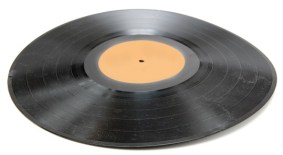 3. There seems to be a shortage of pressing capacity in the vinyl industry (a dubious excuse reason for pumping up prices) – this has resulted in a significant drop off in the quality of pressings over time: lots of warped, of center and in-filled pressings. There is nothing more annoying than opening an album, that you paid €30 for, six months after purchase, and finding it badly warped: there is no comeback at that stage. I make a point now of listening to all new records within a day or two and bringing/sending back warped records immediately.
4. Despite vinyl being a cash cow for the music industry, it is not clear to me that the best available sources are used in the production process. Online forums are filled with accusations that many albums are cut from 16 bit digital files (i.e. CDs). Moreover, for “catalogue” recordings made during the analogue era, I do not understand why the record companies cannot routinely cut their lacquers directly from the original master tapes rather than from digital copies of them. This is like reconstructing a painting from a photograph of the painting – you lose all the analogue texture.
5. Where are all the gatefolds? Now that albums have reached the stratosphere in terms of pricing – for €30 I expect a deluxe package – and that means gatefold covers. Also, I shouldn’t have to damage the record to liberate it from the ridiculously tight shrink wrap encircling it. And while I’m at it – how difficult would it be to place the album in a decent plastic lined inner sleeve rather that the old fashioned (1970s era) cheap sandpaper that frequently infects the record with paper particles? Also, can somebody please sell me a reasonably priced plastic cover for gatefolds (i.e. one that allows you to unfold the album in booklet form)?
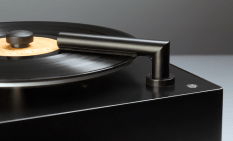 6. Why cannot record shops clean expensive second hand records? Several years ago I was walking through Soho in London, perusing the record shops, and was impressed that the guy behind the counter of one of them (Sister Ray I think) was working away cleaning newly arrived records. I have to set aside an afternoon every couple of months to clean records – used and new (which really annoys me). If you are going to charge premium prices for rare second hand records – show some respect for your customers and clean them, change the inner sleeve and put them in a new plastic cover.
7. There is no correlation between the price you pay for the majority of records and the sound quality. Unless an album lists, on the cover, that it has been carefully mastered from the original tapes in all analogue domain, the likelihood is that your newly minted piece of plastic is digitally sourced. That is not necessarily bad – often records derived from HiRes files sound great – but are they worth €40 or more? No. Pay real money for records from Mofi, Analogue Productions, Music Matters, Intervention Records, Speakers’ Corner, Pure Pleasure, Analog Spark etc.- these are truly deluxe products. Otherwise thread carefully. Also, it has been my observation that the vinyl record in superdeluxe box sets is usually quite mediocre. So you would be better off spending $80 on the Mobile Fidelity reissue and SACD (or deluxe edition CD) of Layla etc. than $150 to $250 on the superdeluxe version (even if it looks cool).
8. It really is about time that the music industry give us much betting provenancial information regarding vinyl reissues: we wish to know the source – Original Master or not, Analogue or Digital, Remastering Engineer and Pressing Plant. For example, the recent Tone Poet reissues from Blue Note clearly state – All Analog – Sourced from the original masters – by Kevin Gray (Cohearant) and pressed at RTI. All of these facts are Hallmarks of Quality. In general, Pallas and Optimal in Germany along with Record Industry (MOV) in the Netherlands, are the best European plants. RTI and QPR (analogue productions) are the best in the USA. I am not overly impressed with GZ in Europe, and United in the USA has a pretty bad reputation. The latter are both high volume plants – so that is where most of your new vinyl is coming from.
9. After the Universal music fire – can we at least have some honesty from Universal Media Group about what the do and don’t have? I am very very wary of buying Universal catalogue product on vinyl – principally due to the fact that the best version of the recording that they have may be a CD. I have no objection buying a record sourced from a second generation tape (the German, UK or Japanese tape) – as long as it is in good condition.
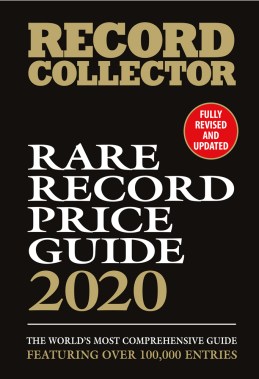 10. How much should I pay for second hand records? I have no idea, but the prices are going up at a spectacular rate. Record Collector magazine publishes it’s “Rare Record Price Guide” every couple of years. I would love to know where I can buy mint or near mint records at these prices. Armed with the book, I have gone to record shops, discogs, ebay and other online marketplaces and have rarely, if ever, been able to buy albums for the price listed in the book. Maybe I’m a sucker. Maybe I need to use it like the Kelley Blue Book and demand the listed price (doesn’t work). In fact, it is really hard to figure out what you should pay for a record: obviously you can comparison shop at discogs – but much of the product on sale is overgraded. The price you pay in the shop should be 5 or 10% lower than you would pay at discogs (no commission). Value your music gives your real world prices of sales on auction sites – but the precision of the providence is lacking compared with discogs.
Of course, if you have schlepped to Berline, or Utrect or London or wherever and have uncovered an album that has been on your wish list forever, does it really matter if it costs £5 or £10 more than you think it is worth (2 lattes)? Just buy it – you’ll likely be sorrier that you didn’t pick it up in 6 months time than if you spent a few quid extra on it.
 audioexchange
[…] I have also posted on quality control issues with new release vinyl. I also whined about the price of vinyl and the poor quality […]