
The end of the cue….Q
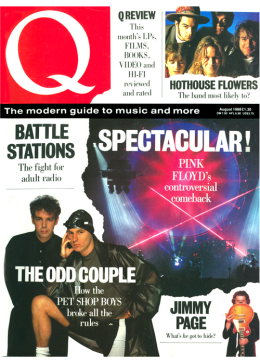 September 1988, I’m browsing through a newsagent in Boston and a magazine catches my eye – “the modern guide to music and more:” Pink Floyd and Hothouse Flowers on the cover of a glossy, full of photographs and jam packed with reviews. It was love at first sight – Q magazine, a UK based music mag that I have bought religiously for the past 32 years. Founded by Mark Ellen and David Hepworth, who had made Smash Hits required reading for my generation (until we decided it was too teenybopper), Q was the antidote to the music weeklies – NME, Melody Maker, Record Mirror, Sounds – which I had grown up with, but, by then was tired of the “cool cynicism” of the reviews, the relentless pursuit of the next big thing (Zig Zig Sputnick – anyone?). Q was great – it carried articles on modern groups like the Blue Nile, Prefab Sprout, the Sugarcubes, Morrissey, U2, Tracy Chapman, REM, Nina Cherry, Bjork, Simply Red – alongside articles about Sting, Dylan, Bowie, Mark Knopfler, the Rolling Stones, Paul McCartney etc. There were reviews of books, movies and hi-fi. Albums received between one and five stars (the latter was a a rare event in the early days; I remember a particularly embarrassing 5 star review of Terence Trent D’Arby’s at best 2 star sophomore recording). There were funny articles such as “who the hell does…..think he is.” My favourite was an article about “euphemisms in rock music” – where terms like “split because of artistic differences” was translated to “broke up over lead singers’ heroin habit.” I still have a pile of those early issues – albeit the music taste now looks a bit staid. The mag was thick – roughly twice the size of recent iterations. Of course, the quality dropped off: the movies were spun off to Empire, and a second, and better magazine, MOJO, picked up the classic rock features.
Fortunately, Q jumped on the Britpop bandwagon early – starting with features on Inspiral Carpets, James and the Stone Roses (whose debut album only got 3 stars!). The magazine then became champions of Suede, Elastica, the Charlatans, Blur, Pulp, Radiohead, Oasis etc. and the audience for those acts stayed with the magazine through thick and thin. Unfortunately this resulted in one or both of the Gallagher brothers or Paul Weller appearing on the cover (what appeared to be) every second month.
A strong competitor emerged in about 1990 from the NME stable – Vox magazine – that was slightly more contemporary than Q, but less teenager focused than Select. Vox disappeared in about 1997, to be replaced (directly or indirectly – I’ve never been sure) by UNCUT, which exists to this day. UNCUT combined the best bits of Q (relatively modern – but not the NME), and MOJO (retromania) while exploring other fields of music that had been ignored by the UK music press – American indie and alt-country – nowadays referred to as “Americana”. Somewhere around 2003, Hepworth started “Word” magazine – which combined the best of all of those mags (a little light on reviews, mind) and could be read from cover to cover: it was the best music mag of my lifetime, now sadly gone. NME bit the dust a few years ago; Record Mirror, Sounds, Melody Maker, Select, Vox – are all in the music press graveyard.
Q pioneered modern music lists (yes I know NME and Rolling Stone were doing this since the 60s), particularly the end of year “best albums” – which I have religiously followed since the 1980s. This morphed into the “120 greatest stories in rock n roll” – “250 best albums of Qs lifetime” – “1001 Songs” “100 greatest frontmen” (inevitable Liam Gallagher cover), “Artists of the Century,” “the 50 most exciting tunes ever!” etc. etc. All great fun.
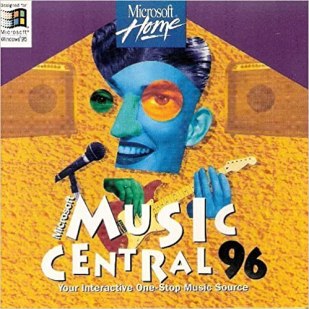 The most valuable commodity in Q was the review section. Because the magazine coincided with the CD era (hence it’s name – cue literally), everything that was re-issued on CD was reviewed. As a result, by the mid 1990s they had a massive archive of reviews. This was before the All Music Guide was fully operational online (it was still in book format then). Microsoft came calling and licensed the reviews for “Music Central” (a CDROM product that sold for about £75) – which meant that you could call up the reviews on most popular recordings on your computer – at home – so convenient!
For many years I bought Q, UNCUT, MOJO, Word and Record Collector until there was a domestic revolt regarding the towers of magazines that were piled up all over the house (it was so hard to throw them out – there were articles that I might read – someday). I went into music mag detox about 4 or 5 years ago – coinciding with the marked deterioration in the quality and quantity of rock based recordings. I took out a digital subscription to Q (along with Prog, Hifi News, Absolute Sound, Stereophile, Sound and Vision, Long Live Vinyl, Downbeat and Jazzwise – all for about the price of a years’ hard copy of any of the music mags). I must confess, I did not enjoy the style of modern Q: it lacked humour, was a bit fawning, didn’t really introduce me to any new bands – it was – honestly boring. From the early 2000s they started draping scantily clad female stars on the cover, that reeked of desperation. And how many articles can you write about the goddam Gallagher brothers (who haven’t released a decent album between them since 1995)? However – I read the reviews religiously (nearly everything seemed to get 4 stars – virtually nothing deserved that score). The reissues section became embarrassing – two pages and not worth reading.
Next week, Q will release its final final issue (the last one looked pretty final). It really represents the end of an era. Q’s generation X readership has lost interest – hardly any stadium filling bands have emerged in the 21st century. We have been waiting for the new Stone Roses album for 26 years. The process of identifying oneself with the kind of music you are “into” seems horribly anachronistic (remember “heavy metal”, “ska”, “punk” etc). It would be an awful shame if those 34 years of reviews and articles are forever lost to music kind. Scribd or an equivalent media salvage site should license all of the back issues (and do the same for all the other UK music mags with mediocre websites (look at Rolling Stone guys) – so that they are searchable: I would definitely buy a license.
So long Q, old friend, I am praying that you brother (MOJO) and cousin (UNCUT) last a few more years.
 audioexchange