
$1000 to listen to jailbreak* your own music
Three decades or so ago, Sony (principally but not exclusively), became so paranoid about people copying music from each other that they hobbled and, frankly destroyed really exciting audio products that they developed/marketed: Digital Audio Tape (DAT), MiniDisc, Digital Compact Cassette (Philips), Super Audio CD (SACD), Dual Disc, DVD-Audio and Blu-Ray Audio. Serial copy protection or just plain copy protection was hard coded into each of these products – and many of them, I believe, bombed as a consequence. A completely moronic attempt at CD copy protection – nearly wiped out the only successful new physical musical medium in the past 50 years.
Folks – people who buy physical product these days are not criminals. They would like to rip their digital audio products to hard disc so that they can stream their music around their houses, preferably before the disc either becomes unplayable or obsolete. If we buy a physical music product – we own the right to play that product. As times change, the way we listen to our products change also. Hardly anyone I know has a standalone CD player in their home (I don’t even have one in my car) and go and try and find a CD or DVD/Blu-Ray/UHD Blu-Ray player in your local electrical store: you might find a dusty one in a corner somewhere. The physical disc era is OVER. People keep their CDs in boxes in their attics these days. Maybe – in 20 years time – people will get all nostalgic about (low resolution) DVDs or Blu-Rays – but there is a big difference resurrecting digital discs versus vinyl records: the latter is simple technology – virtually anyone with a bit of mechanical knowhow could start making turntables today. Do you really think that anyone will be making decks in 20 years time that will play your SACDs? Don’t believe me. Ok – think about those 3D Blu-Ray discs you may have bought in the 2010s: do you still have a TV and disc player that support those products? Even if you still have the TV – do you know where the 3D glasses are?
Fortunately, it is relatively easy to extract the digital data from DVD-A and BR-A discs. SACDs – that’s a different story. A couple of methods have been developed to extract the ISO image of SACDs using the Playstation 2 (original firmware) and later the Oppo-BD105 (good luck getting one – Oppo pulled out of the digital player market a couple of years ago – despite making the best consumer Blu-Ray players), and a variety of other BluRay players (listed here). I have a couple of Oppo players – an early 2000s DVD and the BD95EU (can’t rip discs) players and a couple of Sony Blu-Ray/UHD BR players – all of which will output the DSD layer to a home cinema amplifier (the Sony ones anyway). This is really frustrating for me as home cinema amplifiers are generally not audiophile products. Most pre-existing SACD players or Universal players (including my own) – do not have the same quality in-built digital analogue converters (DAC) as one would find in a high quality standalone DAC. As many audiophiles, these days, and most into the future – are or will be streaming music through their DACs, it is infuriating that their potentially fantastic SACDs are locked into the ludicrous Sony/Philips copy protected universe of 20 years ago. Surely somebody, anybody, would produce a box that would take the encrypted DSD (or DVD-A or BR-A) data from the universal disc player (from the HDMI output) – strip off all of the useless blocking code – and then send the bitstream out to a DAC using the optical output.
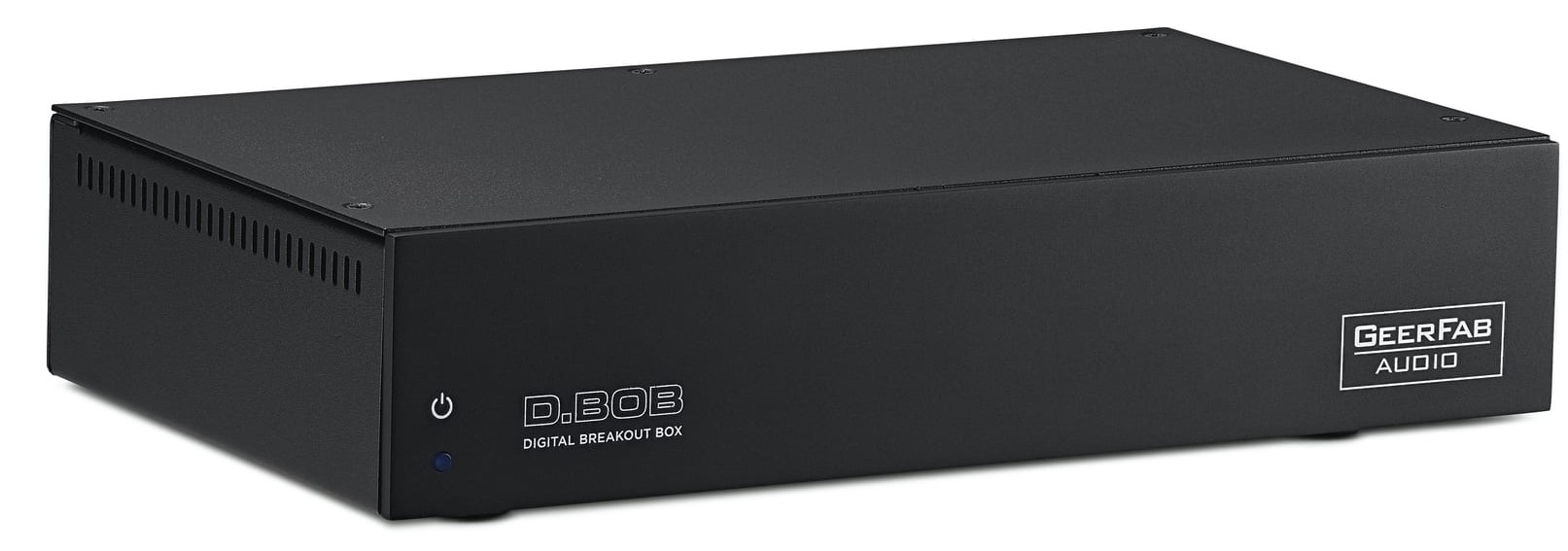
Thankfully somebody has. Unfortunately it costs the same as a high quality home theater amplifier. The product is the Gear Fab audio digital break out box. Price $999. The device outputs standard DSD64 via the DoP protocol and PCM up to 24-bit/192Hz through S/PDIF coax (and up to 24-bit/176kHz through S/PDIF Toslink outputs) to an external DAC. This is all you really need. Is it legal? The company claims so – and frankly who actually cares. So few people have SACDs – and, let’s face it, if you really wanted to steal high resolution digital music files – I’m sure that it wouldn’t cost much to capture high res streams from Qobuz or Tidal or go to a dodgy download site. The Napster/Home Taping is killing music paradigm died long ago when Alex Ferguson was still managing Man Utd, Donald Trump was a reality show star and David Cameron hadn’t yet become prime minister. In fact – this product and it’s clones could breathe new life into the SACD market – as audiophiles and physical product lovers may be more likely to pick up new titles from Analogue Productions, Mofi and other audiophile labels – if they could actually hear the sound quality.
Geerfab has certainly filled a hole in the market – created by Sony/Philips – who must bear some responsibility to ensure that customers who have bought SACDs/Blu-Ray Audio discs can actually access the music that they have bought – for the duration of their lifetimes. The decent thing, of course, would be to allow owners to register their discs with Sony, and for the company to give us download links to our DSD files – a bit like the downloads that come with Vinyl records. I’m not holding my breath on this. In virtually every consumer electronics market, Sony has produced outstanding products (Vaio computers, electronic books before the Kindle or Kobo, all kinds of Walkmans, excellent headphones and hi-fi etc.) and still managed to shoot themselves in the foot. Just look at this range of products – mouth-wateringly gorgeous – but you will hesitate and wonder what they have done to screw it up (the price the price the price).
The product is reviewed here and and is an Absolute Sound product of the year.
*You are only partially jailbreaking the music – you still can’t copy it to a hard drive with this device. Of course, if you have a Sony/Pioneer/Oppo/Denon Blu-Ray player that’s a few years old, you could – and I’m not promoting illegal activity here – consider using it for ripping your SACDs for your own use – using the information published here.
 audioexchange