
Tina Brooks – Tone Poet – ‘Bout Time
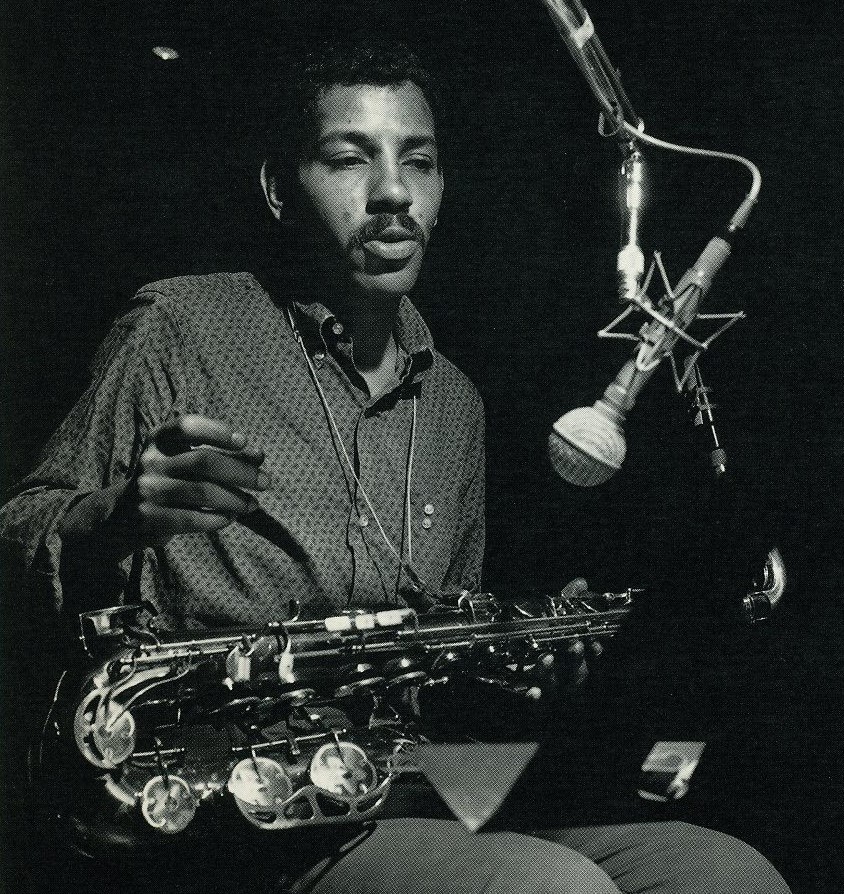
The history of 1950s and 1960s jazz is littered with horrible stories of gifted musicians whose lives were blighted by opioids and alcohol. Some lived to produce great artworks – Dexter Gordon, Art Pepper, Hampton Hawes, Miles Davis, Stan Getz, Grant Green. Some made minor comebacks in the 1970s – Frank Morgan. Others vanished into the mirth. Tina Brooks was one such musician. A phenomenal tenor saxophonists – whose lyricism and light tone is instantly identifiable. He had many outings as a side man, easily melding into the leaders framework, complimenting rather than competing. Brooks suffered the indignity (and poverty) of having most of his recorded output shelved for decades and would have remained a footnote in jazz history were it not for Michael Cuscana.
Born in North Carolina in 1932 – Brooks (nicknamed Tina – for, presumably “Teeny” or “Tiny”) spent part of his adolescence in New York, but was badly bullied due to his nerdy and shy demeanor, so he went back to Fayetteville until 1949. As an adult, he returned to New York and started working as a professional musician. Like all saxophone players of the era, he would have been influenced by the deep bluesy tones of Lester Young and the lyricism of Coleman Hawkins. Brooks played R&B and jam sessions in jazz clubs developing a prototypical blues based hard bop sound. He eventually found work as a sideman for Blue Note – particularly on recordings by Jimmy Smith and Kenny Burrell – between 1957 and 1960, having been introduced to Alfred Lion by Benny Harris.
Brooks’ first Blue Note album, Minor Move, was recorded in 1958 and featured an all star cast – Lee Morgan, Sonny Clark, Doug Watkins and Art Blakey. It is a great record – that was mastered, sequenced, liner notes written, artwork produced and – shelved for decades. Why? Nobody seems to know.
Two years later, Brooks led another session – that featured Freddy Hubbard – then 22 and the bright young thing of Blue Note. The album “True Blue” was released – but does not seem to have been promoted to the same extent as the very well known “Open Sesame” session, recorded 7 days earlier, with Hubbard as the leader. Brooks provided solos and two of the seven compositions in that album. To my regret – I did not buy “True Blue” from Music Matters (although it is still available for $100). But, after hearing the 24/192 version on Qobuz, I rushed out and bought the 1984 Mosaic 4LP Tina Brooks box set (that contains all four of his Blue Note albums).
Brooks recorded two more albums for Blue Note: “Back to the Tracks” (recorded in 1960) and “The Waiting Game” (recorded in 1961). Both albums shelved and forgotten in the Blue Note vaults, until Michael Cuscana went digging in the the 1970s.
Few jazz musicians from the late 1950s and early 1960s got to record for Blue Note. “True Blue” could and should have made Tina Brooks a major league jazz musician. Had he been treated better by the company, perhaps – just perhaps – Brooks may have attained the legendary status of Joe Henderson or Dexter Gordon. But that was not to be, and the likely cause of his demise was heroin. It would be easy to imagine a movie made about Tina Brooks’ life – a tragedy of course – Tina, shuffling into the Blue Note offices – asking when his records would be released, trying to scrounge some money to eat or get a fix. For a musician – record releases are more than just a product, they are a reputation. To a club owner, having an album out from Blue Note would be an endorsement of quality, likely to ensure bookings. With two albums on the shelf including -the astonishingly named “Waiting Game” – well, that would have to wait until well after Brooks died, of renal failure and cachexia – in 1974: 13 years after his last recording.
Fortunately, the endlessly excellent Tone Poet series has now issued two of the four Tina Brooks albums – [Minor Move and The Waiting Game] really the first time that they have been widely issued on vinyl. And boy have Joe Harley, Kevin Gray et al outdone themselves. I am unlikely to ever own an original 1950s or 1960s pressing of a Blue Note album – but, in these cases, I have the “original:” the Mosaic box set. Now, it must be said, in 1984 these Mosaic boxes must have looked amazing – but today they are 140g records with ugly (non Blue Note) labels in a flimsy box. The sound, however, is excellent: true audiophile AAA pressings in relatively small batches (7500). I have often listened to all of the Brooks’ Mosaic records – they are well balanced, clear (without the digital edge) and pleasant to listen to. However, compared to the Cohearant versions – in gorgeous glossy covers – well it is no contest. The Tone Poet albums are louder brighter bigger – just – fabulous – deep and wide soundstaging, clear instrumental separation, just excellent. Every decibel of dynamic range has been squeezed from these (likely) pristine tapes (no wow and flutter). I really hope that “Back to the Tracks” gets a TP release and “True Blue” gets the 80th anniversary treatment.
The upcoming Tone Poet releases for 2021-22 are listed below. I am very excited about the Pacific Jazz releases (particularly Katanga by Curtis Amy – been trying to source a copy of this for years). Thankfully only one Art Blakey release. At last some Art Pepper – unfortunately it is Playboys/Pictures of Heath – which is great – but there is already a nice version available on Pure Pleasure.
March 12, 2021
- Charles Lloyd & The Marvels – Tone Poem (Blue Note, 2021) warning – digitally mastered – no better than the ususal BN Charles Lloyd release but €20 more expensive.
May 7, 2021
- Dexter Gordon – One Flight Up (Blue Note, 1964)
- Andrew Hill – Passing Ships (Blue Note, 1969)
June 4, 2021
- Art Blakey & The Jazz Messengers – The Witch Doctor (Blue Note, 1961)
- Curtis Amy & Dupree Bolton – Katanga! (Pacific Jazz, 1963)
July 9, 2021
- Sonny Clark – My Conception (Blue Note, 1959)
- McCoy Tyner – Expansions (Blue Note, 1968)
August 6, 2021
- Lee Konitz & Gerry Mulligan – Lee Konitz Plays With The Gerry Mulligan Quartet (Pacific Jazz, 1953)
- Wayne Shorter – The All Seeing Eye (Blue Note, 1965)
September 10, 2021
- Joe Pass – For Django (Pacific Jazz, 1964)
- Stanley Turrentine – Rough ‘N Tumble (Blue Note, 1966)
October 8, 2021
- Sonny Red – Out of the Blue (Blue Note, 1959-60)
- Grant Green – The Latin Bit (Blue Note, 1962)
November 5, 2021
- Hank Mobley – Curtain Call (Blue Note, 1957)
- Jackie McLean – Tippin’ The Scales (Blue Note, 1962)
December 3, 2021
- Gerald Wilson – Moment of Truth (Pacific Jazz, 1962)
- Freddie Hubbard – Breaking Point! (Blue Note, 1964)
January 7, 2022
- Kenny Burrell – Kenny Burrell (Blue Note, 1956)
- Grant Green – Feelin’ The Spirit (Blue Note, 1962)
February 4, 2022
- Harold Vick – Steppin’ Out (Blue Note, 1963)
- Bobby Hutcherson – Stick Up! (Blue Note, 1966)
March 4, 2022
- Chet Baker & Art Pepper – Picture of Heath (Pacific Jazz, 1956)
- Blue Mitchell – Bring It Home To Me (Blue Note, 1966)
April 1, 2022
- Donald Byrd – At The Half Note Cafe, Vol. 1 (Blue Note, 1960)
- ScoLoHoFo (Scofield-Lovano-Holland-Foster) – Oh! (Blue Note, 2002)
 audioexchange