
(Not) from the Original Master Tapes
While I was away on vacation devastating news arose that will long have a massive impact on my life and psyche: no I wasn’t the dethroning of Boris Johnson, Ireland winning a test series in New Zealand, Wildfires across Europe, revelations in the Jan 6th Inquiry, the strange tripartite relationship between Russia, Iran and Turkey, Jen and Ben getting married – no it was the revelation that Mobile Fidelity have been using digital sources for their major releases for several years. HOW AM I SURPRISED?
Recall a couple of months ago I discussed the forthcoming one step release of “Thriller” where MOFI is planning on releasing 40,000 one-steps – requiring the manufacture of up to 200 acetates. Clearly there is no conceivable way that Sony were going to allow their most valuable master tapes get slung across an old Ampex machine 200 times. Something didn’t smell right. Surprise – they are using a DSD copy of the master tape as the source: now cutting lacquers is easy peasy. This is now confirmed – MOFI – have been not so subtly deceiving us for years. Their one-step greed is revealing the Emperor’s new clothes.
I have about 40 MOFI albums – Miles Davis, Bob Dylan, Elvis Costello, Allman Brothers, Santana, Cars, Tears for Fears, Derek & the Dominos, Carole King, Little Feat, Pixies, Weezer etc. These were sold to me, and others, as super audiophile numbered limited edition high quality (often half speed mastered) vinyl records from the original master tapes (OMT). The assumption that I made, and I presume virtually everybody else did also, was that the entire production process was all analogue (AAA). These were all premium priced products; otherwise why are these in any way different from Waxtime versions of the same releases (cut from a CD derived from the Original Master Tape)?
Just to say this – and with all honesty – I never thought that these MOFI releases sounded all that great – particularly in comparison with Analogue Productions releases of similar material (SRV, Bill Evans etc.). The One Step of “The Nightfly” – which everybody in the world knows was from a digital source (and admitted to by MOFI – although there was a whole digitally recorded transferred to tape nonsense discussion at the time) – sounds amazing – but everything else has been a bit…meh. The MOFI version of Layla was the subject of a group test on this blog a while ago – and it came out on top – but that was due to packaging rather than sound quality – and I still prefer that surround layer on the original SACD. Nevertheless, I presumed that MOFI records, due to their limited editions and mastering chains would be considered collectable and valuable in the future. Now I’m not so sure.
Why did it believe that MOFI releases were AAA? I have gone back to the MOFI website and their inserts: “First and foremost, we only utilize first generation original master recordings as source material for our releases.” Above this they boast that the “The GAIN 2 Ultra Analog™ system is comprised of a Studer™ tape machine with customized reproduction electronics and handcrafted cutting amps that drive an Ortofon cutting head on a restored Neumann VMS-70 lathe.” Anybody reading this would assume that the Struder tape machine was used to play the First Generation Master Recording to deliver signal to the lathe. This is not the case. What appears to be happening is that the engineers digitalised the original master tapes (did they even have access to these tapes?) at DSD256 and used these digital files as the source of the One Steps in particular. Hmmm.
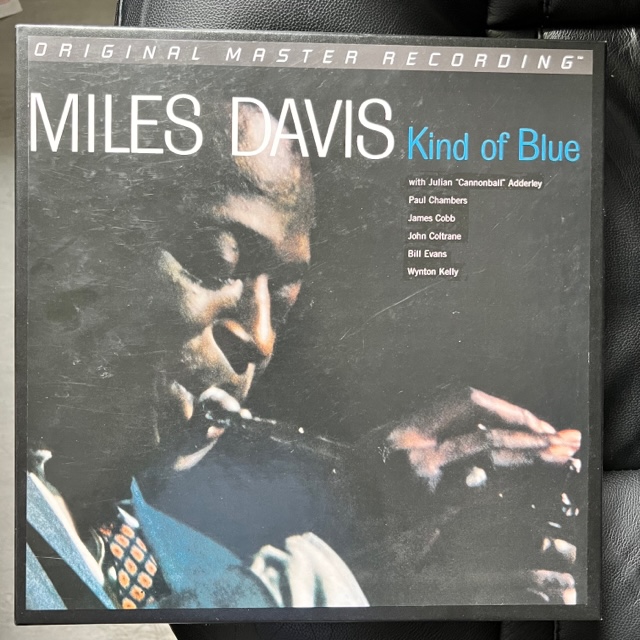
Not long ago, with a friend, I did a multi disc comparison between the Acoustic Sounds (Classic Records) version of Kind of Blue and various other copies – including the MOFI (which I bought off my colleague). I’m looking at it now (see picture). The cover of the box states “Original Master Recording” – which it absolutely is not (it is derived from the Mark Wilder remix). On the back cover the mastering notes mention the “Gain 2 Ultra Analog System.” You would assume that this means AAA (but it doesn’t actually say that). This version almost certainly was derived from a DSD transfer of a fold-down from a non original master. Indeed, it is likely no better (and certainly doesn’t sound better) than the £5 DeAgostini magazine copy from the same master. An the numbering is hocus pocus – as the acetates were cut from a digital file – there is absolutely no limit to the numbers that could be pressed (just limited by Sony License).
For years I have been reading the Better Records blog (The Sceptical Audiophile) – which I find quite entertaining – remembering that they are in the business of selling “Super White Hot Stampers” of original pressings. Much of the blog involves Tom Port ranting about why MOFI records are lousy and he really does not like their Half Speed Mastering Process.* It has bothered me for some time that Miles Showell has been cutting a variety of records at Half Speed at Abbey Road Studios and has been up front about using digital sources. There are numerous interviews with him on the internet and magazines where he describes in detail the processes – and he explains how he is able to get that great half speed treble extension without sacrificing bass. Moreover, he states categorically that he has access to the original master tapes (an is well capable of cutting all analogue) but chooses to use a digital file (that he may or may not remaster) to use in the half speed cutting chain. He digitalises the tape running at half speed and uses a variety of corrective approaches to ensure that, when sped up, fidelity is maintained. The records all sound pretty good – but I still find them a bit bass light. If Showell has to use digital files – how are MOFI able to do the same thing on the fly with all analogue. Now we know – they don’t.
So, MOFI use DSD as their mastering source. Big deal? Rolling Stones 2010s vinyl reissues came from DSD and they sound great (and were priced at <$20). I have loads of records that were recorded digitally and pressed onto vinyl that absolutely destroy most of my all analogue records. Practically everything released by Blue Note in the last few years (the Charles Lloyd and Bill Frisell material in particular) has been high res digital (24/96) onto vinyl. The digitally recorded Venus Hyper Magnus Sound records sound extraordinary. But, so do the SACDs. And speaking of SACDS – if MOFI are using DSD256 as their source material – why the hell are they still releasing DSD64 discs? That is like releasing a 24/96 file as an MP3 and charging a premium price.
MOFI also release “Silver Label” records. They are generally less expensive that the Original Master Recordings. The spiel on Discogs is: The Silver Label titles are pressed on standard weight vinyl (about 140g-150g). The majority of Silver Label titles are sourced from the original tapes, there are some exceptions where the best available source is used. Digital sources are not used except in cases where the title’s original master was digital itself.
I found this on Uebervinyl website: Whereas the Original Master Recordings always uses only the original master tape, for the Silver Label Mofi will also accept good copies of the master tape. This may be necessary if the original tape is lost or damaged. More and more often the labels will be either offered digital files or copies of the original tape. For example, when the original tapes are not allowed to leave the record companies’ vaults for security reasons. In such cases MFSL checks whether the quality of the source material offered meets the in-house quality standards. If this is the case, Mofi will publish on the Silver Label. This need not always result in a worse sound than the original tapes. Especially older master tapes, which have been used for many reissues and have been played accordingly often, do not sound as good as they should. Often the coating on old tapes partially peels off. If the sensitive tapes are not stored optimally, further damage can occur. In this case, a well stored copy of first or second generation tape may even sound better than the original.
So – if the Silver label releases don’t use the original master tape. That’s fine – so the OMT version must use it right? And if you make such a big deal of the tapes, presumably you are cutting all analogue? You would think. I have dozens and dozens of boxes of CDs and hard drives full of high res digital and DSD albums that are derived “from the original master tapes.” Practically everything on CD from major labels – comes from the OMT. My CD copy of “Milestones” from the 1980s is no different from the DSD version that MOFI used to cut the record – both are from the OM tape. This is total crapology from Mobile Fidelity. The CD of “Seeds of Love” by Tears for Fears is from the Original Master Tape (or files or whatever).
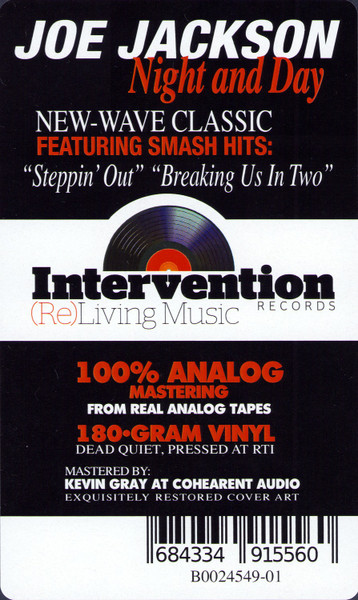
I am not an all analogue zealot – but I do believe that premium priced records should have clear provenance. Those Venus Hypermagnum records are bloody expensive – but at least I know what I am buying. This is also the case with Pure Pleasure, Speakers Corner, Analogue Productions, Impex and others. I love this comment from the Intervention Records Website: “Premium vinyl reissues are expensive to produce and they cost our customers real money. Customers have a right to know what they’re buying! Our commitment to transparent sourcing means that we will always reveal the exact source material used for mastering and who the mastering engineer is, who pressed the records and who printed the jackets.” And they do (see picture). – and a couple of their records are derived from digital sources. They sound great.
It is often said wine snobs cannot really tell the difference between plonk and grand cru. The same may be the case for record buyers. I am not certain that I can tell the difference between an album that has been carefully mastered all analogue from one that is derived from a digital source (particularly DSD). However, if I go into a wine shop and I see a bottle of Bordeaux for €20 and beside it a bottle for €50 – with fancy Appellation claims – I am going to assume that the more expensive bottle is considered to be a better and more valuable wine. If I pay $100 for a copy of “Kind of Blue” – I am going to assume that it is better than the $20 version. Now we know that the fancy schmancy MOFI version was digitally sourced and the cheap record store day copy was actually the true audiophile AAA version.
Is this the beginning of the end of the vinyl resurgence? I wonder. Certainly it will make me think twice about putting down a lot of cash for records that I believe will be highly collectable in the future.
*According the Michael Fremer, MOFI stopped half speed mastering some time ago but didn’t tell anyone .
UPDATE
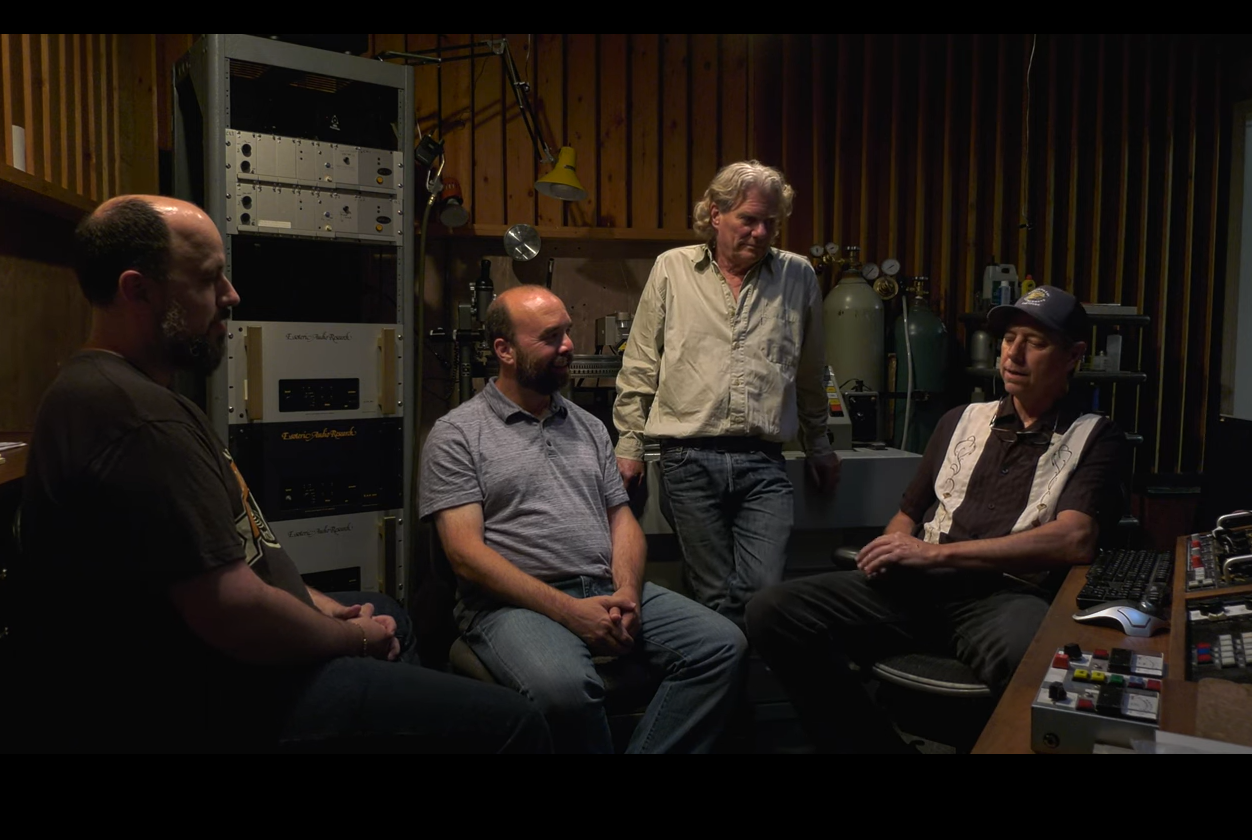
The In Groove guy interviews the engineers at MOFI.
I have previously posted my opinions on digital sources on vinyl – and why we are all suckers buying these records. I have also posted on quality control issues with new release vinyl. I also whined about the price of vinyl and the poor quality presentation.
 audioexchange