
I have spent six weeks in the company of the Bluesound Node. Having gotten over the disappointment of 1. not being able to output 24-192 to my Benchmark DAC 2 & 2. The absence of DSD decoding. I have been using the Bluesound exclusively to stream 24 bit files from my server and CD-Resolution streams from TIDAL. Overall, I have been quite pleased with the device – using analogue outputs the sound is bright and open – probably audiophile. However, the app has been driving me (partially) insane. I have a maybe 6000 high resolution files in my library, and I have spent countless hours having to re-tag virtually everything.
The first and most annoying thing about the Bluesound app on the iPad, is that, when first used half of my album art did not appear on the albums. I must point out that I had already art-tagged all of the art-empty files using MUV-Under cover, and the art appears on (the annoyingly flakey) J. River Media Centre. On many of the albums – remember these files can be up to 200 mb, there was a message “album art too large.” I have used Sonos for years – and it sucked in files and spat out album art regardless.
So I went to the Bluesound forums and found that if album art is more than 600kb in size then it rejected. So, I went back to the albums, stripped out the album art, then re-arted the files with <100 kb artfiles and re-indexed. Guess what? Same problem. I then discovered, that the Bluesound is actually quite lazy – it goes to the folder containing the album looks to see if there is a cover.jpg or folder.jpg file and uses that as the artwork, rather than what is embedded in the file. As HDTracks downloads often contain high resolution artwork – this appeared to be the problem. So I took all of the cover.jpg images and resampled them downwards, re-indexed and…guess what: same problem. So I then deleted all of the folder.jpg files (often there were both), reindexed and it worked. Have you any idea how long it takes to redo high resolution artwork files over a home network – ages! The other issue wit the blue sound is the 120,000 other 16 bit files that I have on the other server – it would be nice to use the Node as my only streaming device for my main system. This is not going to happen for 3 reasons:
1. The artwork issue – I would be suicidal.
2. There is no way to have separate libraries for High Resolution and Normal Resolution files.
3. Artwork display is extremely slow: when you scroll on the Bluesound app, the artwork pictures pop-in (from blank to art) which is really annoying. My old Sonos remote (5 or 6 years old) displays 20 times the number of cover images (albeit in thumbnail) without this problem. Hell, the Squeezebox app did a better job…
Anyway – it is working well now. The device works well – but I don't see it as my longterm: I would give the device 6/10, and the app 6/10 also (Sonos 9/10, app 9/10 but no high resolution).
Glyn Johns – Sound Man
•January 29, 2015 • Leave a Comment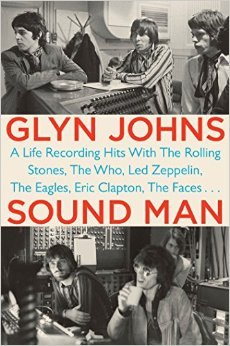 I have now read 3 autobiographies by recording engineers who got their start in Beatles era London: Geoff Emerick, Ken Scott and Glyn Johns. Of the three, Johns had the most interesting career – involved with the Rolling Stones, Beatles, Small Faces/Faces, Jimi Hendrix, Led Zeppelin, The Who, The Eagles – both as engineer and producer. So, I spent the last few weeks reading his autobiography “Sound Man”. Simultaneously I have been reading “Creation Stories” by Alan McGee. Guess who I would rather go out for a pint with? McGee of course – his book is one anecdote after another about a life of drugs, drugs and rock ‘n’ roll, followed by a little salvation. John’s book is a story of transatlantic travel, no sex, no drugs and a lot of rock ‘n’ roll. Strange, like Ken Scott, John’s career seems to have stalled in the 1980s – probably because they forgot how to make decent records then, but had a small resurrection in the 2000s – as retromania brought back nicely balanced well recorded (not overproduced) folk-country-rock. I thought McGee disappeared with Creation records, but – of course, he has had a great afterlife as a manager – in particular of the Libertines. In the McGee biography, all of the characters come across in 3 dimensions, we marry Yvonne, divorce her – his fault, he meets Kate, it works, he has a bromance with Bobby Gillespie etc etc etc. Glenn Johns worked with, arguably, the most successful and notorious artists of the vinyl era and all we learn was – that he set up drums for recording really well, and that Ian Stewart was a hell of a nice guy. Surely he prevented Keith Richards from choking on his own vomit in the studio at least once!
The Geoff Emerick book brought us inside the Beatles, their personalities, Yoko, their recording sessions. He may not have been the most interesting of characters – but he made the book interesting. Ken Scott’s book was full of technical details and enthusiasm for the recordings – I just had to dig out my copy of Supertramp’s “Crime of the Century” to hear what he was talking about. Glyn Johns – well there could have been just a little more detail. I enjoyed the book, but it reads like you’re having a cup of tea with an old codger who doesn’t want to upset anybody – it is all very “stiff upper lip”. I never quite got what made him so special that he became the engineer for the Stones and the producer for the Eagles (the records speak for themselves). Anyway, the book isn’t bad, just a little bit boring…..read McGee first
Will CDs be blown out in a TIDAL wave?
•January 26, 2015 • Leave a CommentIn 1999 I ripped my CD collection to “CD quality (!)” 128kps MP3. There was no option for storage, then, so I copied the files, laboriously, to CD-R – and subsequently, in 2001, to a 100GB hard drive. In 2008, I re-ripped my, now vastly expanded, CD collection to apple lossless (not flac – about that in another post). At this point, I have about 3TB or so of (legal) music files. Unfortunately, due to a series of hard drive failures, I have come close, several times, to losing the lot (the worst was a 4TB WDSHARESPACE RAID which completely died on me forever denting my belief in single backup storage). Now, in addition to the network streaming drive, I keep 2 backups (I think I have spent more money on storage than on music in recent years). A couple of weeks ago, for no apparent reason, my most up to date music backup drive died and I had to copy everything back from network to USB HDD. I took 10 days. In the process files got lost, files failed to copy, files got corrupted etc. Then, of course there is the problem that due to it’s 68,000 file limit – half of my CDs (and all of my 24 bit music) cannot be played on my Sonos system. So, one of my major jobs for the new year has been to thin out my shared music folder and remove enough stuff so that I can fit in the best music of 2014. This is strangely sobering. Suddenly one questions those 50 CD box sets of classical music, jazz or blues. The 8 CD set of the Velvet Underground – or the 24 CD set of King Crimson’s “Red” album. Even the bonus disc that comes with Deluxe Editions may need to be jettisoned. All in all, there are a lot of CDs in a box in the attic that are doubly superfluous: not even good enough for the Sonos library.
Another strange phenomenon concerns vinyl. I decided a couple of years ago to buy new release vinyl rather than CDs. Sounds great, but when I finds one of these records in a pile – while looking for something to play – my attitude is – do I really want to commit to 20 minutes listening to one side of this mediocre record, knowing that I will have to get up off my ass to either change it over or switch it off?
So, it seems to me that I am buying too much music about which I am utterly ambivalent. I sometimes wonder if I am keeping the music industry alive, single handedly. Perhaps I need to get over my generation’s attachment with physical products. My brother, 12 years my junior, has no books, CDs or records – and seems to keep his whole life in cloud storage. He can travel around the world like Jack Reacher, only carrying a tablet and access and stream everything over the internet. I spend my life worrying where I am going to store all my media and books!
I have spent the last few years in a semi love affair with Deezer (I didn’t really take to Spotify). But at the back of my head there was always the feeling that the sound quality was only ok, not hi-fidelity. Now that delusion is shattered – TIDAL has arrived in my neighbourhood, and they are streaming in 1411kbs Flac: essentially what I have on my server, except – instead of a 68,000 track library – they have 25 million tracks.
So, how is it? First things first – TIDAL is up against the really excellent Deezer mobile and Sonos apps – which work brilliantly – and costs me €9.99 a month, TIDAL is €19.99 a month (although they claim that they pay the artists more). The iPAD and iPhone apps worked well, but – no Sonos app. I spent, literally, hours trawling through the internet – specifically the TIDAL and Sonos websites, looking for the app and couldn’t find it. It appears that the app has not been even beta released in the irish version of Sonos. I had better luck with bluesound. TIDAL connected, eventually, to my Bluesound account and I was able to stream. I listened to the new Waterboys album, sounded good, and ran through a few old favorites. Overally, TIDAL looks like a winner. No sign of Deezer Elite here yet – so, if TIDAL fixes my Sonos connection, it will be goodbye to Deezer (for the time being at least). The big question for me follows: if I can stream CD quality music, as part of a subscription, then why buy CDs? I decided a decade ago to stop buying CDs when Rhapsody arrive, along with SACD and DVD-A. But, as 24 bit was not ready for primetime, then, there were few releases, and offline playing of Rhapsody was poor. Everything has changed now. Virtually all new releases now come out in desirable vinyl, many are also available in 24 bit. The CD, usually cheaply packaged now in thin cardboard, without bonus or interactive content, seems – archaic. Importantly, when “push came to shove” in my own library – most of those “Original Artist” series CD multipacks got jettisoned.
David Epworth is famous for saying that most bands only release 12 good or great songs (all in their greatest hits collection). I would argue that most bands only release 2 good albums. Luke Haines states that you have 10 years to write your first album – it needs to be brilliant – and then only 6 months to write your second. Hence, few of the OAS sets feature more than 2 CDs that you would be bothered to listen to twice.
The artwork on CDs, as opposed to vinyl, has never been worth the purchase price. In the near future, in addition to streaming full resolution files, your iPad screen will feature the album art, front back and gatefold, the lyrics, reviews, editorial content, music videos, interviews with the artist, historical context, chart placings and other trivia. This material is already there, it just needs to be consolidated. Physical formats, with the exception of Vinyl, will be dead forever.
The Bluesound System, excellent – but with a major caveat
•January 26, 2015 • Leave a CommentI have a happy history as a user of (all of) Sonos products, but have been long been frustrated by the company’s lack of support for high resolution files and also by the file number limit. I have filled the void, for the last 3 or 4 years with a Squeezebox Touch. This was an excellent product that combined a 4.5 inch touchscreen with a phone/tablet app and remote control. The Touch had 2 limitations: 1. 24 bit recordings were limited to 96kHz (many are now released with 192kHz) and 2. The requirement to have Squeezebox server running on your computer.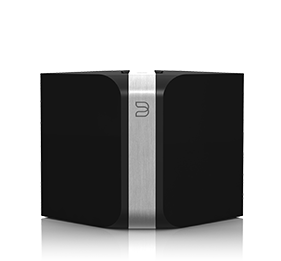
The Bluesound node appears to be an elegant alternative to Sonos: it supports high resolution playback, is part of a multi room wireless playback system and comes under the umbrella of the parent company of NAD. As these products are not sold by high street retailers, having read very strong reviews – I plumped to buy the Node (the equivalent of the Sonos Connect – a device that attaches the Bluesound system to external amplifier or DAC)– sight and sound unseen. Here are my views:
1. Price – the Node is significantly more expensive than the competing Sonos Connect (ZP-90). However, it does support high resolution files, and, frankly, as a newer product – the sound from the analogue output is significantly better than from that from the Connect. However, compared with similar products (network streamers) from other companies (Naim, Linn etc)– it is quite an inexpensive product.
2. Unboxing – I was surprised by the size of the Node – it is a comparatively large product considering that the box is likely rather empty. I am not sure why Bluesound did not build the product 30% of the size or make it flat to fit alongside conventional hi-fi equipment. It is a moderately large (imagine a cube made up with 6 compact discs with curved edges), shiny black or white, plastic cube – and neither cool nor attractive.
3. Connections – the major plus is that the Node supports USB sticks – so you can plug in music files to your system. The major negative is the absence of S/PDIF digital output (only a Toshlink connector is present). I will get back to this. Unlike the Sonos Connect there is no analogue (or digital) input – so you cannot connect up a turntable, tapedeck or CD player and stream it throughout the house (which is actually a handy feature of Sonos).The audio output is standard RCA phono plugs.
4. Setup – a total piece of cake. I setup the Node and connected it to my Network drive in minutes using my iPhone. Bravo – this was superb.
5. Control – these days all of these types of products are sold without remote controls (Sonos did sell a wonderful touchscreen remote – but seem to have discontinued it) – so you have to make do with smartphone/tablet or PC apps. They all work well. I much preferred the iPad to the iPhone app. Usefully, when a high definition file is selected from the library an icon appears HD (as opposed to CD) indicating this. Personally I would prefer if the library could separate out standard and high resolution files completely – so I could have SD and HD libraries. Overall, however, I prefer the Sonos app (although I have lived with multiple iterations of this app for several years).
6. Operation: the Node, connected to an external digital to analogue converter or amplifier is very responsive and the sound quality is very good. I cannot fault the quality of the analogue signal from the Node – files played back from my Oppo BD-95EU Blu-Ray player sound almost identical to files streamed from the Node. The digital interface is another issue entirely.
Virtually all high quality digital products come with two or more digital output options (usually Toshlink and S/PDIF) – this is the case with Sonos Connect (although not the Soundbar which is Toshlink only) and the Squeezebox. However, the “audiophile” Node only comes with Toshlink. This didn’t appear to be a problem for me until I tried to play a 24-192 file (the very reason I bought the product) on my Node through my Benchmark Dac II HGC – and all I heard was – nothing! It turns out the many hi-fi manufacturers are no longer supporting Toshlink above 96kHz – due to some issue with the Toshiba manufacturing process. Which make the decision by Bluesound not to include a coaxial output quite curious – I cannot imagine that it would have cost them any more to manufacture the product with such an output (even the cheapest DVD player has one), and it would have saved me from having to buy a Toshlink to S/PDIF converter.
I have read that Bluesound suggest that the best way to listen to their products is to use the inbuilt DAC, which does sound good, but this is quite a poor argument. The type of people who have significant high resolution libraries tend also to have high quality digital to analogue converters attached to their amplifiers – and would prefer to use them. I cannot say for sure whether or not 24-96 files sound better from the Node –analogue versus the Node-Benchmark-digital, but would like to choose that for myself.
So, in summary, a nice product that is altogether too large for what it does. An excellent starter device for those new to multi-room wireless audio. The sound is very good and the iPad app is excellent. An ideal high-res audio player ?– No – it is limited due to the foolish decision to output digital to Toshlink only. Better than Sonos?– significantly more expensive than equivalent Sonos devices – which probably don’t sound as good but work really well nonetheless. Right now it is my view that if Sonos come up with a 24 bit version of the Connect (and sort out the file number limit), I’ll be selling my Node on Ebay.
Albums of the Year – First Attempt
•November 20, 2014 • Leave a Comment It looks like there won’t be any new music coming out until January – so it is time for me to list my albums of the year. This is mostly to remind myself – not infrequently, as magazines publish their lists, I discover a whole host of records that I missed. With Deezer and Spotify, though, the knowledge gap is closing. So here is my list, so far – there will be additions:
DEFINITES
Felice Brothers – Favorite Waitress (great album – lousy cover!)
Kasabian – 48:13
U2 – Songs of Innocence
Hiss Golden HMessenger – Lateness of Dancers
Hurray for the Riff Raff – Small Town Heroes
Hozier – Hozier
Sturgill Simpson – Metamodern SoundsLeonard Cohen – Popular Problems
Jacob Young – Forever Young*
The Dowling Poole – Bleak Strategie
Gruff Rhys – American Interior
Lucinda Williams – Down where the river meets the bone
War on Drugs – Lost in the dream
Wyatt Funderburk – Novel and Profane
Dylan Howe – Subterranian
Ginger Baker – Why?*
New Pornographers – Brill Bruisers
NEXT BEST
Mogwai – Rave Tapes
Temples – Sun Structures
Allah-Las – Worship the sun
Robert Plant – Lullaby & Ceaseless Roar
Roddy Frame – Seven Dials
Howlin’ Rain – Live Rain
Damian Rice – My Favorite Faded Fantasy
Tom Petty – Hypnottic Eye
Rolling Stones – Fort Worth 1981
Henry Butler – Viper’ Dag
Sons of Kenet – Burn*
IQ – Road to Bones
Hans Chew – Life & Love
Angel Olsen – Burn your fire for no witness
Stephano Bollani – Joy in spite of everything
John Fullbright – SOngs
Afghan Whigs – Do the Beast
Chuck E. Weiss – Red beans and Weiss
Sharon Van Etten – Are We There?
Drive By Truckers – English Oceans
Get The Blessing – Lope and Antilope*
New Mendicants – Into the Lime
Jack White – Lazaratto
The Horrors – Luminous
Swans – To be kind
EELS – The cautionary tale of Mark Oliver Everett
Nick Waterhouse – Holly
King Creosote – From Scotland With Love
PROBABLES
Merchandise – After the end
John McLaughlin – Boston Record*
POSSIBLES (haven’t listened enough to commit)
Syd Arthur – Sound Mirror
Lana Del Ray – Ultraviolence
Johnny Marr –
Caribou – Our Love
Spoon – They want my soul
Phantom Band Strange Friend
Damon Albarn – Everyday Robots
Jim Goodwyn – Odludek
Parquet Courts – Sunbathing Animal
St Vincent – St Vincent
East India Youth – Total Strife Forever
Flying Lotus – You’re Dead
Mac De Marco – Salad Days
Pink Floyd – Endless River
UNDERWHELMING ALBUMS (they may grow…maybe)
Elbow – Take off and landing
Morrissey – World Peace
Beck – Morning Phase
Sun Kill Moon – Benji
Black Keys – Turn Blue
Neil Young – Letter Home and Storeytone
REISSUES/REMASTERS/BOX SETS
Bob Dylan – Basement Tapes Complete (bootleg series vol 11)
Deep Purple – Made in Japan (Complete) – vinyl
Beatles – Mono Box (vinyl)
Lucinda Williams – Car Wheels on Gravel Road (vinyl)
The The – Soul Mining (30th anniversary box)
Aztec Camera – High Land Hard Rain (30th)
CSN&Y – Live 1974 (live)
Morrissey – Your Arsenal (definitive master –CD + vinyl)
Led Zeppelin – Reissues – they’re all good
Pink Floyd – Division Bell (vinyl)
U2 – Songs of Innocence and pseudo shock
•November 7, 2014 • Leave a CommentIt is 5 or 6 weeks no since the new U2 album appeared magically in my iTunes account. I have never actually bought music from iTunes (who wants to pay the same amount for shitty lossy music files as you would for the CD), so it was a bit of a new experience for me. I was and am delighted. It was fascinating to read and listen to all of the contrived pseudo shock from various commentators about the “publicity stunt” or Apple gift or whatever you want to call it. There were two distinct groups: 1. artists who complained that, by giving their music away on iTunes (Apple technically paid for it), U2 were devaluing music; 2. The non fans who complained that U2 were spamming their iTunes account. Both are nonsense arguements.
Regarding the first point – virtually every band actually gives music away free – by streaming their album on their website, by allowing free mp3 downloads, by allowing Uncut or Mojo magazine to license tracks to be given away in sampler CDs each month. Moreover, virtually ANY album can be listened to/streamed for free* on Spotify or Deezer or You-Tube. Artists make virtually no money from recorded music anymore. U2 – irrespective of what Apple paid for the album – almost certainly did make money. More importantly, they have made their new album widely available to fans who may wish to pay exorbitant amounts of money to go to their concerts.
On point 2 – welcome to the modern world folks – the same people who post all kinds of private personal stuff on facebook and twitter, have GPS tracking on their cellphones, delete masses of spam from their email (on a daily basis), are exposed to masses of advertisements on every conceivable medium constantly, likely download movies and music illegally etc. etc. complain that they were given a new album, for free, no strings attached. This contrived pseudo shock is pure bullshit and the media, who are in the business of inventing news, need to give the story a rest – and Bono needs to stop apologising.
So what about the album. 1. Virtually every U2 album has had a lousy cover (“No Line” being an exception, probably also “The Unforgettable Fire”) – this one is no better. In fact it is beyond crap: Larry Mullen cuddling his boxer shorted teenage son (I much preferred Adam Clayton’s shlong on Achtung Baby). 2. Virtually every U2 album has had a lousy title – this one is actually quite good (in other words – not awful – like How to Dismantle…(pure shite). The music…..I streamed the album from my iPhone to the bluetooth in my car for about a week, and listened to it at home as background music intermittently. I must say – I found it pretty inoffensive – the production was bright, not loud (maybe a little glossy – compared with the Steve Lillywhite productions), I sounds like the missing album betwen “War” and “The Unforgettable Fire”. The music any lyrics are significantly less sophisticated than the peak period (Joshua-Achtung), and despite the band taking 6 years over the album – a little bit of extra finessing would have helped (“we were young not dumb” – sounds like something my toddler could come up with). In fact – the lead off single “..Joey Ramone” is remarkably similar to their previous one “Get off your boots” in that it is one of the weaker songs on the album, sounds a little derivative (of themselves?) and the production is a little shiny. I could go on and criticize every song on the album. After a week or two of listening to U2 (some commentators suggested that the album sounded too much like U2 – Miles Davis sounds a lot like Miles Davis – utter horseshit) – I got bored. Then, of course, the album came out, and, of course, I bought it on vinyl and CD (deluxe edition – of course). Strangely, I put on CD2 (the bonus disc), and have not listened to the original album since. Why? Aside from containg a few extra, pretty good songs, CD2 features most of the songs from the album in a single 28 minute track – performed acoustically. And frankly, to me – at least, it is far superior. Taking away the studio and Pro Tools gloss – the songs now jump out as if they were being busked by the band on Grafton street. Suddenly, the songs become songs not tracks. I even enjoy the acoustic Joey Ramone (buried where it belongs towards the end). I would urge anyone who likes U2 to listen to the acoustic versions of the songs before they cast judgement on the album (Cederwood Avenue, Iris and all).
I have bought a lot of records this year – and listened to a whole lot more. Most of these will be consigned to my listening history and forgotten. Somehow, in the acoustic form at least, Songs of Innocence will linger longer (it would be nice if the band would release the acoustic versions on vinyl – perhaps at bargain price for Record Store Day). How many artists that have been around for 35 years have released anything as good as Songs of Innocence (Springsteen, Dylan – no bands)? The Stones last album was ok – but really nothing decent since Tattoo You (1981 – their 20 year anniversary). The latest Neil Young earth loving orchestral work is absolutely brutal – my son thought “Driving in My Car” was a Monty Python joke track. “No son – he really loves cars, his toy trains and his pono.” And he dumped his wife of 36 years for Daryl Hannah (let’s hope that she wasn’t the muse for this stinky piece of crap). Actually it kind of annoys me that this god-awful Neil Young album is getting better reviews than U2. I am a huge Neil fan – but I have yet to manage 1 complete play of the album without switching it off to listen to news about the recession…….At any second I can imaging Neil segueing over to “Somewhere over the rainbow, I skype Darryl.” Maybe the acoustic version on CD2 is better also.
For those who hate U2 and their music and all that goes with it – be aware – the era of monster bands is effectively over – and that includes U2. I was in Walmart, Target & Best Buy last week – and there was not a single copy of Songs of Innocence (or any other U2 album) in sight. Tayor Swift was everywhere – even peeking out at me in Starbucks. Now that the only place that you can buy records in New York is in Urban Outfitters – the future is not great for hard copy rock ‘n’ roll. U2’s use of Apple to release their last hurrah (surely not their last album) appears inspired in that setting.
Deezer Elite – total game changer
•November 5, 2014 • Leave a CommentFor the past 26 years I have been buying CDs – thousands of them. It took me a year to rip them to a lossless codec (ALAC) and put them up on my server. I then listen to the CDs on my Sonos system – wither from ZP90 connected to Benchmark DAC or Play 3, Play 5 or Soundbar. Then suddenly the winds change. Deezer has recently rolled out an inexpensive Elite service in the United States – which provides lossless FLAC streaming i.e. CD quality at 1411kps – on Sonos. Suddenly there is no point buying CDs anymore. Strangely, this service is more flexible than my own music library – which has been maxed out on Sonos for some time (65,000 track limit). With Deezer – everything is available. Strangely, I have had to stream albums from my Deezer account to my Sonos – albums that are present on my server, because I had to cut that album out of my library.
This is the end of digital music ownership. Aside from collector’s sets, blu-ray discs etc. I really don’t see the point of buying CDs from this point onwards. If you want an immersive music ownership experience – buy vinyl
Lossless Downloads
•September 29, 2014 • Leave a CommentI recently discovered that I had bought a pile of new release LPs that came with download codes – where I didn’t simultaneously buy the CD (yes I know that’s a sucker thing to do). Sometimes you get lucky – such an the new Robert Plant album – comes with the CD. Usually the download codes provide variable quality MP3 files. However – some are providing lossless formats or WAV.
King Creosote’s new album is out on Domino Records and you are given the choice of MP3 320 or 16/44.1 WAV – for me a no brainer. Just like a previous post that lists records labels that bundle CDs with their albums – I am going to include a list here of labels that provide lossless downloads.
Labels that provide high resolution downloads:
NAIM
Lables that provide lossless downloads:
Domino
1979 – the greatest year in singles history
•July 16, 2014 • Leave a Comment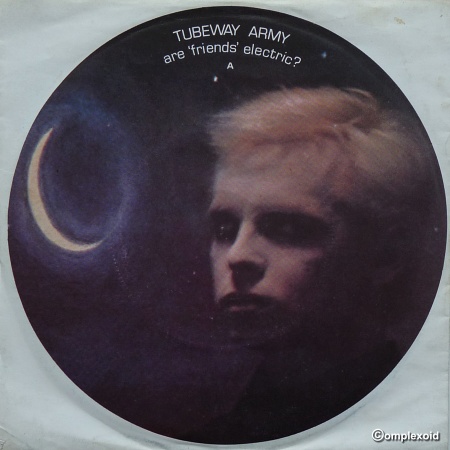 For years when people asked “what type of music are you into”, I would answer – “1979”. Everything. It was a truly great year that shaped my lifetime musical taste. Amazingly, reading histories of popular music, what is relayed from those times is utterly different from what I remember. In the United States 1979 was the peak and the end of the disco era. In the UK and Ireland, it was a transition time – the last remnants of punk rock – often referred to as “new wave”, the rise of ska (retromania), the continued popularity of reggae, touches of dated US AOR music (like Billy Joel), the best disco hits (Chic and Gloria Gaynor) and the beginnings of electro-pop. Along with this there were the 1950s revivalists – like Darts, the mom and pop family bands – like the Doolies, Nolans, Cliff Richard, Dana and Dollar and the beginnings of the New Age of British Heavy Metal. It is wonderful to enjoy all of this, again, through the same medium that I experienced it in 1979 – Top of the Pops (BBC 4 Friday 02.00).
I have been enjoying lots of records that I bought on 45rpm vinyl single back then – “Oliver’s Army” – Elvis Costello, “Heart of Glass & Sunday Girl” – Blondie, “Hit me with your rhythm stick” – Ian Dury, “C’mon everybody” – Sex Pistols, “Into the Valley” – the Skids, “Is she really going out with him*” – Joe Jackson, “I don’t like Mondays” – Boomtown Rats etc. etc. etc. But, beyond doubt, the song that changed everything, that heralded the 1980s, that changed the way records were made – how artists performed, dressed and styled themselves – appears to have been forgotten in pop history. That song was “Are Friends Electric” by Gary Numan – under the cool moniker of “Tubeway Army.” The driving bass synthesiser riff, the funky guitars, the androgynous vocals – the appearance in black jumpsuits and then black military uniforms (replete with shoulder pads) – it all created a template for music for the following half decade.
It is curious to me that, at the time, the intelligensia (music critics) hated Numan – and he was considered derivative (read here) because of his “obvious” debt to Krautrock, Bowie and Brian Eno. For us kids, at the time, Eno was – well who the hell was he? – Bowie was a dinosaur of the glam era, and we had never heard of krautrock. Numan, to us, opened a window to a whole new world of electronic music – and through this came Depeche Mode, Ultravox, Yazoo, Soft Cell, Heaven 17, New Order, Pet Shop Boys, Leftfield, Chemical Brothers, Auterche, Groove Armada, Timbre Timbre etc.
For what it’s worth – Sparks’ “No.1 Song in Heaven” (followed by “Beat the Clock”) – had as big an impact on me as the Tubeway Army song. The 12 inch version is still terrific.
Here are the number 1 songs of 1979. Nearly all crackers except for the godawful Lena Martell version of “One day at a time” and, of course, Cliff Richard
06/01/1979 VILLAGE PEOPLE Y.M.C.A. 3
27/01/1979 IAN AND THE BLOCKHEADS HIT ME WITH YOUR RHYTHM STICK 1
03/02/1979 BLONDIE HEART OF GLASS 4
03/03/1979 BEE GEES TRAGEDY 2
17/03/1979 GLORIA GAYNOR I WILL SURVIVE 4
14/04/1979 ART GARFUNKEL BRIGHT EYES 6
26/05/1979 BLONDIE SUNDAY GIRL 3
16/06/1979 ANITA WARD RING MY BELL 2
30/06/1979 TUBEWAY ARMY ARE ‘FRIENDS’ ELECTRIC? 4
28/07/1979 BOOMTOWN RATS I DON’T LIKE MONDAYS 4
25/08/1979 CLIFF RICHARD WE DON’T TALK ANYMORE 4
22/09/1979 GARY NUMAN CARS 1
29/09/1979 POLICE MESSAGE IN A BOTTLE 3
20/10/1979 BUGGLES VIDEO KILLED THE RADIO STAR 1
27/10/1979 LENA MARTELL ONE DAY AT A TIME 3
17/11/1979 DR. HOOK WHEN YOU’RE IN LOVE WITH A BEAUTIFUL WOMAN 3
08/12/1979 POLICE WALKING ON THE MOON 1
15/12/1979 PINK FLOYD ANOTHER BRICK IN THE WALL (PART II) 5
* This is one of the great songs – I particularly enjoy the first lines (has anyone ever bettered them): “Pretty women out walking with gorillas down my street
From my window I’m staring while my coffee grows cold”
Listen Without Prejudice
•July 16, 2014 • Leave a Comment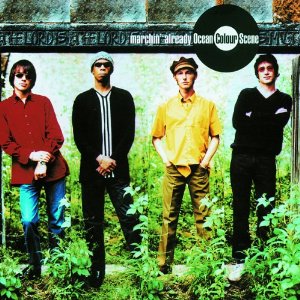 One day, in 1997, having been up all night at work, I went into Golden Discs in the Iliac Center in Dublin to pick up the Verve’s “Urban Hynms” on CD. Ah I can see it now as I walk in the door – I can still see it – I went over to the shelf, picked up the CD, bought it and went home. On arriving home I opened the bag – and – lo and behold – I had bought “Marchin’ Already” by a band that I had never heard of called Ocean Colour Scene. The covers of the two albums were 60s similar – the OCS album looking like something that the Byrds would have released in 1969. The music – well is was terrific – good old riff based driving guitar rock – a top notch band with a terrific vocalist. I did not return the record; indeed I have enjoyed listening to it ever since. Of course, I subsequently discovered that the same band had released an even better record 2 years earlier called “Mosely Shoals.” If you are a rock music fan – and I am – these are great albums that you can pick up for next to nothing on CD – but will cost you an arm an a leg on vinyl
So what? Not long after the release of Marchin’ Already, I went to see OCS at the Point Depot in Dublin. I was the oldest person there – the average age was about 17. And boy were the crowd into it! A great concert. OCS, at the time had a lot of young fans, but the quality of their product fell off rapidly, and although they are still together (and work as Paul Weller’s backing band), they don’t stir much interest these days.
Here is the thing – Google “Ocean Colour Scene” and read what was written about them at the time – terms like “dad rock” and “trad rock” and general vitriol launched by virtually all critics that absolutely HATED them. These were the same critics who loved Oasis – a second rate overly loud Beatles cover band – who happened to have a number of very hummable songs. I feel I still have to apologize for liking those two OCS albums (and their Baggy-Era debut) as it seems to signify that I have some sad dad-rock-trad-rock-sad-rock taste. Strangely, then, one should remember that Led Zeppelin received the exact same sour critical appraisal – indeed for the duration of their existence they routinely had bad album reviews – and sold millions.
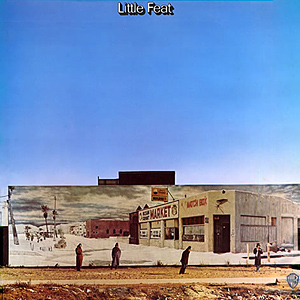 Anyway – a strange thing happened to me the other day. My car multichanged advanced to the next disc (I had been listening to Lana Del Rey’s Ultraviolance) and on came a charming folky-bluesy-swampy record, beautifully mastered – dead clean – no reverb – no loudness – just good old honkey tonk. So whose record was this – perhaps the new Felice Brothers album, Blitzen Trapper, maybe Fleet Foxes, maybe some other nu-folk band whose record I picked up. No, not at all! It was Little Feat’s debut album – Little Feat (1971) – and one of the most contemporary albums that I have heard all year. In fact – I think it is one of the great “forgotten” albums that every collection should own (nice Musical Fidelity vinyl reissue available for $30). But think about it – a 43 year old record sounds “fresh” by todays standards because virtually everything released now is retromania in the extreme. And so what if it is? – Musical forms by definition are limited – once Jazz did fusion, the only way forward was backward (Wynton Marsalis). There hasn’t been a whole lot of original music since the 1970s – virtually everything that I have listened to in my lifetime is derivative. Bob Dylan in 1962 was derivative. The Beatles? The Stones?
My advice – ignore critics – they laud crappy records with a 5 minute shelf life – there was never anything wrong with “Trad” rock – whateverthehell that means.
Go back and listen to Ocean Colour Scene’s early albums, and listen without prejudice.
 audioexchange