Bruxelles

•April 17, 2014 • Leave a Comment

I spent a few days in Brussels last month and came home with a pile of second hand vinyl. In addition to the usual FNAC and Media Mart that sell new and reissue records, there are little record shops popping up all over the place. Good selections too, mostly of 1970s rock and Jazz, which is great as I am bolstering my Prog vinyl collection right now. What is noticeable, not just in Brussels, is the price inflation  that is going on for vinyl records. It is now rare to come across a new release for less than 20 euro. The most recent St. Vincent album was retailing, on release, in the 30s – with only a miserable mp3 download code! The best vinyl label in this respect is NAIM: I bought Sons of Kenet and Get the Blessing’s albums – and they provide you with a 24 bit flac download. 

In terms of second hand vinyl – there are lots of examples of NM records on sale, particularly in Brussels, but you need to be careful of the country of origin of the recordings. Speaking of provenience, there is a mushrooming of “boutique” (euphemism) record labels, re-releasing copyrighted material, which may or may not be of dubious legality and, more importantly, quality. I have previously ranted about Prog albums that have been reissued on Tapestry and Timeless records, undoubtedly bootlegs, but there is a slew of such product on the market. Indeed, three times recently I nearly purchased “High Hopes – Sea Shanties” on Tapestry thinking I was picking up the Sundazed (legal and high quality and less expensive) reissue. I bought the Climax Blues Band – “Plays on” in a shop in Brussels – on Italian Akarma label ‎(AK 143). Now, I really wanted the record – it was released on the excellent Esoteric label last year (on CD) and it has been on my vinyl wish list. No real prospect of obtaining an original version. So here it is in a record shop in Brussels, looking excellent, nice 180g vinyl, 22 euro. Do I have a reissue or a copy of the CD in my hand? It usually helps if the label has a website, but my mobile roaming is costing so much I have to make a quick decision : so I ask the guy in the shop – “is this a bootleg.” Naturally, being Brussels, he speaks better english than I do. His reply – “no it is an official Italian record label from whom we buy lots of albums, they are usually pretty good.” A month later, I still don’t know….Undoubtedly there is a healthy market for 1960s and 1970s prog, psych and acid folk. Esoteric/Cherry Red should really consider releasing some of their great titles on vinyl, I am sure there is a market. For example, I recently obtain two records, by Pink Fairies and Greenslade on Purple Pyramid (Cleopatra records). Of course, they don’t kill themselves detailing the provenience of the recordings, but they’ve been around for 20 years and their products are good. 

Analogue versus Digital Masters

•February 20, 2014 • Leave a Comment

girl recordWhen you are buying second hand records, remember to check the origin and catalogue number of the record. The most valuable records are the first pressings from the country of origin. Otherwise, German and Japanese albums tend to be better than those from other countries. Contemporaneous copies of UK bands from the record company’s Greek or Spanish subsidiaries are worth significantly less than the UK version. Big seller records from the 70s and 80s from the USA are likely junk pressed on thin “non virgin” (i.e. recycled so that the record contains old labels) vinyl. I know because I have the all time worst ever pressing of “Rumours” by Fleetwood Mac (NM in NM sleeve that sounds like your are hearing it from an AM radio station, with a broken turntable, in the snow). Remember, the first pressings came from the first acetates taken from the vinyl master tape (these, incidentally are copies of the master master tapes that have been re EQ’ed for vinyl). International versions come from second generation tapes. As more and more records are pressed the stampers become worn down, the grooves thinner and eventually, from 25th generations tape copies, worn out stampers and tired employees – they press up my copy of “Rumours.”

It is important to remember that this “beautiful” record derived from an all analogue production process sometime in the late 1970s. I probably bought it on a whim, mid 1980s, probably new – at a “special price”. I my local record shop, right now, I can buy a BRAND NEW digitally remastered copy of Rumours (the 200 anniversary edition or some such), on 180g virgin vinyl with way nicer artwork than my (NM) version. I know that if I buy the record, and play it, the sound will be astonishingly good from a silent flawless disc. But vinylphiles would shriek in horror at the thoughts of this record (aside from the total and utter uncoolness of AOR era ‘Mac) – analogue vinyl sourced from digital (likely 24bit 192khz) files (not stated incidentally on the cover, but we all know – don’t we – this isn’t an mobile fidelity release). Heresy!

Nearly all new records these days are mastered from digital files – mostly from high resolution files – we hope – but probably a fair few from CDs. I am really struggling with this. For example – Heavenly Sweetness, a French label, is reissuing Blue Note records that have been, for years, extremely hard to get. If you could obtain one of them – having sold your car, it was probably G+ because jazz fans actually play their records. If analogue productions or Music Matters released the record it would cost you $50. Heavenly Sweetness are going to the Capitol Vaults, taking out the original masters (presumably the vinyl masters), making high resolution digital copies (first generation), doing a little remastering, making lacquers and pressing the records in 180g virgin vinyl in perfect reproduction sleeves for 20 euro. They sound wonderful. Why the struggle? Does digital, in some way, contaminate the analogue sound chain? I have never noticed – most records that I have sound better than their CD (or hi res download) counterparts. In general, although I don’t understand why, “digital” chain records cost substantially less than all analogue albums. I have no doubt that $50 45RPM Blue Note reissues sound better than the $10 in my collection – although I am not sure that the difference is worth the price for a whole collection of them (a friend of mine has the whole collection of Music Matters Blue Note 45rpm reissues and has NEVER owned a record player – bastard!).

Overgraded Vinyl Blues

•February 20, 2014 • Leave a Comment

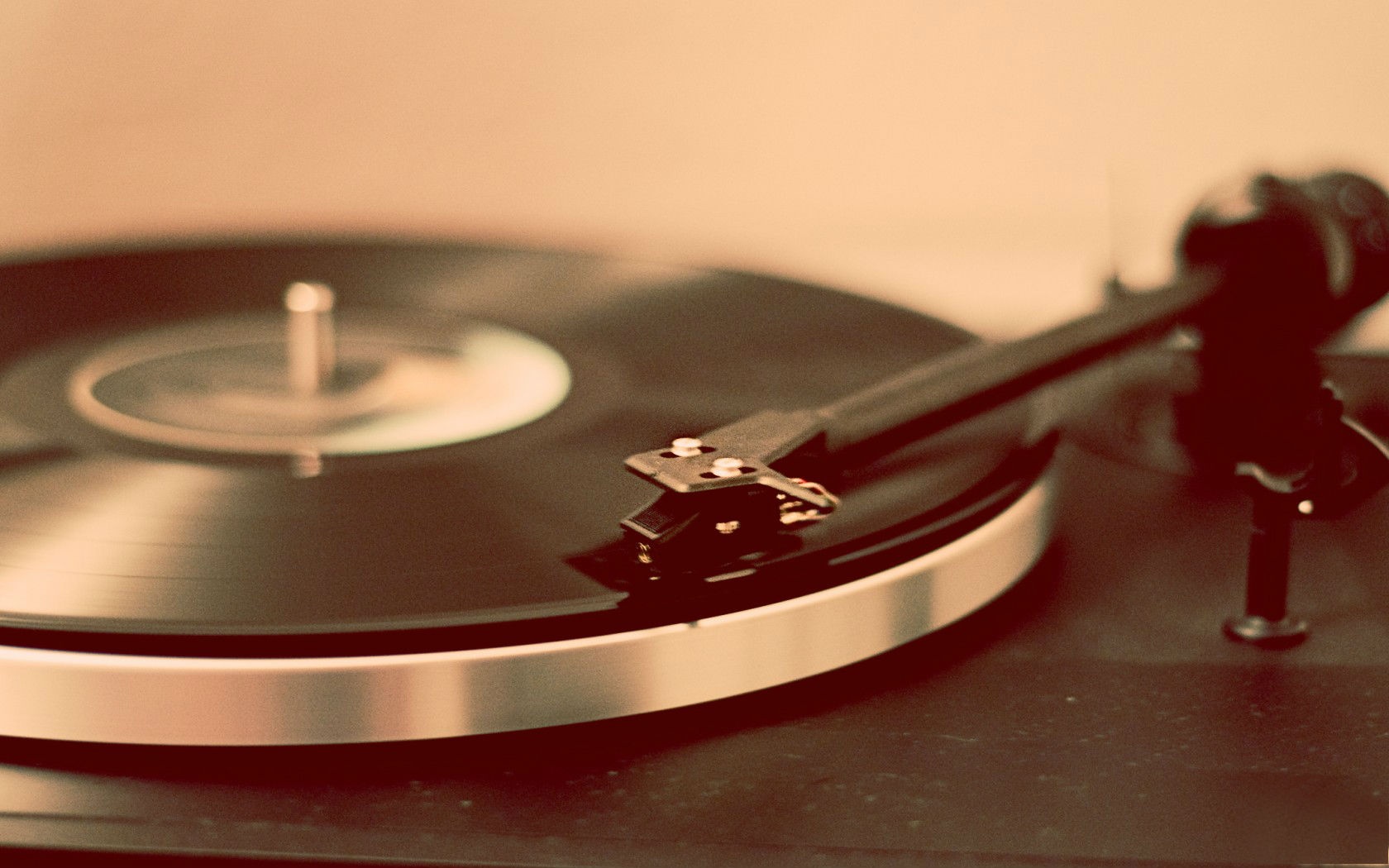
turntable_record_playerVinyl is like a new car – as soon as it is driven out of the showroom (you plonk the needle down on it), it devalues by25%. A brand new unplayed record is in “mint” condition. Usually the cover is too – although not infrequently the cover has been banged up or creased in some way – in which case it becomes “near mint”. A record that has been played a few times without any evidence of scuffs, scrapes or scratches – is near mint. (NM). The highest quality second hand records are, generally, near mint in near mint covers. Collectors seek out NM+/NM- discs and pay a premium for them. Obviously the older the record is, the less likely it is to be in NM condition, and the more valuable it is. Record stores often obtain NM treasures not from ordinary Joe’s but from DJs, record reviewers, individuals working in record companies, or obsessive collectors (he dies and 5 seconds later, without remorse, his widow flogs the collection – which is then bought up piecemeal by dozens of other obsessive collectors with long suffering wives).*

Over the past couple of months I have been cataloguing my record collection, which features lots of new (mint) records, newish (near mint) records, albums that I have bought second hand and ones that I have purchased new myself over the past 35 years. In general, of the latter group, the only records that are NM are the ones that I picked up in sales, and discovered that I didn’t like them much! A couple of needle slides across the record will produce a scrape that reduces the quality of the record to Very Good Plus (VG+). In fact, most records that you buy in a second hand shop will have a cover that is VG or VG+, and likely a VG+ record. Rarely is the cover better than the record. Similarly a scuffed up stained cover with somebody’s name written on it is unlikely to house anything worth buying.

A record that has lots of scrapes and scuffs – but plays well with minimal noise is considered Good+ (G+), if there are pops and crackles but no skips or scratches – it is Good (G). Anything below this is not worth talking about. Nevertheless, I am willing to buy a tatty cover if the record is in VG+ condition, if I want it (because I might pick up a NM cover to replace it in a bargain bin later).

Anyone who grew up in the vinyl era (up to 1990), who was a music fan/record collector, would have spent a lot of time looking at second hand records, to see if they could spot scrapes, scratches, warps etc. We became experts at looking at the disc at just the right angle in just the right light. A record that looks mint from above, can deteriorate to good when the light and angle changes.

There are two types of second hand records shops: the “old timers” that hand you the record and expect you to examine it in front of them, and the amateurs to whom you have to request a viewing before they package it. Not an issue, really – you examine the record – if it is VG+ or NM you are likely to buy, based on the price, if it is G+ and relatively inexpensive and fairly rare – you might buy, or you can put it back on the shelf. But second hand record shops are rare as hen’s teeth these days, so most of us are forced to go online to buy catalogue records that are unlikely to be reissued and day soon.**

Many collectors frown on digitally sourced reissues from Music on Vinyl etc, and want original recordings. Irrespective, we use ebay, musicstack, GEMM and discogs to buy records. I confess to being ebay averse, as there are so many charlatans out there that I find it really hard to trust anybody- and I hate auctions in any case (due to annoying gazumping). I have long suspected that “buy it now (decent price)” means – “piece of shit priced to reel in the sucker.” So there is musicstack and discogs. Musicstack is purely a marketplace – a storefront for second hand retailers, and I have bought many items from these sellers, usually getting what I paid for.

Discogs is a terrific website that allows you to catalogue your own collection, create a wish list for records that you want, discogsalert you when they become available and buy them. All kinds of people sell on discos – shops, former shops who trade only online, collectors, individuals who have a few records etc., and this is the problem. Look up a record – for example Egg’s debut album “Egg” (Deram SDN14). This is a rare record – and a mint copy is probably worth $100-200 . For a record such as this the starting price will be $65: serious collector territory. The sellers in this market will not screw you around, because at this price range their reputation is key. For more expensive items, like this, I have never been burned at either music stack or discogs (but I am sure that it happens).

For less expensive records, however, I am having a bad run. For the vendor, grading a record as NM rather than VG+ is worth 25% more – but if they price the item in between, not only do they get more money for the VG+ record, they are more likely to sell it. Most records are bought in ones or twos, most buyers of less expensive records are likely to be inexperienced and less discerning, and even if they notice that the record was OVERGRADED, and get a little pissed off, they are unlikely to do anything about it. Occasionally they will put in a negative review of the vendor – but many fear that they will get a negative review in response. Recently I bought 6 LPs from a seller in the UK and 2 from one in Italy – all of which were overgraded. In the Italian case, the vinyl of one record was listed as NM (I usually won’t buy anything below this) and the sleeve VG+ – what I received was a VG record and a G sleeve. I would not have even looked at this album if it was in a local record shop. The UK items were all in NM sleeves, and superficially the records looked NM – but on examination they were all VG or VG+. I would probably have bought all of them in a shop, but for less money.

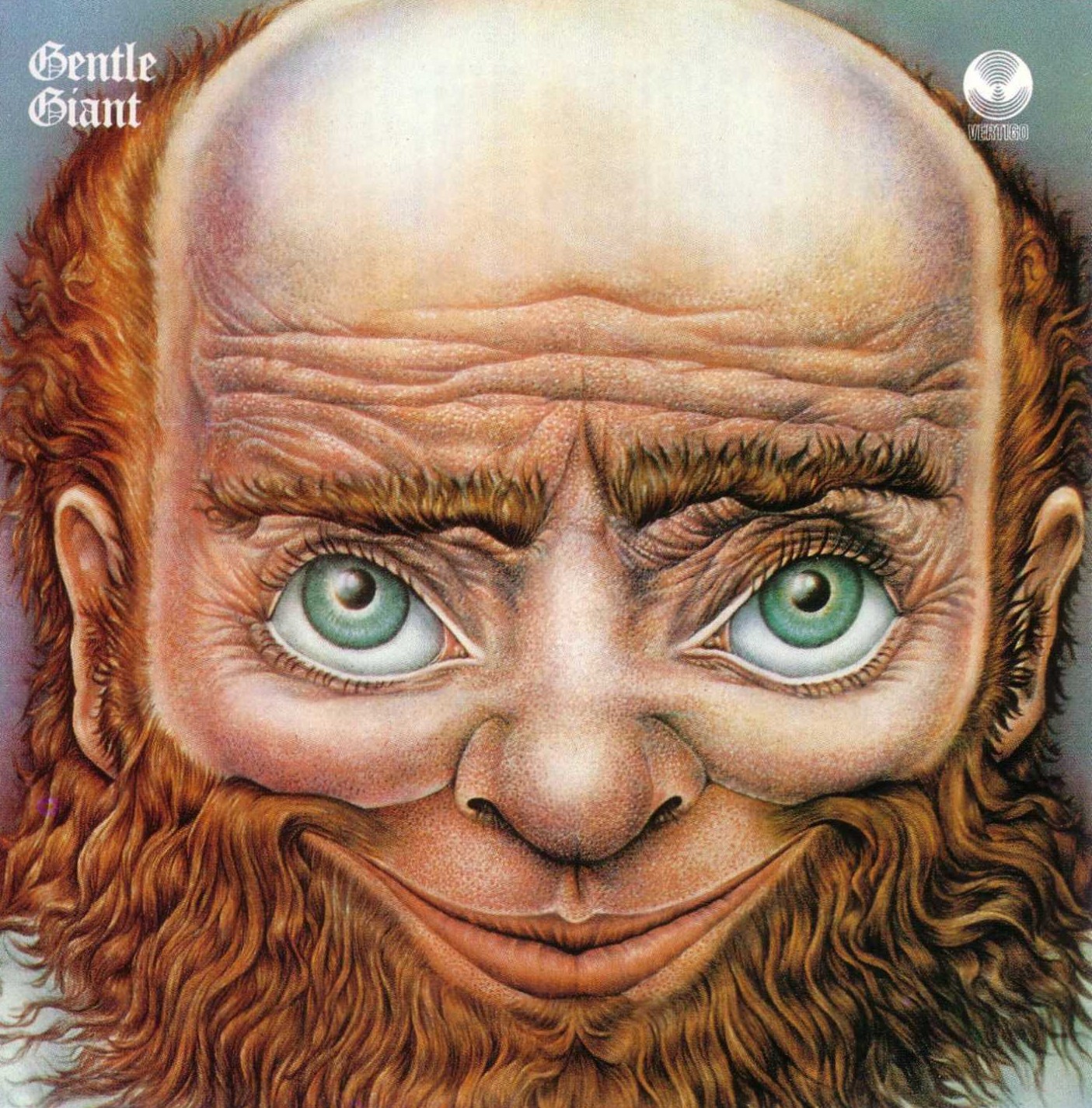
gentle giant (genuine)The other issue that is manifest in the vinyl renaissance is the number of pirated or bootlegged records out there. I recently bought 4 or 5 prog albums from Amazon (marketplace sellers) – assuming them to be  authentic reissues. I noticed that they were on Timeless and Tapestry labels – which I did not check. One of these records was Gentle Giant’s first album. When I opened the package the record popped out – in a beautiful sleeve – 200g vinyl, shrink wrapped. On the back it said: (c) 1986 limited edition 500 copies. I paid 20 pounds for this. Of course, I immediately twigged that this was a scam: 1.

where had this pristine record been for the past 30 years, 2. a mint 1986 200g reissue would cost probably 3 times the price, 3. there was no number  – there was no address for the record label, they have no website, no production or reissue credits are posted. It is probably a 2011 CD sourced pirate job. It turns out that the Tapestry reissues are the same. Apparently you can buy these records from independent retailers all over the place. Now I have no problem with bootlegs – of 1974 Neil Young radio concerts or equivalent – but pirated records by bands that made very little money back in the day, for which there must be a bit of demand – well this is awful.

The moral of this story is 1. to wait for big label reissues from trusted sources (MOV, BOB, MFSL, Audio Fidelity, Sundazed, Org), 2. go on a record buying field trip to a place where they have lots of record shops, 3. contact the sellers on websites and ask precise questions about the record that you are thinking of buying. Apparently, many of the records that are currently being purchased by 18-30s are never played – they don’t have turntables- they listen on their iPods but think the record looks cool. So, maybe having a really good looking copy of Gentle Giant, that has been unplayed, in my collection, will make me look cool in front of my nerdy though knowledge less, record appreciating peers. No I don think so either!

*not being sexist here – nearly all obsessive record collectors are men. Women have other things to think about like – living, children and where to go on holidays. Of course record collecting is more important.

** I have been burned by this recently as well – the stranges and most random records are being reissued these days, whereas many albums that were big sellers back in the day are still on the fence.

Ken Scott – hi fidelity and all that

•January 16, 2014 • Leave a Comment

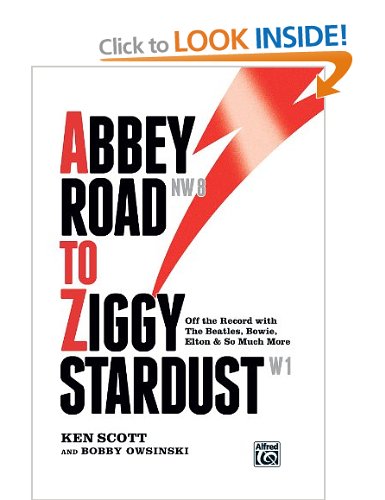
ken scottA few months ago I read Ken Scott’s biography: “Abbey Road to Ziggy Stardust etc.” It was a very enjoyable read about the career of one of the 1970s great analogue engineers/producers. Before reading the book, I had no idea just how many Ken Scott albums that I had in my collection, and how many of them I really enjoyed. Scott started his career at EMI Abbey Road, moved on to Trident and eventually emigrated to Los Angeles – where his career appears to have stalled. In the 1970s, Ken Scott was THE man.

A Ken Scott production is a true work of hi-fidelity art, and even if you don’t like David Bowie, Jeff Beck, Billy Cobram, Stanley Clarke, Happy the Man, Devo, Kansas, Dixie Dreggs, Supertramp etc. (and of course “The White Album”), any LP engineered by him is a hi-fi demonstration record. Unfortunately, his biography essentially ends in 1980 (not really sure what he did between 1980 and 2000 – not a lot of production – it seems. I presume that his style of work – large-scale, slick and open, reverberating drums, lots of headroom, separation and 3-dimensionality – presumably just went out of fashion. Listening to anything recorded in the 1980s is a real struggle now: if you look at my list of albums of the year for that decade (below) it betrays a huge dislike of the overproduced synthetic sound that characterized the decade. Things improved for a short while in the 1990s until Oasis arrived and dynamic range compression transmuted from the radio to our CDs. There have be so few well produced rock records over the past 20 years, it is frightening. Even blues and jazz (with the exception of european labels such as ECM and ACT) became unlistenable.

Listening to Jonathan Wilson’s “Fanfare” and all of Steven Wilson’s output, I am transported back to the era of the super-engineer where records really did sound good. My current listening is: Gene Clark (“No other”), David Crosby (“If I could only remember my name”), Jonathan Wilson (“Gentle Spirit”), Roxy Music (“Roxy Music”), Denis Wilson (“Pacific Ocean Blue”), Bruce Springsteen (“High Hopes”).

Here is a list of my favorite Ken Scott albums – the year of release and what he did on the record. All strongly recommended:

  • 1979   Night of the Living Dregs     The Dixie Dregs         Engineer, Producer
  • 1978   Crafty Hands Happy the Man         Engineer, Producer
  • 1976   School Days    Stanley Clarke           Engineer, Producer
  • 1974   Crime of the Century            Supertramp   Engineer, Producer
  • 1974   Crosswinds    Billy Cobham Engineer, Producer
  • 1973   Birds of Fire   Mahavishnu Orchestra         Engineer
  • 1973   Spectrum       Billy Cobham Engineer, Remixing
  • 1972   Ziggy Stardust and the Spiders from Mars            David Bowie , Producer
  • 1972   Transformer  Lou Reed        Engineer, Mixing
  • 1969   Beck-Ola         Jeff Beck         Engineer
  • 1968   The Beatles [White Album]  The Beatles    Engineer
  • 1967   Magical Mystery Tour           The Beatles    Engineer

After these it was all re-issues and compilations.

THINGS I HATE/LOVE ABOUT COMPACT DISCS

•January 13, 2014 • 2 Comments

Things I hate about CDs

COMPACT-DISCSince my local HMV closed down, and the local independent record-cum-nick nack shop insists on charging €16.99 for new release CDs, I have found myself back in the 1990s – priced out of the market and just a little bit ambivalent of the product. So I thought that I would reflect on compact discs and the things about them that I hate:

  1. Jewel cases – I hate them. These god-awful plastic boxes that break and shatter if you drop them. The hinges have a life expectancy of about 3 seconds between purchase and being broken off. The cd holding tray is particularly annoying: early CDs had hard black plastic trays that firmly held the disc in place. Since clear plastic trays came into vogue, I reckon there is a 40% incidence of  the little shards of plastic breaking off – before the case is opened for the first time, resulting in a badly seated CD – at risk for scrapes and scratches.
  2. Liner notes – although liner notes improved during the CD era, the placement of said notes, in particular the CD cover inside the front of the jewel case is extremely annoying. Often to get the cover/notes out from the little holders you end up damaging them.
  3. CDs that don’t list on their surface the artist and album. Often there is some globby artwork on the disc (this was a real problem during the 1990s) and maybe some sign of trademark activity or a record company logo and that’s it! I often have 20 or 30 CDs in my car – once ejected from a multiplayer it is often impossible to match up the disc and the jewel case. I have had recourse to putting the CD into a computer for iTunes to recognize so that it could be rehoused.
  4. CD Text: how hard is it for a record company to put on the disc the track titles and album title? CD text has been available for 20 years, but only about 1 in 10 CDs come with it……hint to record companies – since the advent of the iPod – we have gotten used to seeing the track titles while listening to music.
  5. They have virtually no residual value: well your Oasis and Beyonce CDs right now, anyway.
  6. They don’t sound very good compared with vinyl.*
  7. Sequential remasters that sound worse and worse – anything released between 2000 and 2012 (in pop or rock) is a victim of the loudness war.
  8. When they came out they cost twice the price of vinyl and cassette.
  9. A lot of the early releases sounded muffled because they did not come from the original master tapes, later releases sounded muffled because they were brickwalled by the loudness war.

10. Hmmmmmm…..nothing else!

cd-medium1Conversely, WHAT I LOVE ABOUT CDs

  1. You can play them in your car: once they solved the skipping thing and actually put CD multichangers in cars – they have been an ever-present source of entertainment. In recent times, however, I have taken to streaming Deezer throught the Bluetooth connection.
  2. Unlike DVDs/Blu-Ray discs/VHS tapes, there is no copy protection, no trailers and they always play on any CD player in any region anywhere. All physical disc players are backwards compatible with CD – try and find anything that will play your HD-DVDs now – you will always be able to find something to play the CD on. CDs can be easily ripped to a hard drive (losslessly) or to a portable media device in MP3 format. In lossless format, even the crappiest home network will stream the 16bit 44.1 kHz file. If you want to keep your CD in “mint” condition, make a copy with a CD duplicator, then cover it up and put it away. The copy is a bit-perfect clone: try and do that with a vinyl record, tape or SACD.
  3. Everything was released on CD: where did those millions of tracks come from on itunes and Spotify? From CD Rips. And, as we have subsequently learned, many historically important (and I am talking up to the mid 1980s) recordings are on rapidly deteriorating master tapes (even the Beatles tapes needed to be “baked”). Millions of recordings released during the CD era have degraded beyond recovery and the 16 bit CD version may be the last decent version of many recordings available.
  4. For archive and historic recordings, the dynamic range of the original is well within the range of CD (remember CD has a way better DR than vinyl), and so a well mastered CD should be a good a representation of a recording as you will ever need.
  5. Provinance: AAD ADD DDD – from the outset the music industry at least attempted to tells us the source and provinance of the music on CD. These days we have no idea where the files on HDTracks and on the majority of  vinyl reissues came from.
  6. CDs don’t pop, crackle, unspool, get covered with all kinds of weird mould that requires extensive (and expensive) cleaning.
  7. Digipacks solved all of the problems associated with jewel cases.
  8. Deluxe editions – you get so much more for your money (although many releases could be better – what about the “Frewheelin’ Outtakes” Bob?).
  9. They are dirt cheap: you can buy 50 CD sets of Miles Davis for $100, or everything Elvis released in movies, or Johnny Cash’s Columbia recordings – for next to nothing. For <$20 you can have the complete recordings by most bands, albeit in cheap cardboard covers. For a little more you can get deluxe boxes of complete recordings by Roxy Music, Joni Mitchell or deluxe box sets with lots of bonus tracks. Box sets that cost $100 10 years ago are now less than $20. For a couple of hundred euro I assembled a seriously impressive classical music collection by buying Deutsche Gramophone, Chandros and Decca boxes. Sony music’s two Jazz boxes are a fantastic introduction to the genre (buy them now because these kind of deals won’t last).
    They are a bargain. In my local second hand music shop, (badly pressed, scuffed and scratched) vinyl records that they could not give away 20 years ago are selling for €15 – three to five times more expensive than the CD, which likely sounds better. For example – for the price of 4 analogue productions 45rpm Blue Note Vinyl Records, you could buy 20 or 30 blue note CDs.
    CDs now cost, online and in second hand stores, less than the price of lossy itunes downloads (with no liner notes or physical product).

10. CDs have long term value. Nobody wants CDs now – very few people wanted vinyl records in 1994 – now a well maintained vinyl collection of quality recordings is worth a fortune. No, your copy of Oasis’ “Be here now” is not going to be worth much, but low volume productions by high quality independent labels (like esoteric, cherry red etc.) have value – because, in time, those recordings will become scarce. Try and get second hand ECM recordings cheaply! Moreover, with Spotify, Deezer and other streaming services, younger people will become more adventurous with their musical tastes – find recordings they really like and want to have a physical copy. For example, I came across “Greek Variations” by Neil Ardley on Deezer: loved it. Looked for the CD – deleted – minimal cost (second hand) £30 (bought on ebay). On vinyl, this recording will set you back £300 – prohibitive. Some CDs will be collectable.

11. Coolness – CDs are cool: I have no time for flared trousers and disco music – but people 10 years younger than me think they are cool. You can now buy new release cassette tapes in some record shops – why? – There is close to nothing good to say about tapes (although I like how they sound, wow and flutter included). They are selling because somebody thinks that they are cool. Over the next few years, CD sales will evaporate, due to the combination of downloading, record store closures and vinyl madness. As a consequence, low volume CD releases will have long term value (just like 1990s era vinyl) and they will be cool collectors’ items.

12. CDs are seriously robust. When CDs came out first there were claims by the music industry that they were indestructible – nonsense of course – they become scratched and damaged if abused like any other product. However – I have CDs that I bought in the late 1980s and they still play – perfectly. I have hard drives and USB (flash) keys that I bought last year that “bricked” themselves for no reason. Anything that I commit to computer drive I have to back up at least twice – I have had the experience of losing a RAID array and the backup of the backup fail in the same day. I once dropped a Joe Louis Walker CD from 4 feet – it landed side on and cracked: refusing to play on my CD player. I was able to rip the disc losslessly using DBPoweramp – error free – and make a replacement copy. Try doing that with vinyl or cassette. If you want to have a permanent copy of your favorite recording – buy the CD.

13. You can pack them away in a box in the attic and they will never warp or grow mold.

14. You can get into hi-fidelity for reasonably low cost with compact disc. For less than £500 you can connect your DVD/Blu-Ray player (that you already own) to a DAC-magic DAC (which will also connect to your PC/mac), integrated amp (Denon, Marantz, Cambridge Audio) and a decent set of speakers (Dali, Focal, Wharfdale, Tannoy). This will play your CDs and music files in glorious hi-fidelity. Of course, a £500 system from Richer Sounds (or equivalent) will knock the socks off ANY wireless streamer speaker that the big electrical shops are pushing these days.

15. I grew up listening to records, 7” singles in particular in the late 1970s. I never threw them out: it is great fun playing these records to my children today. If you grew up with CDs, don’t give them to Oxfam, put them away, and play them for your children some day. Physical will always beat files in nostalgia terms.

Hi-Def audio – a suckers game?

•January 10, 2014 • Leave a Comment

24bit-mediumAre audio enthusiasts suckers? I believe so. Just after Christmas, as expected, HDTracks announced a 15% off sale, and having forgotten being burned by them in the past (with upsampled recordings), I purchased a series of 24/96 recordings: “Kind of Blue” (Miles Davis), “Moondance and His Band and the Street Choir” (Van Morrisson), “Atlantic Crossing” (Rod Stewart), “Byter Layter “(Nick Drake), “Soul Station” (Hank Mobley) and “Fleetwood Mac” (FM) amongst others. Never mind that I already have at least 2 CD versions of each of these recordings (usually original CD, remastered CD, then Deluxe Edition) and one or more versions on vinyl – here was my opportunity to have the definitive “Studio Masters” (incidentally I don’t see any point in 24/192) of great analogue recordings.
Having downloaded the recordings, from the much improved HD tracks download manager, to a laptop running JR Media Center 16 -> award winning Chord USB cable -> Benchmark DAC2 HGC -> Quad 909 -> B&W CM7, I sat back in my armchair to listen to these stunning recordings. And stunned I was – the sound quality was staggeringly unimpressive. My first port of call was Jonathan Wilson’s “Fanfare” (my album of the year). I have listened to this extensively on CD and on lossless rip on my new Sony Walkman (F886). The 24/88 recording sounded exactly the same. “Atlantic Crossing” is one of those great 1970s high budget analogue console big name producer (Tom Dowd in Criteria, Miami) recordings that should sound tremendous in high res. In 2010 the Mail on Sunday gave away a copy of this album on CD (free, gratis) – I put it on in the car and was blown away with the sound quality. I subsequently bought the 2009 deluxe edition that sounded about the same. I presumed that the 24 bit version would be sensational. It is not. Indeed, to my ears it doesn’t sound as good as the freebie from “the Mail.” Listening to other HDTracks downloads by Eric Clapton (Slowhand and Ocean Boulevard), Rumours by Fleetwood Mac and others gave me that self-same disappointed feeling.
Previously I had compared CD versions of albums that I had bought against the high res downloads or rips from DVDAs and thought that the 24 bit recordings were smoother, had more depth and better soundstaging – just like vinyl. The flaw, of course was whether I was listening to the same recording or mastering: CDs may have been mastered louder than SACDs, hence the lack of dynamics and soundstaging.
So does 24 bit sound better than 16 bit? The only way for me to find out was to use DBPoweramp to resample those HDTRacks recordings to 16/44.1 (really easy), and compare tracks. All other things should be equal. For this experiment I used: Laptop HDD -> JR Media Center 16 -> Dragonfly -> B&W P7 headphones. File after file, using this set up, I could not tell the difference for the majority of files (except for maybe Miles Davis (“So What”) and Wilco (Misunderstood from “Being There”) where there was improved soundstaging – but minimal). Where I can hear a huge difference between even the best MP3 file and a lossless 16 bit file, I really and honestly could not discern any great difference between the 16 and 24 bit files. Granted, both of my DACs upscale the 16 bit recordings – which presumably make them sound better. However, if you compare an upscaled DVD to HD versus the same movie in Blu-ray – there is a massive difference in resolution, contrast and clarity. Not so with so-called high resolution music. Not these recordings anyway – and why would they? How can you expect recordings done on relatively primitive analogue equipment from the 1950s through the 1980s produce dynamics that even begin to utilize more than 16 bits of data – and by inference more than 90Db of dynamic range? There is no doubt that if you listen to Telarc Classical SACDs, recorded in 24bits digitally, and switch between the CD and SACD layer – you will notice a clear difference in dynamics and soundstaging. And maybe this is the rub of the matter: if you want to hear high quality 24 bit digital recordings, perhaps you should check that the recording was made digitally in 24 bits: in this scenario – these are true studio masters. Linn, 2n, Society of Sound release such recordings, and they sound great. The music on HDTracks (and let’s face it they sell what will sell and what is popular) is just rehashing of music we already have that was recorded for vinyl and sounds best on vinyl.
I have bought into Hi Res in a fairly big way. I have dozens of SACDs, DVDAs, Dual Discs, High Res Downloads, Pure Audio and Video Blu-Ray discs. I am not saying for 1 minute that 24 bit formats don’t sound better than CDs. However, for the majority of recordings, particularly from the analogue era, we are deluding ourselves with “high resolution”. More and more I am coming to believe that recordings are best heard in their original intended format: vinyl from the 1950s to the 1980s, cassette in the mid 80s, CD – late 1980s to 2000, god only knows 2000-2012 (loudness war era – everything sounds awful on all formats), vinyl and high res (24 bit) today.

Pure Audio Blu-Ray – music’s next Cinderella?

•January 9, 2014 • Leave a Comment

PABDI was in a FNAC in Paris in October and happened upon a number of titles that had been released on Blu-Ray audio discs – “Pure Audio Blu Ray” (PABR) by Universal Music Group. The only previous audio only blu-rays that I had purchased were “Grrr” by the Rolling Stones and “Celebration Day” by Led Zeppelin. Most music related Blu-Ray discs are mixed content. Pure Audio is an attempt to turn Blu-Ray into high definition CD – you put the disc into a Blu-Ray player and it should play without having to look at at screen menu to navigate – which was a real problem with DVD-Audio discs (I solved this problem with my Oppo BD-95 by attaching a video output to an old portable DVD player – but the whole operation was clunky – eventually I ripped the DVD-As with DVD audio extractor to flac – the flac discs then played perfectly from the drive). Unfortunately the selection of PABR discs available then were Lionel Richie, Velvet Underground (24 bit???? possibly the lowest-fi recording in major label history), Stevie Wonder and Supertramp. So I dropped 20 euro on “Breakfast in America” an promptly forgot about it, until yesterday.

breakfastThe discs are nicely packaged and “Breakfast” contained instructions, in French, for a free download in MP3 or 16 bit Flac format: plus 1 for the format (remember that SACDs have a hybrid layer that you can rip – but DVD-A gave you no portable option and that is one of the reasons why the format failed). Of course, Universal could be clever and bundle a CD with the PABR disc – just like Disney bundled DVDs with BR discs in the early years of the format. There is nothing worse than a free download that doesn’t work. But work it did (I already had the Deluxe Edition CD in any case!). Anyway, I put the disc in my blu-ray player and it played perfectly well, and sounded – exactly like the CD (more about my current feelings about 24 bit audio tomorrow). A major bonus about Pure Audio is that UMG guarantees provenience: discs must be created from studio master recordings at a minimum of 24bit/96kHz standard, the discs are encoded in three high-quality lossless formats: uncompressed PCM, DTS HD Master Audio and Dolby TrueHD. It would be nice if they would offer said discs in 5.1 surround also. Obviously, like all HD formats, the PABR disc cannot be easily* ripped, but at least, as part of the process, a portable or streamable version is being provided. It is time that UMG and others follow the lead of, arguably the worlds greatest label, 2L – and provide a catch all solution. For 25 euro they will sell you a hybrid CD-SACD plus a Pure Audio Blu Ray of a recording and allow you to download lossless flac files into your computer. I like the idea of high res file downloads, but having being badly burned by hard drive failures in the past (HDTracks will NOT allow you to re-download files that you have already paid for), I like physical product, liner notes etc. Perhaps this is a generational thing – but High Res, which is probably only a marketing ploy (I am seriously beginning to doubt whether or not it makes any difference to recordings that were not made in digital high resolution), is a premium product – and I prefer physical to vapourware.

Hey Universal – how about releasing a few NEW recordings, by CONTEMPORARY artists (most of them work for you) and releasing them in PABD format? Show some spine and confidence in your product. It is hard to believe that in 2014 new releases are coming out in CD (1980s technology), Vinyl (1950s technology), MP3 (1990s technology) and not PABR (21st century technology). It must be significantly less expensive to press up a PABR than a 180g vinyl LP. The masters are already there (they have to downsample to produce a CD). I’m drooling about the sheer ludicrousness of a DVD\PABR\Vin

yl deluxe edition. I suppose you could construct this from The Rolling Stones in Hyde Park releases.

[While writing the last paragraph I had a sudden flashback to the sheer awfulness of Dual Disc: this was a format introduced by the majors in 2004. There was supposed to be a CD layer on one side, and a DVDA (high resolution) layer on the other. I bought several of these believing that I have bought DVDA. However, when I examined the discs with DVD audio extractor, it turned out that virtually all of them were 16bit 48kHz LPCM (not really any different from CD). The exception to this was the Talking Heads Brick boxset – all high resolution and terrific.] DualDisc_logo

A few asides:

If UMG really want to know how to do a deluxe edition they need to look at Nick Cave, King Crimson and anything that Steven Wilson touches. If you are going to do a deluxe reissue be aware of what fans want: 1. demos, 2. a contemporaneous live recording (we already have the bootleg), 3. a high res remix with 5.1 surround. The “immersion” edition of “Dark Side of The Moon” provided this and is a model for major record labels.

I think that $25 for a 192kHz download is a complete rip off. 1. 192kHz for analogue recordings makes no sense – the information is not there, 2. it takes up too much space, 3. a lot of DACs cannot decode >96kHz. “USA” by King Crimson comes in CD/DVD format, costs <$20 and provides the listener with Hi-Res stereo versions of the three different album mixes: expanded 30th anniversary edition, Ronan Chris Murphy mix & previously unreleased Robert Fripp/David Singleton mix. And it looks great. Similarly, I bought the majority of the R.E.M. Warner’s catalogue in CD\DVD audio for <$20 per digipack. Why would you pay for a download?

I will not buy SACDs anymore as I cannot rip (the DSD layer) them (and don’t want to have to go scouring ebay to buy and old Playstation 3 to do so). In 20 years you won’t be able to find a player that will play the discs for less than the price of a car (just like cassettes – hard to get a good tape player these days, even used, because nobody makes them). Conversely, I bought lots of DVDAs because I could rip them (I am not confessing to doing so, nonetheless). Wise up music labels, people want to put their music on their servers – so give up on this copy-protection nonsense. Purveyors of DVDA, BDA and SACDS are selling the unprotected product on HDTracks and Acoustic Sounds ($25 for DSD downloads, $30 for multichannel SACD – I know it is Analogue Productions, but come on – you can buy the original CD for most of these for <$5). BD audio is probably the safest bet high res disc format to date – it is the ONLY HD disc format out there, so, like CD, you will be able to play your discs for decades to come. Interesting – SACD was a Sony product (they have given up on it), Blu-Ray is a Sony Product, where are the Sony-Columbia PABDs?

*BD audio discs can be ripped using dvdaudio extractor and Any DVD (I am not giving you the links).

I have been a “deluxe edition” (DE) obsessive for several years – I do think that these, and pre 1990 CDs, will be collectable long term. However, it has been really disappointing how DE discs from major record labels have not included high resolution or surround sound versions. Universal appears to be releasing PABR of many of it’s DE recordings, so I suppose, for completeness, it is worthwhile dropping 15 quid on Derek & the Dominos, Nevermind etc.

Blue Note Records

•December 23, 2013 • 1 Comment

Thinking about getting into jazz? There is no doubt that the blue note label is a wonderful place to start – spanning almost 75 years since being  originally set up by Alfred Lion & Max Margulis, with a few dead years in the late 1970s – the label is a wonderful melting pot of modern jazz. It is one of  relatively few labels from which one can choose any album or CD without hearing and be confident of a high quality enjoyable experience (the others are Impulse! ECM and ACT – I think).

I have recently being trying to work my way through (the little bit boring) Biography of Blue Note by Richard Cook and I realized how much I have enjoyed Blue Note recordings. They are extraordinarily popular and collectable. Indeed, labels such as Music Matters and Analogue Productions have ongoing series of Blue Note reissues on 45rpm for deep pocketed fans. Many of the soul jazz recordings from the late 1960s and 1970s were used for DJ samples during the 1990s dance boom. Virtually all of the recordings were made by Rudy Van Gelder, at his studio in New Jersey and feature iconic covers by Reid Miles. If you like Blue Note you should invest in the Cover Art coffee table book. Anyway, here is a list of my favorite classic and newish Blue Note recordings (sorry to connoisseurs if they are a little obvious). These are the recordings that I would happily drop $1000 for  the whole 45rpm set! I find the modern blue note label a little slick for my taste, but there have been some terrific recordings, one of the greatest of which was “Without a Net” by Wayne Shorter which came out this year (where is the vinyl version EMI?).

My Favorite Classic Era Blue Note Records:

1.       Something Else  – Cannonball Adderley

2.       Cool Struttin’ – Sonny Clarke

3.       Soul Station – Hank Mobley

4.       Song for my father – Horace Silver

5.       Thelonius Monk – Genius of Modern Music

6.       Blue Train – John Coltrane

7.       Maiden Voyage – Herbie Hancock

8.       GO! –Dexter Gordon

9.       The Sidewinder – Lee Morgan

10.   See No Evil – Wayne Shorter

11.   Open Sesame– Freddy Hubbard

12.   Page One – Joe Henderson

13.   Point of Departure –  Andrew Hill

14.   Idle Moments – Grant Green

15.   Unity – Larry Young

16.   Midnight Blue – Kenny Burrell

17.   Volume 2  – Sonny Rollins

18.   Moanin’ – Art Blakey

19.   Dialogue – Bobby Hutcherson

20.   Back at the Chicken Shack – Jimmy Smith

There are many many more that I would recommend – but I am stopping at 20l

Modern Blue Note

1.       Time on my hands – John Scofield

2.       From the Soul – Joe Lovano

3.       I can see your house from here – John Scofield & Pat Metheny

4.       Combustication – Medeski Martin & Wood

5.       Romance with the unseen – Don Byron

6.       When the heart emerges glistening – Ambrose Akinmusire

7.       Spirit Fiction – Ravi Coltrane

8.       Without A Net – Wayne Shorter Quartet

Retromania 2 – 1978 and all that

•December 19, 2013 • Leave a Comment

totpFor the past 12 months I have been enjoying BBC 3’s rescreening of Top of the Pops 1978. It is fascinating to see how the popular music world was 35 years ago, and unlkie ’75, ’76 and early ’77 – I actually remember most of the episodes. Like many kids of the era – TOTP was THE music programme to watch, and it informed our tastes massively. Unfortunately the BBC has decided not to screen episodes VJayed by the monsterous Jimmy Saville – which must be a bummer for bands that appeared only on those Thursdays – they must get a great kick out of showing their grandchildren their younger selves.

What is a real eye opener for viewers not of TOTP is the degree of retromania that was apparent then. The NME would have us believe that the years 76-78 were all about punk and everything else was blow away: nonsense! There was hardly and episode of TOTP that did not feature Darts, Showwaddwaddy, Racey, the Soundtrack of Grease and other Retro 1950s digging fare. The only punks that you saw were the Boomtown Rats, Buzzcocks, Elvis Costello, Sham 69 and Blondie. The Clash refused to go on. I cannot describe the original thrill of seeing Bob Geldof ripping up a picture of Jon Travolta before ripping into their seminal hit “Rat Trap” – it was one of the great scenes from TOTP. No matter how hard the NME has tried to paint them out of the picture as “Johnny Come Lately’s” to the punk scene (who wasn’t? punk was retromania for MC5 and the Stooges and 1960s Nuggets music – it was about as original then as new folk is now), they had been around for a good 18 months by then and had several appearances on TOTP in 1977. No, 1978 was a great year for family friendly music – Boney M and Brian and Michael, 10cc and the Baron Knights. I have pasted below the no.1 singles of the year. Compared with the manufactures schlock that is out these days, I would argue that many of these songs are all time classics. 1978 was a great year for hit SINGLES, but be aware – the “Smurf Song” was the no. 5 hit record of the year but the LP chart is plain embarrassing: the soundtracks of Saturday Night Fever and Grease were No1 for nearly half the year! The other best selling albums were “The Album” by ABBC, “Nightride to Venus” (Boney M) and Nat King Cole’s Greatest Hits (Retromania). The US charts for 1978 was all about the Bee Gees and Disco – punk wasn’t even an afterthought. Anyway – ’78 was great – 1979 was better!

Date Song Artist Weeks
7 January Mull of Kintyre” / “Girls’ School Wings 4
4 February Uptown Top Ranking Althea & Donna 1
11 February Figaro Brotherhood of Man 1
18 February Take a Chance on Me ABBA 3
11 March Wuthering Heights Kate Bush 4
8 April Matchstalk Men and Matchstalk Cats and Dogs Brian and Michael 3
29 April Night Fever Bee Gees 2
13 May Rivers of Babylon Boney M 5
17 June You’re the One That I Want John Travolta and Olivia Newton-John 9
19 August Three Times a Lady The Commodores 5
23 September Dreadlock Holiday 10cc 1
30 September Summer Nights John Travolta and Olivia Newton-John 7
18 November Rat Trap The Boomtown Rats 2
2 December Da Ya Think I’m Sexy? Rod Stewart 1
9 December Mary’s Boy Child – Oh My Lord Boney M 4

Below are my personal favorite hit singles of 1978 – I’m not trying to be cool many are cheesy – but I was 10 years old at the time!

1. Rat Trap – Boomtown Rats

2. Promises – Buzzcocks

3. Hit Me With Your Rhythm Stick – Ian Dury & The Blockheads

4. Hanging on the Telephone – Blondie

5. No More Hero

6. Dreadlock Holiday – 10cc

7. Mr Blue Sky – ELO

8. Run for home – Lindisfarne

9. Love is in the air – John Paul Young

10. If you can’t give me love – Suzi Quattro

11. FM – Steely Dan

12. Take a chance on me – ABBA

13. Is she really going out with him? – Joe Jackson

14. Three Times a Lady – Commodores

15. Wuthering Heights – Kate Bush

16. Baker Street – Gerry Rafferty

17. Can’t Stand Losin’ – The Police

18. Le Freak – Chic

19. Because the Night – Patti Smith

20. Miss You – Rolling Stones

21. Grease – Franki Valli

22. Lucky Stars – Dean Freeman

23. Love is like oxygen – The Sweet

24. Come back my love – Darts

25. Oh what a circus – David Essex

26. Jilted John – Jilted John

27. Darlin’ – Frankie Miller

28. It’s a heartache – Bonnie Tyler

29. My best friends girl – The Cars

30. Blame it on the boogie – The Jacksons

Popular Culture

•December 19, 2013 • Leave a Comment

Retromania-Pop-Cultures-AddiWhen they write history books, politics, world events, kings, queens, natural disasters fill the pages. But most of us don’t live in politics (unless things are really bad such as in the late 1970s and the past 5 years). Most of the time we live in popular culture – what matters in our lives is what we are eating, drinking, who we are kissing etc., what we are watching, listening to, what sporting events are on. Young people believe that their tastes in music, movies and television are current, whereas, in all likelihood their taste has been attributed them by faceless marketing types rebundling older concepts in fresh packaging. The most cynical version of this is books that are often re-issued (not updated) with flashy modern covers, but really dated typescript on the inside, for full price.

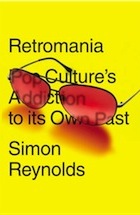
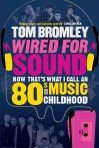
Around this time, 2 years ago (2011), I purchased Retromania by Simon Reynolds. It was a real eye opener – I rapidly came to realize that much of the music that I had listened to during my formative years were completely derivative and unoriginal. Punk rock, indie, house, rap, electronica – none of these were original: in reality popular music stopped evolving somewhere around 1975.WiredForSoundCvr(1) Tom Br

omley’s “Wired for Sound” – an 80s musical childhood, was a stonking good read. I confess to being a couple of years older than Tom, and, at the time generally disliked 80s pop music. Hated Duran Duran, Spandau, Michael Jackson, Madonna, New Romantics, Agadoo, Stock Aitken and Waterman etc. I realized 2 things: the music from the first half of the 80s was pretty good and the second half of the 80s was shockingly bad (nearly as bad as now). The differences in the line ups between Band Aid 1 and Band AId 2 is revelatory. The seco

nd thing I realized was that there was a good reason why the early 80s pop stars dressed in poncy clothes and wore make-up: they had not abandoned punk rock – they were never punks! If you think about it – a pop star in 1983 was likely born in 1958-60 – and was in their formative musical years in 1970-75 – pre punk. They were all Roxy Music & Bowie fans! The bands that emerged in the late 80s and brit pop were the kids of the punk years, the Stone Roses, Primal Sceam, Teenage Fanclub, Blur, Charletans etc.