Stan Getz at the Gate

•June 16, 2019 • 1 Comment

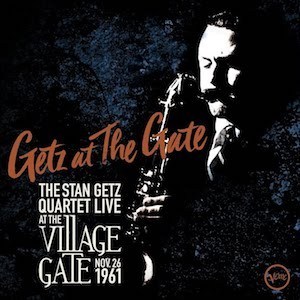
getz gateGreat news – Verve have recently released a professionally recorded Stan Getz concert in AAA format from Nov 26th 1961 – featuring Steve Kuhn (p), John Neves (b) and Roy Haynes (d). Of all the great tenors, and the 1960s was the era of great tenor saxophone players, I think that Getz had the best tone – and he kept recording mainstream jazz right until the 1990s (Anniversary and People Time are among my favorite live recordings). This comes fairly hot on the heels of the “lost” Getz/Bill Evans album, that I though a little disappointing.

The album comes as 3 x 180g slabs, packaged in cheap “sandpaper” inner sleeves. The outer cover looks like the kind of photo-processing that one would have done with an early copy of photopaint and windows 3.0. The liner notes, which give a good historical context, are on the inner gatefold. Verve should look to Resonance Records for advice vis-a-vis modern deluxe packaging. Sound quality is excellent- nicely mastered and a good live re-production for the era. The muffled introductions by Chip Monck at the start of side 1 are un-necessary. It is a worthwhile investment if you are a Getz fan: this is after “West Coast Jazz” after Europe but before “Jazz Samba“, and he very much appears the equal of Coltrane and Rollins in that era. Incidentally, of the 1960s Stan Getz records, for reasons that I cannot explain, “Sweet Rain” is my favorite. It is one of those rare albums that could be released today, and would not appear out of time.

What is reassuring about this 1961 live album is that it came from the Verve music archive – which must have survived the UMC fire. Hopefully, sometime soon, the February 21st 1961 session, part of which has been released in compilation, will be released in a nice package like this. The major reason for interest in this concert was the presence of Scott LaFaro on bass.

Stan Getz Quartet
February 21 1961, New York, Ny Unissued Concert Live
Stan Getz Quartet Stan Getz (Ts) Steve Kuhn (P) Scott Lafaro (B) Pete La Roca (D)

  • Baubles Bangles And Beads (Forrest-Wright)
  • Little Old Lady (Adams-Carmichael)
  • I Remember Clifford (Golson)
  • For You, For Me, For Evermore (Gershwin-Gershwin)
  • Speak Low (Nash-Weill)
  • Spring Can Really Hang You Up The Most (Landesman-Wolf)

Incidentally, if I were to go to a desert island and was allowed to bring only a few live jazz box sets with me, People Time – with Kenny Barron would be one.

The others that I would bring:

I’m sure there are more – but all of these I would recommend without hesitation.


I am NOT an analogue zealot, however…..

•June 14, 2019 • 2 Comments

master tapeI was accused of being an analogue zealot, or equivalent, yesterday as I was extolling the sheer excellence of high quality vinyl. I get why one might think that streaming spotify into your phone and listening through (absolutely crap) Beats headphones, is the last word in audiophilia, if you have never heard better. There is nothing like listening to a well mastered nicely pressed record through an all analogue system. Well…… maybe a live performance.

In any case, I am both the most analogue and the most digital person I know. I was a very early adopter of CD (and have thousands of them), DVDA, SACD, Blu-Ray audio, surround sound and ran the gamut in the video sphere also from video 2000, to VHS to CD-I, to CD-V, to DVD to HD-DVD to Blu-Ray to UHD-Blu Ray. I ripped my entire CD collection to MP3 in 1999 – having to burn the files onto CD-R because there wasn’t a large enough external hard drive available then. I bought the first CD Walkman that supported MP3, then various MP3 flash players, the first windows iPod (and lots of its descendants), I rockboxed a Cowan-iAudio X3 to play flac bootlegs in 2007. I have a large collection of HiRes flac and DSD files that I can play through portable players and a high quality digital system at home. I bought Sonos in 2008. I use Roon. I love digital. I still prefer records.

Why do I make this point? After the horrific revelations about the UMC archive in 2008, I realize that we have really taken analogue recordings for granted for too long. I believe that recordings are best heard in the medium that they were first recorded – either analogue or digital. Yes I buy many new recordings on vinyl, but I don’t believe for one second that the record is better than the 24 bit digital master. But here is the rub: I bought the new Bruce Springsteen album today (by the way it is really good). I presume that this was recorded in a modern studio using a digital console and mixed in Pro-Tools, from which the digital master was constructed in 24/96 or 24/192 resolution. You can buy the album from HD Tracks or Qobuz at 24/96 and it will sound exactly like the studio master. The album can be obtained on downgraded 16 bit – as a CD or MP3 for €15 or you can pay up to €30 for the 3 sided vinyl album (limited edition on blue vinyl). There is no conceivable way that the record can outperform the digital version. One buys the record for the experience, to impress yourself and your friends by your collection, because you like to own music (and CD no longer feels like a quality product) and as a souvenir.

Analogue recordings are like paintings – in the master there are multiple layers of physical data that builds the soundstage. The best version of the recording is the original master tape. Every copy, irrespective of the quality, must be inferior. Mastering engineers, such as Kevin Gray, Steve Hoffman, Bernie Grundman etc. take the master tape and, using a lathe, cut a vinyl acetate that mirrors the master tape. Then there is a couple of generations of sound loss to construct the stamper (I know the mofi one step gets rid of this and improves the sound). Irrespective, a high quality vinyl pressing reconstructs the analogue master and brings with it the texture, colour and soundstage. The master tapes can be copied into a series of digital files, either in PCM or DSD format – but this is like making a photocopy of the original. Something always gets lost. The best transfers and the best mastering engineers may produce a digital copy very close to the master – and these often sound great, but not always. However, it makes NO SENSE whatsoever to take that digital album and use it to cut an acetate – for pressing into vinyl. This is analogous to photocopying a photocopy. It is so inferior to an all analogue (AAA) copy that it is scary.

Bizarrely, people, including and in particular me, will walk into a record shop and pick up a newly pressed digitally sourced 180g version of an album, while ignoring the vintage AAA version sitting in the second hand bin. Why would one do this? First – people like new stuff and new records look and feel good. Secondly, they may actually be better: I have piles of 1980s records that aren’t much thicker than flexidiscs – and sound hollow due to mass pressing. Also, for the best records in the best condition, second hand copies are unbelievably expensive. It is highly likely that the new copy of Dark Side of the Moon that your recently bought (and it is, in any given year, one of the top 5 selling vinyl titles), sounds better than your original version: pressed on flat virgin vinyl from a high quality source. Indeed, for most rock records from the 70s and 80s, the chance of picking up a really good sounding used product is quite low: Tom Port’s Better Records makes a business of buying lots of albums, identifying “hot stampers” and then charging $100s/$1000s for them. In my opinion, modern vinyl is of a much more consistent quality than the product I grew up listening to.

Finally, vinyl has now become very expensive. Vinyl box sets are typically twice the price of the equivalent version on CD; the CD box set drops in price over time, vinyl does not. But here is the crux: are they the same product? I recently bought the Traffic studio albums box set. I already had a couple of the records on vinyl (new pressings), and they are all easily availably from second had outlets as AAA (but first pressings are very expensive). The only Traffic album available for download on high res is “John Barleycorn Must Die” – which makes me think that the box set is sourced from 16 bit wav files. Considering that UMC is charging €25 per album in the box, the least they could do was source the records from the original analogue masters; if they still exist. Suckers? Probably.

This was OUR Notre Dame

•June 13, 2019 • 1 Comment

AP Studio Fire“I was driving home one evening – then I saw it – black smoke billowing in the distance – could it be – no please no – my home on fire. Worse, my record collection flaming and smouldering and melting and disappearing; forever. All of those days, weeks, months, years of crate digging, swapping, retrieving from dumpsters, ordering from ebay or discogs. That first edition…..”
I’m sure that every serious record collector has this nightmare, recurrently. A couple of years ago I dropped a CD and a big chunk broke out of it. The CD was old, difficult to replace, but – then I remembered – I had a back up (ripped losslessly to flac) on my server. The history of the world’s digital recording can be stored in a cloud or on infinite hard drives. But analogue, that’s a different story.

You are in a band. You record an album that sells a lot of copies on vinyl. Then it is re-issued on CD and sells loads more. Many years later, it is time for the 25th anniversary deluxe edition box set. Steven Wilson has been brought on board to do a 5.1 surround mix for the Blu-Ray. He also wants to remix the original and do a flat transfer of the master tapes. The multi-track masters cannot be found. This seems to have happened with XTCs “English Settlement.”

Remember that the “master” tape is a mix down of the multi-tracks, in stereo for mastering to vinyl, CD or cassette. The “original” master tapes are valuable. The multi-track masters are the real gold. An example of this is Sgt. Pepper. Several years ago, as part of the Mono box set, the original mono masters were used to cut new vinyl copies of the record. It sounded great. However, 2 years ago, for the 50th anniversary, Giles Martin went back to the original multi-track masters, redigitalized everything in multi-track and remixed the album to 21st Century standards. I though it sounded spectacular.

Imagine if we suddenly lost the multi-track tapes and original masters of a large number of classic albums? Up in a puff of flames. For example – imagine if all of John Coltrane’s fantastic Impulse! albums’ master tapes were suddenly lost in a fire. That would be it: no more remasters, no more “original master recordings” no more remixes; nothing. Imagine if we lost all of Chuck Berry’s masters, or Buddy Holly’s. Gone. Stop imagining – it has happened and they didn’t tell us.

In 2008 a fire broke out in a warehouse on a backlot of Universal Studios. Everything was destroyed – but, we were told, it was only just film stock – advertisements, short flix nothing important. They lied. The warehouse had been sublet to Universal Music Group and it contained a large amount of original master recordings belonging to the behemoth music company. And everything was destroyed. I read about this in an article published this week in the New York Times. Reading the article gave me the same feeling as watching, in horror, as the great cathedral of Notre Dame (in Paris) burned down. They can rebuild, but it will never be the same.

“But don’t they have digital backups (like my CD-flac)?” – you might ask. This is analogous to hanging a photograph of the Mona Lisa in its place, because the original is destroyed. If you have ever watched the “Classic Albums” series – usually the artist and the engineer are seated at a large analogue console- the multi-track masters are loaded – faders are moved up and down – detail is revealed and then buried back down in the mix. The “master” tape or the digital copy of it is merely a reproduction of what the mastering engineer believed, at the time, the listener wanted to hear, taking into account the limitations of the equipment. In the 1950s and 60s, that equipment was likely a Dansette record player. In the 00s it was an iPod, later a smartphone or a car stereo – mastered for maximal loudness. Lose, for example, the multi-track masters (and remember that these may be digital, and stored on tape/hard drive/zip drive etc), of Californication, and you are stuck in loudness hell forever.

I would have thought that the master tapes of Buddy Holly or Chuck Berry or BB King or Billie Holliday or Aretha Franklin or John Coltrane or Bing Crosby would be American National Treasures – these are amongst the greatest artefacts of American culture in the 20th Century – no less important than Caravaggio paintings or Degas sketches. Keeping them stored in a tinderstick shed in a sunny location with huge amounts of traffic is not just negligent – it is tragic.

My heart goes out to all of those artists whose master tapes were being held (?Hostge) by Universal, whose cupboard is now bare – where even to obtain some copy of the master the company has to go to Japan, or Germany (for x generation master), where the multi-tracks are gone. And then there are all those, lesser, recordings that were never copied, never digitalized – lost forever.

Finally, if most of John Coltrane’s Atlantic and Impulse! masters were destroyed – can UMG inform us of the providence of the High Res downloads that have only been available in the past few years? Was 24/192 used for archiving prior to June 1st 2008 (I suspect not – as most recorders in those days were 24/96 or DSD)?

Fortunately, in view of the fact that Kevin Gray has been working away on them for years, one must presume that the Blue Note (another UMG company, but then part of EMI/Capitol) masters were located somewhere else.

Enormous Selling Albums that NOBODY listens to

•June 13, 2019 • 3 Comments

One of the most striking passages in David Hepworth’s recent book involved Hootie and the Blowfish. Who you might ask (unless you are of a certain age – and you will nod in vague recollection)? Their album “Cracked Rear View” has sold 21 million copies – 21 times platinum. “Kind of Blue”, by far the best selling jazz album ever, released 60 years ago, is only 4x platinum. Brubeck’s “Time Out” is platinum (1 million). Blue Train sold about the same. The remainder of the platinum awarded jazz albums are all fusion – Herbie Hancock’s “Headhunters” and “Future Shock,” Weather Report’s “Heavy Weather”.

Other alumni of the 20 million plus album sales include Linkin Park, Ace of Base, Backstreet Boys (2 albums) and a couple of Shania Twains’. All on heavy rotation in your living room, I don’t suspect. Susan Boyle sold over 8 million copies of her debut album (“I dreamed a dream”).

Oasis’ “Be Here Now” – one of the greatest abominations ever recorded – has sold over 8 million copies and there are 9 million in bargain bins around the world. At least there is some vague possibility that I might, one day listen to “Be Here Now” – particularly if they “deloudnessed”, remixed and remastered it. No chance would I ever contemplate – MC Hammer’s ‘Please Hammer, Don’t Hurt ‘Em (10m), Linkin Park’s ‘Hybrid Theory’ (10m) and of course Creed’s ‘Human Clay’ (11m).

You would think that the music industry was being kept alive by Beyonce, Jay-Z, Katy Perry etc. based on the amount of press that they receive. In fact, the saviours of the music industry are Adele (50 million albums – including a lot of CDs) and Ed Sheeran (some staggering number). Adele and Sheeran fans listen to their albums – a lot!

One last thought: Norah Jones has sold 50 million albums. It is likely that she has sold more albums that every other artist that has recorded for Blue Note put together in the 1950s (and possibly the 60s – and possibly ever). When did you last listen to “Feels like home” (12 million).


So Long iTunes (downloads) – you sucked!

•June 5, 2019 • Leave a Comment

The iTunes download store is closing down. I am delighted to announce that, despite being an early adopter of the iPod (first windows version), I never bought a single track from iTunes and the only album in my library was the free U2 one.

I never understood iTunes – you had to pay $10 for an album of copy protected compressed files that you never really owned (you could not sell them on “second hand”) that were stuck in the Apple universe. Buy the CD and rip it bozo! I know, I know, it was all about the “tracks” – I remember Bruce Willis asking what would happen to his iTunes library when he died (it dies with you). iTunes was dead the moment that Rhapsody started a streaming service – about 10 years ago. Subsequently Spotify came to dominate the market and music broke “free”.

Whenever I look at the pile of tapes, videocassettes, CDs, DVDs, BluRays and Records that I have accumulated over the years – realizing that all of this is available now with online subscriptions that I pay for, I take comfort that, at least, I didn’t waste money on iTunes. What is remarkable, in hindsight, was the big fight that Steve Jobs had with the music industry – he wanted MP3 downloads – they insisted on copy protection (hence AAC). Amazon started making MP3 files available for download later, and still include autorip for CDs that you have bought. These days I stream Flac files from Qobuz – in both CD and 24 bit resolution – as part of my subscription. I think Apple and the music industry should do the right thing now – make everybody’s iTunes libraries available to them to download in 16 bit flac.

One last comment: as a music ripper, iTunes is ok but not great – but I always seem to end up using it. iTunes has always lacked the precision, but not the flakiness, of dbpoweramp – and of course forces you to use apple lossless rather than flac. Albums are listed as compilations if there is a track “featuring” somebody other than the primary artist – not infrequently resulting in two albums appearing in the library. It’s handling of album art is terrible (“get art” does not add artwork to the meta-tags). Nevertheless, once you tidy up the meta-tags, folder organization is fantastic and I have never found a better programe for sorting out albums into artists folders. Also, its CDDB is really good – freedb on foobar is close to useless, I gave up on music match in 2009 and media monkey in 2012 and, did I mention that dbpoweramp is flakey as hell. So, hopefully, the iTunes ripping software will be around for a few years to come. Disclaimer – I ripped approximately 5000 CD with iTunes in 2008-2009.

Jazz albums – 02: Blue Train

•June 4, 2019 • 3 Comments

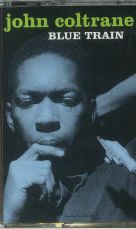
blue train cassetteHave you ever had a record/tape or CD that has been lying around for years – you play it once or twice – it doesn’t grab you and it gets thrown on a pile, then one day, you discover it? The most egregious example of this for me was the Stone Roses’ debut album that suddenly infected me in about 1997 (8 years after release). The most important, though, was a cassette of “Blue Train” by John Coltrane that was my soundtrack in the early summer of 1991.

Every “greatest jazz albums of all time” list ever constructed will point you towards “A Love Supreme” by John Coltrane. I have owned many versions of that recording – CD, LP, Blu-Ray audio, Box set etc. and I can say, for certain, that I am not quite ready for it. Yet.

In 1990 – for most of us, jazz was Stanley Jordan, Stanley Clarke, David Sanborn, Kenny G – and all of the crap that was featured, back then, in Jazziz magazine (so called “contemporary jazz” analogous to elevator music). The sounds were echo gated, overproduced, layered with synthesizers. There was no jazz on the radio, as I have mentioned before. My only access was from various sampler tapes and CDs. And then a jazz movie came out – not a crusty old bio flick like “Bird” or “Round Midnight” but bright and colourful and ambitious and elegant.

The movie, a Spike Lee joint, was “Mo Better Blues.” It starred Denzel Washington as a jazz trumpeter. Wesley Snipes played Shadow Henderson, the saxophone player in Washington’s quartet. They are competitive professionally and romantically – principally for the attention of Clarke (played by Cynda Williams). Neither the movie nor its soundtrack ever grabbed me – but one scene jumped to my attention. Shadow goes into a record store and buys a bunch of John Coltrane CDs (says something like “I have all of these already) just to spend a few seconds at the till with Clarke – and maybe arrange a little bit more.  The message was clear – if you wanted to be taken seriously as a jazz saxophone player in 1990 – you needed to study Coltrane. My first JC album was “Blue Train” picked up on cassette, mid-price, in the late 1980s, at the Virgin Megastore. It did not click instantly.

IMG_1665“Blue Train” is an anomaly. Recorded in 1957 (September 15th), it was is only recording as a leader for Blue Note (Coltrane had previously contributed to a Johnny Griffin blowing session and a Paul Chambers album). He had recently quit heroin – for which had been banished from the Miles Davis band. He had been recording as a sideman and leader at Prestige records for about 6 months, and would continue to do so through most of 1958 (hence the recent Craft recordings boxset).  At the time, Coltrane had playing with Thelonious Monk and was soon to rejoin Davis.
The session came about as a result of a visit Coltrane made to Blue Note records the previous year – in order to scrounge some Sidney Bechet records. At the time he made verbal agreement and received an advance from Alfred Lion. In the meantime Coltrane signed an exclusive contract with Prestige and required the permission of Bob Weinstock to record with his competitors.

The band he assembled will be familiar to Miles Davis fans: the drummer was Philly Joe Jones and the bassist Paul Chambers. Kenny Drew played piano. In addition Lee Morgan played trumpet and Curtis Fuller trombone.

I’m not going into detail about the tracks on the album – it opens with the fabulous “Blue Train” and fizzes along for 42 minutes. The sound is marvelously crisp – typical Van Gelder and the band are tight – nicely rehearsed and disciplined. All of early Coltrane is here from sheets of sound to blues to ballads. It is wonderful and not “over valued” as suggested in the Penguin Guide to Jazz (which I will visit in a later post).

My original version was on cassette – listened through a Walkman. I have, at least, three copies on vinyl (see picture above), the best of which is the Music Matters 33rpm. I have a CD copy or two and the 24/192 high res version. They are all good. It is one of the few jazz albums that I can listen to in the car, at home while working or by the fireside. It is a great place to start with Coltrane. Unfortunately, being the early 1990s, the only CDs that I could afford were those that were on sale – and I followed it up with the (relatively) inaccessible  The Major Works (including Ascention), Expression,  and the outtakes album From the Original Master Tapes. Newport 1963, however, was terrific.

Anyway, for the uninitiated – here is my suggested Coltrane listening in order:

  1. Blue Train (Blue Note)
  2. My Favorite Things (Atlantic)
  3. Giant Steps (Atlantic)
  4. Ballads (Impulse) or Africa/Brass
  5. Settin’ The Pace or Lush Life or Soultrane (Prestige)
  6. Bags & Trane (Atlantic)
  7. With Thelonious Monk at Carnegie Hall (Blue Note)
  8. With Johnny Hartmann (Impulse)
  9. Live at the Village Vanguard (Impulse)
  10. A Love Supreme (Impulse)
  11. New Thing At Newport (Impulse)
  12. Ascension (Impulse)

There are now bad Coltrane albums – although I would advise against Live at the Village Vanguard – Again: it is tough going and, strangely, seem to be in every vinyl bin I ever visit containing Coltrane albums.

Of course there are lots of albums on which Coltrane plays as a sideman – various Miles Davis recordings, a load of Prestige albums and then albums with Kenny Burrell, Cannonball Adderley and Duke Ellington. The are all highly accessible and wonderful. If you were to pick one era – it would be Atlantic (the Heavyweight Champion Boxset). My personal favorite is Live At The Village Vanguard (1962). I have a lovely mid 70s Japanese pressing, but the 1997 box-set is truly wonderful – featuring Coltrane’s best band: McCoy Tyner, Elvin Jones,  Jimmy Garrison and Eric Dolphy (I have a nice copyright free bootleg box of the band playing in Europe and there is a Jazz Icons DVD available featuring the group).


David Hepworth Has Written My Biography

•May 28, 2019 • Leave a Comment

hepworthSmash Hits magazine came out in 1979: it was a glossy lightweight pop mag that featured the lyrics of several of the current hit records, so you could sing along with your 45rpm singles (in those days lyrics for many records were in-comprehensible – I challenge anybody to unravel the words of “Into the Valley” by the Skids ). An early contributor and, later editor, was David Hepworth. It was compulsive reading for a pop music fan in that era. Of course by 1981, I was reading Kerrang and the NME rather than Smash Hits and pretty much ignored Hepworth until the arrival of “The Word” – the greatest music magazine EVER (well in my memory anyway). It remains the only magazine that was worth reading cover to cover each month: I still have a few copies lying around. Unfortuately, a few years ago (see blog below), it closed. Hepworth was the editor. I then followed his blog; and still do.

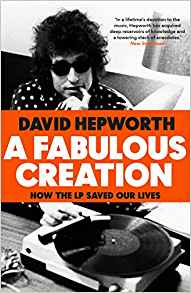
Thankfully, David Hepworth has now published a few books to keep me happy: “1971 – Never a Dull Moment” – about 1971, “Uncommon People – the rise and fall of Rock Stars,” “Nothing is Real” (which I haven’t read yet) and his current masterpiece: “A Fabulous Creation: How the LP Saved Our Lives.” I downloaded the audiobook for Audible – Hepworth, thankfully, reads this love letter to the long playing record himself. It is really good. He starts the book in 1967 – 20 years after the LP had first come out, 8 years after “Kind of Blue” – with Sgt Pepper. His assertion is the “Pepper” started the LP revolution (i.e. not 2 hits and filler) and opened up the mass market for album music and it’s associated lifestyle. He then follows an Anglocentric path through the 1970s and 1980s to describe the habits and culture of crate digging vinyl lovers, the transition to cassettes – driven by the Sony Walkman and the movement from singles to albums to “tunes”. He parallels the development of video technology with the simultaneous development of the world of “always on” audio. Everything, to me, is familiar. Some things I had forgotten. It is like the book is a biography of the record loving aspect on my life (entirely separated from career, marriage and kids). Some albums give significant attention – “Thriller” (Jackson), “Tusk” (Fleetwood Mac). He has a section on comedy, but not soundtracks. The CD is a revolution, but is “unloved”.

My favorite comment by Hepworth, in Word, was that most bands have, at most 12 good tunes/songs (enough to fill 2 albums) – after that they are threading water. The book reinforces that view. He discusses record reviews and points out that most albums are mediocre – so the reviewed either goes “Meh!” (which, as they are usually freelance, will result them in not being invited back) or enthuses or savages the record. Most well reviewed records are not as good as your remember, most badly reviewed records are not as bad as you remember.

An excellent book – a great read – must buy a hard copy now. He seems to have another one coming out in October. Truly prolific!

Into the Valley

Into the valley
Betrothed and divine
Realisations no virtue
But who can define
Why soldiers go marching
Those masses a line
This disease is catching
From victory to stone
Ahoy! Ahoy! Land, sea and sky
Ahoy! Ahoy! Boy, man and soldier
Ahoy! Ahoy! Deceived and then punctured
Ahoy! Ahoy! Long may they die
Out of concealment
Blank and stark eyed
Why so uncertain
This culture deceives
Prophesised, brainwashed
Tomorrow’s demise
All systems failing
The placards unroll
Ahoy! Ahoy! Land, sea and sky
Ahoy! Ahoy! Boy, man and soldier
Ahoy! Ahoy! Deceived and then punctured
Ahoy! Ahoy! Long may they die
Time for the audit
The gathering trial
A collector’s dilemma
Repositioned and filed
Songwriters: Richard Jobson / Stuart Adamson


Dexter Gordon – “Doin’ Alright” BN 80

•May 21, 2019 • 6 Comments

doin alrightThe new Dexter Gordon BN 80 LP arrived (at last) today. After Herbie, I had lowish expectations. Worry not.

Doin’ Alright was Gordon’s first foray into Blue Note records. He had spent the 1950s, like Art Pepper, in and out of prison and had lost his cabaret card to play in New York. His spell with Blue Note yielded a number of classics including Go and A Swinging Affair. Locating subsequently to Europe he recorded Our Man in Paris, One Flight Up and Clubhouse there (without RVG). All great albums. His wife has recently published a well written biography – Sophisticated Giant – which (so far as I have read) is significantly less harrowing than the Art Pepper equivalent.

You can buy a reasonably good quality original mono copy of “Doin’ Alright” for $350 or you can buy the new Kevin Gray mastered AAA version (from the original stereo masters) for $20. It is a bargain.

The sound is spectacular – of a caliber that I have heard only on AP Prestige and MM  Blue Note reissues (same mastering engineer, after all). This blows away the 24/192 digital version that I have. The sense of space is extraordinary, the timbre and timing of Gordon’s saxophone is as rich as coffee beans, the bass and drums punchy – and the  trumpet sound of Freddie Hubbard is just gorgeous. The sound of the record is truly immersive. It’s a great audiophile record.

Now, I’m in a quandary – should I open and listen to the duplicate Herbie Hancock album that Amazon sent me – in case the other one was a dud, or will I send it back?

Jazz Recordings that Changed My Life 1

•May 16, 2019 • 5 Comments

blue note tape outsideDublin, mid 1980s. Synth pop is fading; indie hasn’t really happened yet. I currently hate U2. I have grown tired of heavy metal and new wave. I want a new musical experience. I want to explore jazz. Where do I start? Despite what revisionists will tell you – Jazz was OUT in the mid 1980s. Nobody that I knew knew anything about jazz and those that did, such as my dad, favored the Acker Bilk 1950s British Trad variety. There were no books about Jazz in the library or in the small bookshops of the time. Record shops (this was before the HMV, Virgin, Tower era) sold current hits, (what we now call) classic rock, country and western and compilations. The “jazz” section contained nothing much, usually swing (I once bought what felt like a 90g Benny Goodman album that was likely recorded before the Americans commandeered Ampex from the Germans). Louis Armstrong – that’s jazz – right? I was given a 3 LP Louis Armstrong box, again likely copyright free stuff from the 1930s – hifi it was not. Meh.
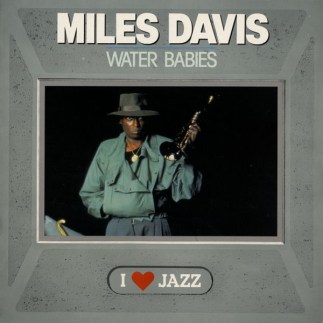
water babiesI visited Freebird Records, still going strong – “any jazz?” – I was treated like I was some form of poserish-tosser (I suppose they call them hipsters today) and pointed at a rack that contained tapes from Count Basie, Ella Fitzgerald and Miles Davis. Miles – that’s jazz – right? So I bought a second hand tape by Miles – “Water Babies.” If one was to assemble every recording ever released by Miles Davis and rank them from 1 to 70 (or 80) – starting with “Kind of Blue” (best) and ending with “Decoy” (worst), “Water Babies” is so inaccessible, being leftovers of leftovers – stuff that didn’t even make up padding for padding albums, that it doesn’t make the list. I thought it was, well, shite. The cover, one of the I love (heart) jazz series, was crap – the original at least was a painting of some black kids playing in a fountain! (just a thought – I see that it is on Qobuz, must stream it to see if I still hate the album after 30 years).
In 1986 there was no internet, Google, no Spotify – just a big vacuum of information. That’s the way we lived. It would take one second now to Google “10 best jazz albums for beginners” – every single one of the lists generated would start with “Kind of Blue” – would I be a different person if I had discovered that gem in the mid 80s?

Why was there no great jazz albums in the second hand bins in Ireland in 1986? For the same reason as is the case today – nobody sold  them because very few people knew enough or heard enough to buy high quality jazz albums and those that did sure as hell didn’t need the quick fix money from selling their collection to buy the new Smiths album. I gave up.

One day in 1988 I was wandering through the Virgin Megastore, and remember this was the worst period in popular music history – almost as bad as now,  looking for something decent to listen to. Obviously I couldn’t afford anything on compact disc (staggeringly expensive £15 at the time). However – there was a cassette sale – 3 for £5 –  going on, and, on a whim I bought 3 tapes – one of which was “A Sample of Blue Notes” – a compilation of Blue Note recordings (released in 1987). I don’t thing that I have really ever quite recovered from first hearing that Blue Note tape. I still have it and treasure it. It is the greatest sampler EVER.

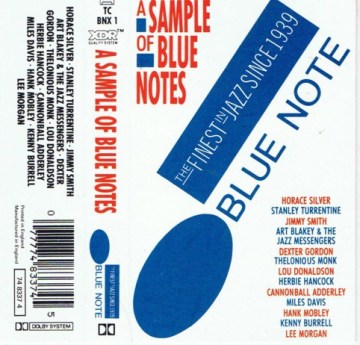
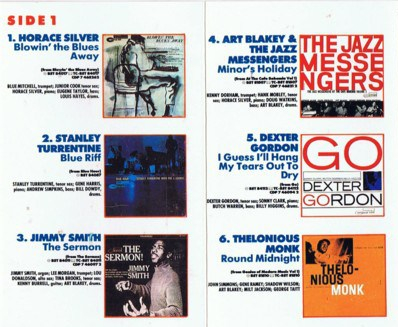
blue note tape insideSide one (see picture) starts with “Blowin’ the Blues Away” by Horace Silver, followed by another blues by Stanley Turrentine, Jimmy Smith, Art Blakey, Dexter Gordon and finishes with the original version of “Round Midnight” by Monk.

Side two is even better: Lou Donaldson, Herbie Hancock, Cannonball Adderley, and then the extraordinary trio of “Dig Dis” (Hank Mobley), “Midnight Blue” (Kenny Burrell – covered around that time by Stevie Ray Vaughan) and “The Sidewinder” by Lee Morgan.

I frequently hear musos complaining about compilation albums and making condescending comments about people who buy them. For my generation, radio was terrible (only hits and weird alternative stuff) and discovering new music was really difficult. This was particularly bad in the 1990s and the early 00s (before satellite radio in the US – literally all you had was classic hits and the current manufactured smooth R&B crap in the charts). The compilation gave us a low risk window into the world (unfortunately, frequently if you bought the album based on hearing one song from the compilation you discovered that it was the only good song on the album).  In fact, so popular were compilations then that they are reissuing some of them now, on vinyl.

Within 10 years I had bought, on cassette or CD, all of the original albums featured on the Blue Note sampler. I’m sure that I have bought them all again on reissued vinyl. There is no doubt that hard boppin’ Blue Note recordings are really accessible jazz – and that is why the brand has such a strong current cachet (and quality used product is unbelievably expensive). You can pretty much pick up any classic era Blue Note recording and will enjoy it.

In 1989, the now resurrected Blue Note issued another sampler – the Blue Note 50th Anniversary Sampler. Hmmm. This release followed the now familiar approach of stuffing in recently released and truly mediocre output (side 1) with classic Blue Note recordings (side 2). I’m pretty sure that I listened to side 1, once.

Below is a list of 10 Blue Note Albums that I would strongly recommend to anyone who is just “getting into” jazz (no surprises here). The best versions currently available (but hurry) are the 33rpm releases from Music Matters.

1. Something Else – Cannonball Adderley

2. Moanin’ – Art Blakey

3. Midnight Blue – Kenny Burrell

4. Maiden Voyage – Herbie Hancock.

5. GO – Dexter Gordon

6. Song for My Father – Horace Silver

7. Open Sesame – Freddy Hubbard

8. Soul Station – Hank Mobley

9. Blue and Sentimental – Ike Quebec

10. Blues Walk – Lou Donaldson

I could list another 100.

The Tribulations of the European Vinyl Jazz Fan

•April 25, 2019 • 7 Comments

In 1954 Sarah Vaughan released her eponymous album “Sarah Vaughan” on EmArcy records (picture on right above). A NM copy of the original album will set you back £200, at least. My first copy, a CD bought in 1990 or 1991, was called “Sarah Vaughan with Clifford Brown (picture on left above)” – Brown being upgraded from accompanist to co-lead (for reasons that are unclear to me). I have loved the album since I first heard it. However, I have always found the vocals to be quite “thin” and sibilant on the CD. I recently bought a reasonably affordable Japanese print from 1974. The record sounds completely different to the CD – Vaughan’s vocal is deeper and clearer and more, dare I say, analogue. There is a richness and punch to the mono production that I had not heard before. The album has had a couple of digital remasters that I have not heard, including an SACD reissue. Strangely, when I went to catalogue my purchase, I discovered, to my horror, that I had two copies already. The first, a 2008 Jazz Track and the second, a 2016 copy from the wonderful De Agostini jazz at 33 vinyl LP series (the majority of which I have obtained – both UK and Ireland and Italian versions, which had different releases). I decided to play the records side to side. The Jazz Track record, of course, sounded exactly the same as the CD – but used the original artwork. The De Agostini version sounded exactly the same as the Jazz Track, similar cover but with the original labels. Both of these records were likely sourced from the CD. And therein lies the problem.

Under European law, pre 1963 recordings are copyright exempt. In general, this is a good thing for music lovers, as most of the artists are now dead, and the record companies made hay re-issuing CD of historic recordings in the 80s and 90s and selling them for top dollar prices. Now you can happily pick up classical and jazz CD box sets for €10 to €15 that contain 8 to 10 albums. Presumably, the CDs are digital clones of the official releases. Occasionally, the manufacturers boast that the recordings have been 20 or 24 bit remastered, which is a little ridiculous without the master tapes.

However, when it comes to vinyl, the copyright exemption has led to a vinyl version of Greshams’ law: bad vinyl is pushing good vinyl out of circulation. I have been in dozens of record shops all over Europe over the past decade, and crate after crate of jazz records are chock full of copyright free (i.e. CD sourced) reissues by – Jazz Wax, Jazz Tracks, Vinyl Passion, DOL, Vinyl Lovers, Not Now, Panam, Doxy etc. If you get lucky, there are a few Rhino, Impulse or Atlantic reissues and of course new pressings from ECM and Blue Note – but literally nothing else. If you visit Amazon’s european sites, most of the 1950s and 1960s jazz vinyl on offer is the same rubbish. Take, for example – Art Pepper Meets the Rhythm Section – a true classic from 1957. If one goes to Amazon.com – you are offered a 2011 Original Jazz Classics pressing for $22. If you go to Amazon.co.uk – you are offered a 2013 Waxtime pressing for £20. It is possible, that both of these pressings derive from the same 16 bit files, but at least OJC own the original master tapes (they may be all analogue), and presumably pay some reasonable attention to mastering. The point is that, for basic vinyl reissues, European jazz enthusiasts are being subjected to second rate CD sourced junk, and it is very difficult to source the good stuff.

It might be worth noting that CD sourced 180g virgin pressings may sound a lot better than the 27th repress of a 1950s recording on 120g vinyl from the 1980s.

For years, American audiophile labels such as Analogue Productions, Music Matters, Org, Org Music, Analogue Spark, Mobile Fidelity etc. have reissued AAA versions of, often, hard to find recordings that likely sound as good as the first pressings. Unfortunately, these are not widely sold in Europe. And although one can buy many, but not all, through reputable sources such as the Vinyl Gourmet, there are very few record shops that stock these records. When they do, the double taxation makes these audiophile records prohibitively expensive. Pure Pleasure and Speakers’ corner records are manufactured in Europe – and available online at a reasonable price, but rarely have I ever found their products in a record store. Thankfully, Universal Music have internationalized the “Tone Poet” Blue Note re-issue series. Unfortunately, they are charging top dollar for albums that most of us wouldn’t necessarily choose if we were starting a Blue Note collection. I am excited about the prospects of a UK based AAA Blue Note reissue label Wallinbink.

The Jazz Workshop is a Spanish reissue label. I have a number of their releases – all of which I have enjoyed immensely.  I have no idea of the provenance of these recordings – except for a record shop owner in Salzburg telling me that they were all analogue and audiophile. The records in question are beautifully presented and difficult enough to find on CD.

Finally, there is the used market. Again, I have been in dozens of used record shops across Europe and, everywhere you go, it the same stuff: crappy 1970s and 1980s Italian pressings of classic records in weird jackets on thin vinyl. Anything remotely decent is up, on the wall, at staggeringly elevated prices. This, for me, is the ongoing problem of used record stores: as soon as any new high quality stock arrives it is cherry picked by the staff, regulars, lucky browsers etc. such that most of what fills the crates is fairly ordinary. Yes, you might pick up a much wanted replacement of “Nightflight to Venus” for €1, but forget about finding a first or second pressing of an american jazz classic. Indeed, my own experience is that even a first UK or German pressing can be very very expensive.

So, what about the internet? Let’s face it – Discogs is the greatest thing that has happened to vinyl in the internet era. Apart from the fact that virtually every release is catalogued properly, the marketplace give one the opportunity to source and price records with a fair amount of safety. Unfortunately, over-grading is epidemic. It is remarkable how many “near mint” records I have bought with what turned out to be “good+” sleeves. At least you can contact the seller to warn them that you are going to give them a bad review – usually resulting in a bit of a rebate. Record shops that sell directly do not have that feedback system: I was recently badly burned with a copy of Bill Evans’ Interplay – that was sold to me as first pressing VG+ NM sleeve and record. The cover was Good (at best – big split in the top) and there were audible scratches on both sides. Oh and it was a 1966 repress (I should have spotted this by the photo of the record label). Of course, it’s my own fault – the record price (€40) was too good to be true – I should have consulted Popsike before buying.

The major problem with buying used jazz on discogs (or ebay) is that most of the records on offer are in the USA and buying them risks the wrath of customs and VAT – currently applied on anything that costs more than €22 – often the price of shipping a few records alone. Consequently, one is usually forced to accept later European or Japanese pressings (which often sound great).

Of course, a sensible person wouldn’t spend a penny on vinyl and just enjoy the music – every possible album out there is available on multiple streaming platforms at CD and often high res bitrates.