
The Loudness War
I have been wondering why several highly lauded records have not done it for me last year – particularly Sleigh Bells “Reign of Terror” and Alt-J’s – “An Awesome Wave.” Strangely, I heard the latter in a record shop when it came out first, and really liked it. But, having bought it, I went home and listened thru headphones and grew really fatigued with it after 3 or 4 tracks. This form of listening fatigue has become a problem for me with CDs over the past decade or so: I can listen for hours to anything recorded before 1995, anything on ECM records and most classic rock. But a lot of modern rock records are hard to listen to thru headphones (I usually just plug my B&W P5s into an old Sony Discman). Why is this?
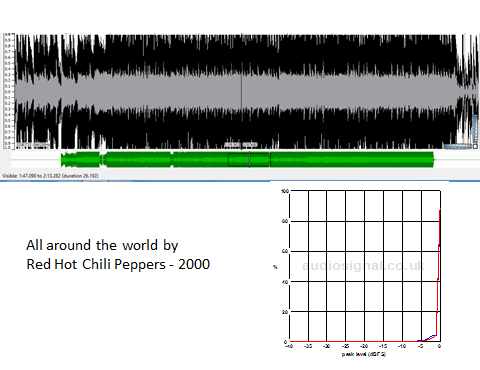
Of course the problem is the persistence of “The Loudness War” a phenomenon that started with Oasis’ “What’s the story – morning glory” where so much dynamic range compression was used that the album sounded like a “Brick Wall”. Back in the 1970s amplifiers had “loudness” switches that pumped up the base and filled out the sound, and I must confess that I enjoyed the phenomenon – better a fat rather than a thin sound. In fact, when CDs came out first (and indeed SACDs) I found that I had to turn up the volume to get a fat sound, as they were often mastered at low levels – presumably to take advantage of the quietness of the format: however low level mastering leads to lower resolution digital output and a dissatisfying listen (the quieter the recording the fewer number of bits are used). Hence, in the early 1990s, dynamic range compression (DRC) became universally used in mastering CDs – particularly classical recordings – where the DB range between quiet and loud parts is frequently enormous. When the CD became the de facto sound carrier in cars DRC became essential, as drivers didn’t like having to continually re-adjust their volume controls when the quiet part of songs came on. These 1990s remasters were excellent recordings because mastering engineers pushed up the volume so that the loudest parts of the album would just about reach the limit (the red zone), and then a little compression fattened up the sound. And then along came Oasis: much of their albums were recorded well into the red, resulting in loudness, harshness and echoey sound. I think that is the reason why their first two albums never became firm favorites of mine – great songs but hard to listen to. Nonetheless, in noisy environments – pubs, shops, workshops etc. the music could penetrate and be heard, and the album shifted millions of copies. The floodgates opened – all young bands wanted their records to sound LOUD – so that they would have the Oasis effect on radio. When the Red Hot Chili Peppers released “Californication” 2000, critics gushed praise all over it. It won lots of album of the year awards. I hated it. I couldn’t listen to it. I did not know why; it just sounded wrong! I now know that this was one of the loudest albums ever released.
Back in the 1980s I bought a couple of Led Zeppelin albums on CD – this was a serious expense for me because at the time CDs cost £16/$16 and I was expecting “Perfect Sound Forever”. I put the first disc – I think it was “Houses of the Holy” into my CD boombox and pushed play: it sounded – awful. On the same device I played the cassette tape of the same CD – it sounded so much better. Several years later Jimmy Page remastered the entire Led Zep catalog and released a wonderful greatest hits collection – “Remasters.” Great sound, great songs. More recently, and unnecessarily, “Mothership” was released. And it sounds – awful. Where everything on “Remasters” was crisp, dynamic, exciting, detailed everything on” Mothership” is overblown, flat, tiring to listen to and extremely LOUD. It is like Led Zep trying to sound like Muse: unfortunately these are not new recordings; Led Zep should be sounding like Led Zep.
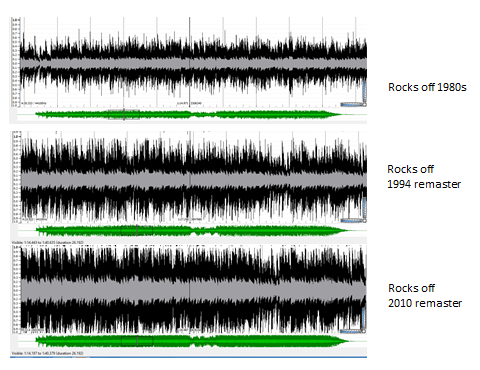
Possibly the most irritating phenomenon is the “newly remastered” approach. The Rolling Stones catalogue, like Led Zeppelin’s, was released on CD in the 1980s. Unlike, Led Zep, the original CDs were derived from the original master tapes, and should have sounded good. Having been told, since I was a toddler, that “Exile on Main Street” was the Greatest Album Ever (Q magazine), it had to be one of my first CD purchases. I listened to it 3 or 4 times – but just did not get it. Muddy sound, no clear instruments, couldn’t understand the vocals: the guys must have been doing some serious drugs in the 1972 in France. However, in 1994 Exile, plus several of the 70s albums, was remastered on Virgin records, by Bob Ludwig, and I took the plunge. It was a different album – “now I know what Mick Taylor did in the Stones”, clear voices, great range – wonderfull. After this, all of the 1960s albums were remastered into SACD hybrids by Ludwig, and the CD layer on each was a pleasure to listen to (unfortunately nobody ever came up with a portable SACD that you could plug your headphones into). In 2009 everywhere you looked there was hype – a new set of Rolling Stones remasters was coming out (principally because they had changed label) – culminating in a deluxe edition of Exile. Well, of course, I had to have it. Bad move – suddenly, this great record started sounding, well – awful – again. The reason – DRC – LOUDNESS. Some genius at the record company decided that the Stones’ 70s recordings (they recorded in the best studios during the best time in history to record on 24-48 track analogue boards) did not sound “modern” enough for the iPod generation. So, they were mastered super loud: cue drone, drone, drone.
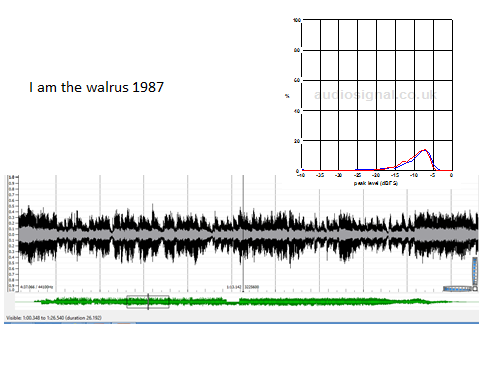
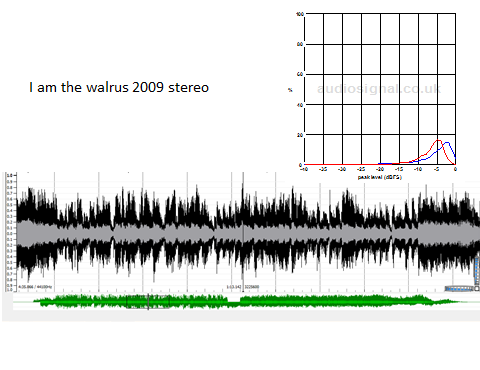
Is DRC ever well done: yes it is! The recent Beatles remasters are an example of how to do DRC correctly. I have all of the original 1980s Beatles CDs; and they all sound pretty good. Being a complete sucker, I bought both the Mono Box and most of the stereo albums and the USB 24 bit high resolution edition of the remasters. The mono remasters have moderate volume, certainly compared with the 1980s versions. The stereo versions (both 16 and 24 bit) used DRC, and increased the volume significantly – but not enough to brick wall the recordings – they now sound vibrant, engaging and fun – but not fatiguing; I like the stereo remasters very much.
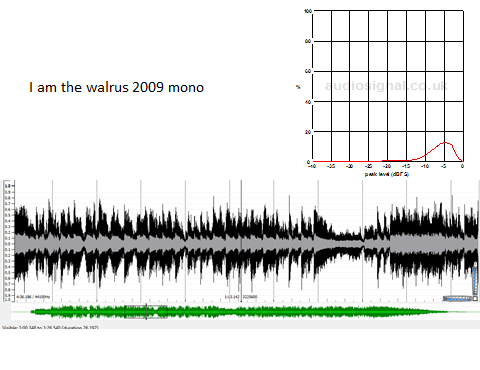
One of the side effects of DRC is that I cannot listen to popular radio anymore. Radio stations always used DRC and loudness; again this appeals to people in cars who have to deal with a lot of cabin noise. All pop records have loud bass and drum tracks, heavily compressed and auto-tuned vocals: they sound truly awful, particularly when doubly compressed by the radio station. Unfortunately, with DRC, this phenomenon is also a problem with rock recordings. When I turn on pop-rock stations, I feel my senses being assaulted: I want to relax while driving – not feel like I need to drop E at a rave.
The worst outcome from DRC is clipping – where the sound is audibly distorted and dissonant due to excessive loudness. The majority of modern recordings avoid this, due to at least a little care during mastering – the audio is loud – but not clipped. However, a couple of highly praised albums from last year fell into this trap:
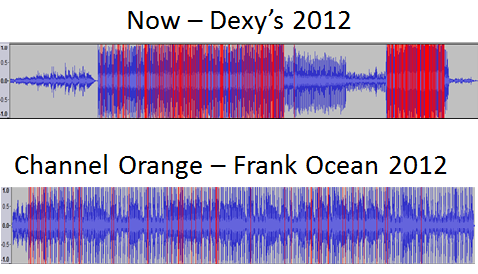
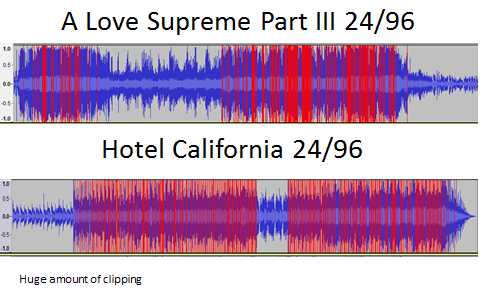
One of the purported advantages of 24bit mastering is the increased “head room” associated with the wider dynamic range. Head room refers to a situation where an engineer is recording a concert, for example: the recording levels are set at the beginning hoping that the quiet and loud parts will be captured without “going into the red”. Recording too low leads to loss of detail; too high – clipping. In the 24 bit realm – there is a huge amount of head room, so clipping of high resolution recordings is, frankly, a criminal offence for mastering engineers – dare I say it – incompetence. So you will understand my horror when I discovered significant clipping on a couple of high res tracks that I had downloaded from HD tracks (see a Love Supreme Part III and Eagles – Hotel California below).
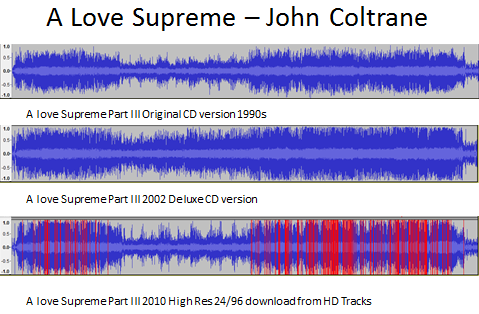
A Love Supreme is one of the great jazz recordings, a Rudy Van Gelder Impulse Masterpiece – I have 4 or 5 versions of this – on CD/deluxe Edition/Vinyl/Tape. Out of curiosity I examined a couple of other versions from my media server. The first was from a cd reissue from 1995. The second is the 2002 deluxe edition remaster – you can see that it is significantly louder – but there is no clipping. The 3rd is the 2010 HD-Tracks 24/96 download – there is clipping all over. I am not sure what the source of this version was: a new CD remaster was released in 2008, which I did not buy and the accompanying liner notes are from that version. Irrespective – the high res download is a disgrace. Listening to the 3 versions – the 1995 version is very poor – muddy, lacking in dynamics and detail; the 24 bit version is a little better, certainly smoother, and I cannot hear noticeable clipping to be fair. The 2002 CD version is by far the best – clear, good soundstage, great separation and dynamics. Interestingly, having done this comparison I came upon this article: click here. It turns out that the original masters were binned and the original 1980s and 1995 releases came from second generation masters. The deluxe edition came from a UK production master – so it is the best version available. Presumably the 2003 SACD came from the same source. It is unclear where the 2008 version came from (no provenance in the liner notes), but HD tracks mention a “recently rediscovered first generation master tape.” That is what is mentioned on the Verve music group website which is selling the 2003 version.
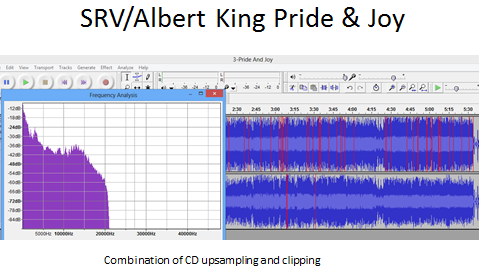
Finally, my real venom is reserved for another HD tracks download – the 24/96 download (from 2010) of Stevie Ray Vaughan and Albert King – “In Session”. I have to admit that I was originally surprised that this was released as a high res download as the original source was video, and the sound of the CD was not great. However, I presumed that HD-Tracks had gotten hold of the original masters and delivered outstanding sound. I wasn’t. In fact it sounded – awful. My analysis of this recording can be viewed below:
You can see that not only is there significant clipping, but there is no information above 20kHz (CD range) – this is a CD upsample; I was conned. About this topic, more later.
Points that need to be made:
1. Music critics, when reviewing a recording, should comment on the quality of the recording, the mix and the mastering. None of the critics had the balls to say that Californication was a great album before they made a mess of the master. Is it uncool to say that an album is too loud?
2. If I want to hear noise – I can stand outside a construction site and listen to a pneumatic drill – music should sound like music, drills should sound like drills. Sleigh Bells – I am sure that you are good musicians – I would like to hear your instruments. Grow up and show some confidence in your music. Loudness, to me, is like coating a meal with too much sauce: the sauce tastes ok – but you will never know what the meal underneath tasted like.
3. Itunes normalises the volume on everything. Folks that listen exclusively to music on itunes cannot be impressed by your loudness – so stop turning up the volume Mr Mastering Engineer.
 audioexchange
[…] Fortunately, CD arrived in the mid 80s and by 1995 every album had been digitally remixed and remastered.* Many of those ADD remixes were wonderful. For example, Bob Ludwig’s work on the Rolling Stones catalogue is fantastic – in many ways the Virgin CDs (mid 1990s) and the ABKCO SACDs (early 00s) are the definitive versions of their albums. I have at least 8 versions of “Exile” (1980s CD, 1995 Virgin CD, 2000s UME Deluxe Edition, 2010 Vinyl Reissue, 2016 1/2 Speed “Abbey Road” Vinyl, 24/96 Pure Audio Blu-Ray, 2014 SACD) – and I still think that the Ludwig CD is the best sounding (i.e. the most modern sounding version). The 2010s versions on Universal were horribly loud, almost to the point of unlistenable. […]