
When the CD may be better than the Vinyl Record
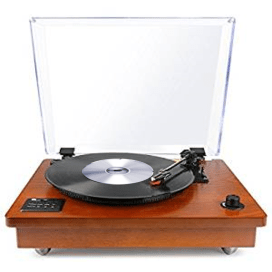 The music industry has been particularly good, over the past 4 decades, at repackaging “catalogue” material into new or new old products and selling them back to us. This started with the compact disc (CD) and the box set, deluxe edition, superdeluxeedition, vinyl reissue, vinyl superdeluxedition and, of course, high res downloads. In between there have been a number of “failed” formats – DAT, digital compact cassette, mini-disc, DVD-audio and Super Audio CD (SACD) – all of which were massively hamstrung by serial copy protection. Mini Disc, in particular, was a spectacularly good product from the era – and it could and should have been the computer drive of choice (rather than, for example, the zip disc) after floppy discs became inadequate. The successful format, of course was MP3, which side stepped the music industry and became the de-facto format of the iPod era (2002 to 2010). With mobile phones and streaming, now, the format is largely irrelevant. Nevertheless, the music industry is still trying to sell new product to the diminishing number of us who like physical formats. Hence, the “vinyl” revolution. The problem, as I have mentioned many times in this blog, is the provenance of the master recording used for the acetates that make the stampers that make the records. Virtually everything that you see in a record shop or online that comes shrink wrapped and bearing a gold and black 180g audiophile vinyl sticker is sourced from a digital file.
Digital sourcing is not all that bad. For example, many years ago Bob Ludwig took the 1960s Rolling Stones catalogue’s master tapes and mastered them in DSD for SACD release. Those discs sounded fantastic, whether the CD or SACD layer was played. The DSD files were subsequently used for fairly inexpensive vinyl pressings, all of which sound very good – probably better than most of the versions of those albums that one would find in a second hand shop. Most compilation albums and live albums are digitally sourced. Music on Vinyl reissues classic records, from High Res sources – and they usually sound very good. I have a copy of “No Sleep till Hammersmith” that I bought new in 1981. I bought a new copy from Universal (Back to Black). Honestly, the latter sounds better. No contest. So, if you want a facsimile of a favorite record from the past, a digitally sourced copy for under €20 is pretty good value.
Digital recording gained traction in the 1980s. Often the album was recorded using a Soundstream product, exported to an analogue console and then re-digitalized to put it on the CD. So this was DAD. By an large, you were better off with the lightweight vinyl record or cassette. Of course, many of these were remastered (now DDD) in the early 1990s – and those CD sound really good. Remember, at best, these are 16 bit recordings – so, no more information can be squeezed from them. The CD is the master tape. This is different from tapes from the 1950s through 70s: the tape resolution was far superior to the vinyl, in particular in the early years of LP, such that, with improved lathe technology, early vinyl reissues (and Japanese pressings in particular) often sound better than the first pressing.
The golden era of compact disc, in my opinion, was 1990 to 1996. In 1996, Oasis released “What’s the Story Morning Glory” and this resulted in 15 years of the “loudness war.” The sound of rock CDs went to hell. This eventually resulted in the stinker release of “Exile on Main Street ” (Universal version) 2010 – which is an abomination and compares very poorly against the beautiful 1994 Virgin CD release. I must have 8 versions of Exile – the latter is the only one – cassette, vinyl, High Res, Blu-Ray audio etc. that I can listen to.
In 1997 Pro-Tools went mainstream in 24 bit. From that point onwards, better than CD resolution was available, high resolution files became the standard bearer and vinyl sourced from high res likely sounds better than CD. Moreover, loudness war era recordings, made digitally, have been reissued with better dynamic range on vinyl.
But, the crux of the matter is the tween years- the time between the advent of digital recording and mixing and the new 24 bit standard: 1988 to 1996. In that era, CDs were generally well made, had good dynamic range and, usually derived from 16 bit sources, such as DAT. It is extremely unlikely that anything can be done to the original masters to improve them – after all they are 16/48 data – 1s and 0s. Early 1990s CD players represented the state of the art of audiophilia – and recordings tuned to those CD players were very good indeed (listen to any of the ECM or Telarc discs from that era). The CD manufacturing processes were finely tuned and the products very good. Also, outside of indie style rock music and dance – albums were not pressed onto vinyl – the CD was THE product.
A final thought: some record companies, such as Telarc and ECM, have specialised in digital recording – with product so good that it is unthinkable that vinyl pressings would improve on the CD. Although ECM has re-released a number of it’s analogue era recordings, and they are fantastic, vinyl releases from the company’s current catalogue are limited. ECM CDs are ALWAYS good. Yes you can buy or stream high res files of the tunes, but there is something luxurious about an ECM CD. If the house started burning down, I would rescue the family first, then the network hard drives (photos etc), then my boxes of ECM CDs.


What has caused the cd downfall IMHO is its portability. Squashing dynamics and bringing everything as loud as possible was first introduced to help listening in less than ideal condition. Which is ok per se. What I do not understand is why they have never ever thought about manufacturing also ‘normal’ versions as surely there is/was a market for it. Even today the tone poet, BN80 or other AAA or well done reissues could be easily be sold as CDs providing the same master. They would still be an improvement with regards to the already produced versions.
It really drives me mad that to take the best out of many new releases, even though they are digitally recorded and mastered, you will have to buy the vinyl as the cd is squashed to death. Utter nonsense. As usual these money cow corporations do not really know what they are doing and are also leaving money on the table while following trends they do not understand. I like both formats and would love to get the best out of each but it seems rather impossible today. As a result I am buying more (used) CDs than ever.