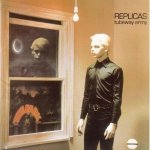
 When I was a teenager, in the 1980s, it was not uncommon for a band to release more than 1 album a year. For example, Gary Numan released both Replicas and The Pleasure Principle in the same year. In careers spanning 5 or 6 years, bands like The Clash, the Boomtown Rats, the Human League, Steely Dan, The Eagles, the Smiths and The Jam, left significant recorded legacies. When you look at the bundle of albums that you might have bought by Led Zeppelin, The Byrds or the Beatles – observe the number of years over which these albums were recorded. 3, 4 years – a decade maybe? It is understandable that as artists and bands get older, their recorded output falls. For example, after their early yearly or biyearly output, U2’s releases have fallen off: Zooropa 1993, Pop 1997, All that you cant 2000, HTDAB 2004, NLOTH 2009: however, creative juices tend to run thin as time goes on, it takes bands of this stature 2 years to tour an album and they have families etc. Likewise, Morrissey was unbelievably prolific as a member of the Smiths and then as a solo artist until 1997 – but has only released 3 albums in 15 years. Blur released 8 albums in 12 years , and Damon Albarn has kept this going thru a variety of projects. Certainly the most prolific major artists are Van Morrison and Bob Dylan, who manage a new album every year or two, and manage to keep the quality quite high. Similarly, Neil Young, with two new records this year, has kept the flag flying. Often, the covers album is a sign of creative bankruptcy – but Neil followed his with a splendid double album. Frank Zappa was unbelievably prolific.
But what has happened to today’s major acts? Adele, unquestionably the most popular artist in the world right now, has released only 2 albums – the last almost 2 years ago. Back in the day, she would have an album out for Christmas, lots of singles and plenty of new material to keep her fans interested. But that was when albums were relatively disposable – by 1968 Jimi Hendrix was complaining that he was sick of having to play oldies from his first album (18 months old at that stage). “Revolver” was merely a year before “Sgt Pepper,” but the music industry was moving so fast that it was already forgotten. Or so it seems. Strangely, back in the 1960s, kids had to save for months to buy an LP. When Bob Dylan was jeered as “Judas” at the Manchester Fair Trade Hall, it was because most of the audience had not yet heard much of his recorded output from the previous 12 months. If anything the album cycle should have been longer then than now. After all, I can download a new album on iTunes or Spotify seconds after it has been released, and can be tired of it later that day. So what gives? Several albums have been re-released 6 months later with add on EPS – Coldplay, Fleet Foxes, Lana Del Ray, Biffy Clyro etc. to prolong the life expectancy of the album; presumably. Do artists believe that they will gain more sales in this manner than releasing standalone EPs of new material, as they would have done previously? It this dishonest? Are they worried that the quality of the new material is below that of the album, and don’t want to be exposed? Does the release of the EP lengthen the gap for the next album? 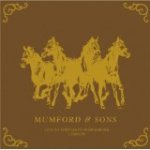 All of the above I presume. The best approach, I believe, was that of Mumford and Sons, who re-released “Sigh no more” 6 months later with a live recording of the album: they didn’t have to give up any new material, and their fans loved it. Obviously, the sales charts for the album were boosted – hence elevating their reputation in the music industry. As a result, when their second album “Babel” was released only 3 years after their first album, they had accumulated loads of good songs to fill it….NOT! Unfortunately, it sucked! (but sold millions; to me included). I see that they have now re-issued it with a live CD/DVD at Red Rocks. Limited musical imagination makes for a short career.
It is quite remarkable in this era of downloading and digital music how little music has moved on – if anything, it has regressed. Back in the 90s, artists milked their fans by releasing 3 or 4 versions of CD singles – with different B sides or live tracks included. They subsequently re-sold these tracks to their fans in album from – Masterplan by Oasis, or Sci-Fi Lullabies by Suede. This is how you keep your fans happy – with continuous product. I don’t believe that the music industry has found a novel way of exploiting fans since then, and this is one of the reasons why revenues are falling. There is no reason why Adele, using the best songwriters in the world and with carefully chosen cover versions, could not churn out a new album every 9 months. However, the music industry seem to think that holding out until every last household on the face of the earth has a copy of “21”, they will optimize profits.
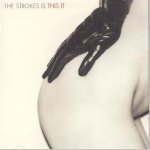 My view is, unless you are U2 or the Rolling Stones, a band or artist needs to have a new album out every 2 years to keep relevant. If they wait any longer, their audience (particularly if they are teenagers or 20 somethings) will have grown beyond them. The best acts, like Muse or Radiohead, can afford an extra year, but they already have a mature audience. Arcade Fire need to get moving. Bruce Springsteen reliably has a new album out every 36 months, has used filler like the “Seeger Sessions” when the juices have run a little dry. One of the reasons why almost no major act emerged out of the last decade is, unquestionably, hubris around album releases. Take the contenders: 1. The Strokes – Is this it (2001), Room on Fire (2003), First impressions (2006), Angels (2011). For a new wave band it was too long between albums, and they tanked. 2. Franz Ferdinand – Franz Ferdinand (2004), You could have been (2005), Tonight (2009): good start but then forgotten. Four years is an eternity in popular culture. 3. The White Stripes/Jack White – White Stripes (1999), De Stijl (2000), White Blood Cells (2001), Elephant (2003), Get behind me (2005), Ichy Tump (2007), 2 Reconteurs albums (2006 and 2008), 2 Dead Weather albums (2008 and 2010) and Blunderbus 2012. This is how prolific you need to be to become a Rock and Roll legend. Jack White unquestionably is the only true rock royalty to emerge from the past decade.
 What other global brand bands have emerged? Like them or hate them – that band is Coldplay. And how prolific: Parachutes (2000), A Rush of Blood (2002), Live (2003), X&Y (2005), Viva La Vida (2008), Mylo Kyodo (2011), Live 2012 (2012). They have impressively kept their momentum going with timely releases, filler live albums, big performances (Para-Olympics). With their more grown up audience, Coldplay will be relevant and remembered for decades. I don’t have any great love for the band (Phil Selwey’s solo album was great) but I really admire them.
David Hepworth claimed in Word magazine, that the majority of bands have only 12 good songs in them. I would go a step forward and state that they only have 5 or 6 productive years in them. There are, of course, exceptions – Paul Simon, Dylan, Bee Gees, David Bowie etc. However, even the greatest artists only have half a dozen “peak” years. If those years are not used productively – The Stone Roses, The Verve etc. their catalogue remains fairly bare. Oasis put out 2 great albums and the b-side album mentioned above before spiralling downwards rapidly. Ditto Stereophonics, Super Furry Animals, Supergrass, Suede etc. I am not a proponent of what if (bands stay together)? Was there another great album in the Beatles (no evidence from their solo material)? – The Stones did not release a great album after “Exile” (“Some Girls” and “Tattoo You” were fine records but not of the calibre of “Beggar’s banquet).” The Kinks and the Who were prolific, but did they release any compelling albums after 1972? Did Nick Drake, Jim Morrison or Janis Joplin have another great album in them: unlikely. Am I looking forward to a new Stone Roses album? No – I know it will be disappointing. I would rather the Rolling Stones release an album of blues covers than hear any new material from them. Note – trawling the classics is a good way of prolonging your career – see Paul McCartney, Rod Stewart and Jeff Lynn. How many Alex Chilton albums did I have to buy to discover that he had nothing fresh to offer after “3rd/sister lovers.”
 Do artists come back after decades and produce worthwhile albums? Yes – this years best of lists contain Leonard Cohen, Neil Young, Bob Dylan, Dr John, Bill Fey, perhaps Van Morrison etc. All legacy acts – all solo performers, that front bands. Paul Weller releases a new album every 18 months or so, all reasonable quality: he has been around for 35 years, so why are the current generation of artists so slow at coming up with new material? There are a few prolific artists around today: Conor Oberst has released an abundance of mediocre albums over the past decade. Ryan Adams, at on stage, was releasing a double album every year or two: boy did he need some quality control – has he released a memorable album since “Gold.” And now the wheel has turned full circle. Ty Segall released 3 albums this year: he released 1 in 2008, 2 in 2009, 1 in 2010 and 2 in 2011. Green Day released 3 albums this year: there was probably enough good material for 1. Nevertheless, filler was always an issue with the 2 albums per year era. Some artists plan to be prolific – Sufjan Stephens had planned to do an album for 50 states: he managed 2. So there is a tradeoff – quality versus quantity.
Posted in Digital Music, Music Biography

 A few weeks ago I picked up a copy of Sunken Condo’s for $13.99 at FYI at Washington Union Station. I then realized that I had nothing to play it on – as I had brought my MacBook air on the trip (no optical drive). So, I downloaded it from Deezer – listened, enjoyed, brought the CD home – played it in the car, ripped it to ALAC, stored it on the server and dumped the CD in the attic with the other gazillion CDs that I have nowhere good to store. Browsing Amazon weeks earlier I had had an irresistible urge to buy the vinyl version – I put it in my shopping basket and forgot about it. So I went to buy it: advertised price originally £15 (amazon.co.uk) – now I was told that the record was unavailable. Well, it is available now of £32.16 (UK) or $44.16 (USA) – this is 4 times the price of the CD ($10.99 amazon.com). This is nearly as big a rip off as the Neil Young’s two most recent albums (“Le Noise” $65, “Psychadelic Pill” $70). I know that vinyl is now considered a premium product, but what exactly are you buying?
 Of more interest is the release of “Psychadelic Pill” by Neil Young and Crazy Horse on Blu-Ray audio. There is no question of provenance here – this is 24/192 and we know that Neil is a stickler for audio quality. The price $19.74 on Amazon (lowest $16.74) – less than 1/3rd the price of the vinyl. So, if you can live with the fact that you cannot audio out the blu-ray to a DAC (you need a high end player to get value for BRA) – this is a game changer – nice jewel box and all. If necessary you can rip the audio to 24/192 flac and put it on your server.



 audioexchange